Heroes In The Struggle
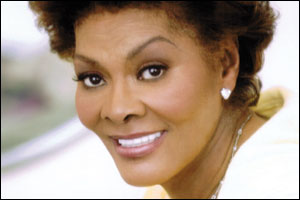
The song is so familiar that if someone starts humming the intro most people will jump in with “That’s what friends are for….” Rod Stewart originally recorded “That’s What Friends Are For” in 1979 for the movie “Night Shift.” However, it wasn’t until Dionne (Warwick) and Friends (Elton John, Gladys Knight and Stevie Wonder) recorded the Burt Bacharach/Carole Bayer Sager tune did it become a No. 1 hit and a Grammy Award for Best Pop Performance by a Duo or Group with Vocals. In a courageous effort to do their part to combat the disease that was discovered 25 years ago and deemed a “gay” man’s disease, the proceeds from “That’s What Friends Are For” were donated to American Foundation for AIDS Research (amfAR) in 1985 in the United Kingdom and in 1986 in the United States. While many celebrities are now stepping forward in the fight, it was Dionne and Friends who were the pioneers of this movement. The Black AIDS Institute’s 6th Annual Heroes In The Struggle celebrates the song’s 20th anniversary at a gala and reception Thursday, Nov. 16 at the Director’s Guild of America, 7920 Sunset Blvd., Los Angeles. A VIP reception begins at 6 p.m., followed a rare stateside performance by Cheryl Lynn, who has scored several No. 1 hits -- “Got To Be Real,” “Shake It Up Tonight,” “If This World Were Mine,” w/ Luther Vandross, and “Encore.” The event will be hosted by Rocky Carroll. Las Vegas comedian J. Reid will perform. Featured will be two Ashford & Simpson-penned tunes for the new stage production “E. Lynn Harris’ Invisible Life: The Musical” will be featured. Other performers include “American Idol’s Trenyce and Broadway actor Billy Porter. Dionne Warrick began singing gospel with her family, and started her professional career after graduating from the University of Hartford. In the earliest stage of her career, she sang backing vocals on records by Chuck Jackson, Dinah Washington and Solomon Burke, among others. Her first solo single was 1962's "Don't Make Me Over,” the title supplied by Warrick herself when she snapped the phrase at producers Burt Bacharach and Hal David during an arduous recording session. From the phrase, Bacharach and David created an elegant R&B recording, which became a top 40 pop hit in the U.S. (and a top 5 U.S. R&B hit.) Famously, Warrick's name was misspelled on the credits, and she soon began using the new spelling (i.e., "Warwick") both professionally and personally. "Anyone Who Had a Heart" was Warwick's first top 10 pop hit. This was followed by "Walk on By," a major hit that launched her career into the stratosphere. For the rest of the 1960s, Warwick was a fixture on the U.S. and Canadian charts, and virtually all of Warwick's singles from 1962-1972 were written and produced by the Bacharach/David team.
| A 1967 LP called “Here Where There Is Love” became a big hit, as did her single "I Say a Little Prayer" (on her album “The Windows of the World”) which is now famous for being featured in the movie, “My Best Friend's Wedding.” In addition, her 1960s recording of "Wives and Lovers" was used as the theme song for the 1996 hit movie “The First Wives Club.”
Her next big hit was unusual in that Bacharach and David did not write it. "(Theme From) Valley of the Dolls" was a smash success, as was the Bacharach/David-penned follow-up, "Do You Know the Way to San Jose?” More hits and a few Grammy Awards followed in the last two years of the 1960s. Warwick had become the priority act of Scepter Records with the release of "Anyone Who Had A Heart" in 1963. However, in the post-Woodstock era of the late 1960s, the decision was made that she would begin looking for a major label. Warwick's last recording for Scepter was in 1971. She debuted on the Warner Brothers label -- in a five-year contract that was the biggest contract for a female artist at that time. Although she initially teamed with Bacharach and David as writers/producers, this association dissolved after one LP on Warner’s. For the next few years, Warwick would team with a variety of producers, looking for an elusive hit. Her career slowed greatly in the 1970s, with no big hits until 1974's "Then Came You," recorded as a duet with the Spinners and produced by Thom Bell. It was her first U.S. No. 1 hit on the Billboard Hot 100. Nevertheless, other than this success, Warwick's five years on Warner Brothers -- despite the fact that she worked the entire time -- left her almost completely without hits. This trend ended with the move to a new label, and the release of "I'll Never Love This Way Again" produced by Barry Manilow. The accompanying album “Dionne” was her first to go platinum. This was her debut on Arista Records to which she had been personally signed and guided by the label's founder Clive Davis. Warwick's next hit was her 1982 full-length collaboration with Barry Gibb of The Bee Gees for ”Heartbreaker”. Her following hit was the duet “Friends In Love” recorded with Johnny Mathis, her good friend and music legend who is one of the largest record sellers in the world. In 1986, Warwick led the amfAR benefit single "That's What Friends Are For" with Friends (Gladys Knight, Elton John, and Stevie Wonder). It also marked a reunion of Warwick and song co-writer Bacharach (lyrics by Bayer Sager). In 2005, Dionne Warwick was honored by Oprah Winfrey at her Legends Ball and enjoyed one of her largest audiences ever when she appeared on the May 24, 2006 fifth-season finale of “American Idol.” An estimated 36 million U.S. viewers watched Warwick sing a medley of "Walk on By" and "That's What Friends Are For," with longtime collaborator Bacharach accompanying her on the piano.
|
|