News 2017
In The Life: Lestian McNeal

Lestian McNeal, Program Coordinator, Black AIDS Institute
One night in September 2012, I was home alone, no cable, nothing to do, but interested in watching the 1st Presidential Debate between then President Barack Obama and Former Governor Mitt Romney. Due to my lack of resources (i.e. cable and a TV) I googled options for watching the debate at a local bar.
More than a Name Change: AIDS.gov Becomes HIV.gov

The newly rebranded HIV.gov
We've changed our name from AIDS.gov to HIV.gov!
To learn more about our name change and the reasons behind it, view the Facebook Live discussion we held on Wednesday, June 7, with Dr. Richard Wolitski, Director of the HHS Office of HIV/AIDS and Infectious Disease Policy, Jesse Milan, Jr., President & CEO of AIDS United, and Kaye Hayes, Executive Director of the Presidential Advisory Council on HIV/AIDS.
Read more: More than a Name Change: AIDS.gov Becomes HIV.gov
Serving Up Digital Communication Resources for #HIVTestingDay
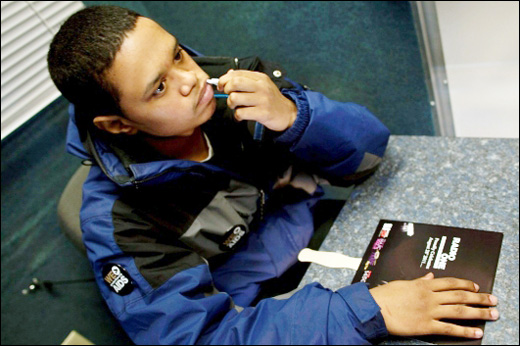
Young man takes HIV test
HIV.gov serves our readers in part by supporting their communication with their target audiences about the importance of knowing one's HIV status. One example: we annually post a blog before National HIV Testing Day (NHTD - June 27) with digital resources for this important communication.
Read more: Serving Up Digital Communication Resources for #HIVTestingDay
NIH Statement on HIV Vaccine Awareness Day
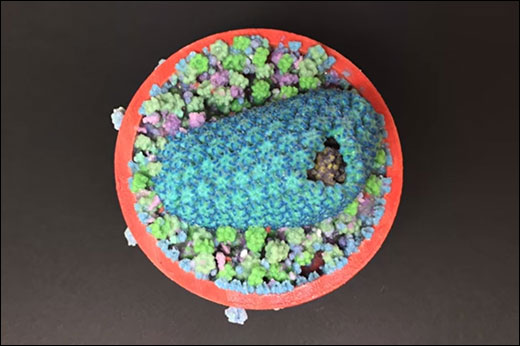
HIV virus
Much progress has been made in HIV/AIDS research since the disease was first recognized in 1981. Today, lifesaving antiretroviral therapies allow those living with HIV to enjoy longer, healthier lives—an outcome that once seemed unattainable.
Blacks More Prone to Colon Cancers That Arise Between Colonoscopies: Study

Patient shares his concerns about colon cancer with his doctor
Colon cancer guidelines now recommend a colonoscopy every 10 years, beginning at age 50 for people at average risk for the disease.
But a new study finds that older black Americans are far more likely than whites to develop a colon cancer in the decade-long gap between these screenings.
Read more: Blacks More Prone to Colon Cancers That Arise Between Colonoscopies: Study