News 2016
Putting HIV Science into Practice: What Public Health Educators Must Do
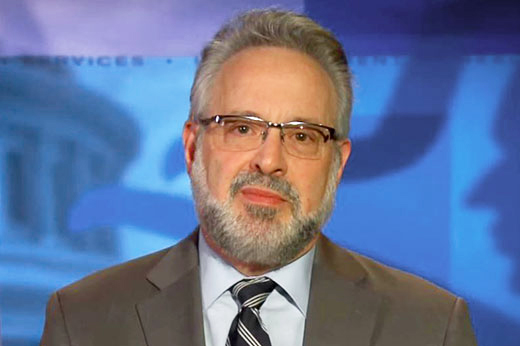
Ronald Valdiserri, M.D., M.P.H., Deputy Assistant Secretary for Health, Infectious Diseases, and Director, Office of HIV/AIDS and Infectious Disease Policy, U.S. Department of Health and Human Services
Since the very first international AIDS meeting took place in Atlanta in 1985, these gatherings have provided an important venue for exploring the science surrounding the global AIDS epidemic. What do we know about the virus? What steps can we take to prevent its spread and reach those who are most vulnerable to infection? How can we better care for persons who are living with HIV? Throughout its thirty one year history, the international AIDS meeting has convened experts from around the globe to share information about their successes, their challenges and sometimes, their failures. Demographers, epidemiologists, basic scientists, virologists, immunologists, sociologists, ethnographers, psychologists, political scientists—the list of disciplines represented is stunning in its breadth. And at every one of these meetings, the science that's presented has been put into a broader, real-world context by the large contingents of people living with HIV, their providers and other community advocates who participate in these exchanges with enthusiasm and insight.
Read more: Putting HIV Science into Practice: What Public Health Educators Must Do
Connecting Recently Incarcerated People Living with HIV to Health Coverage and Care

Health coverage may be available for those recently incarcerated
HIV exists in the nation's prisons and jails just as it does in surrounding communities. People living in prisons/jails are also more likely to be poor, non-White, and have higher rates of mental illness and substance abuse compared to people who aren't incarcerated . Coverage through Medicaid or Marketplace qualified health plans (QHPs) can help meet complex medical needs. In addition, for people living with HIV (PLWH) the Ryan White HIV/AIDS Program remains available to fill in gaps in HIV care and medication access, and can often provide financial help with premiums and out-of-pocket costs, as well as case management and other services.
Read more: Connecting Recently Incarcerated People Living with HIV to Health Coverage and Care
Join Us at The AIDS 2016 Update on Wednesday in Atlanta

AIDS 2016: Atlanta
On August 17 the Black AIDS Institute and Black Treatment Advocates Network Atlanta will host the first of 12 local AIDS 2016 Updates in Atlanta, GA.
Read more: Join Us at The AIDS 2016 Update on Wednesday in Atlanta
In Defense of Korryn Gaines, Black Women and Children [Opinion]

Korryn Gaines poses with son, Kodi
America's investment in policing and prisons prevents our ability to create systems of safety and protection for Black families. Given this, we must question the means Black parents have to protect their children.
Read more: In Defense of Korryn Gaines, Black Women and Children [Opinion]
In This Issue
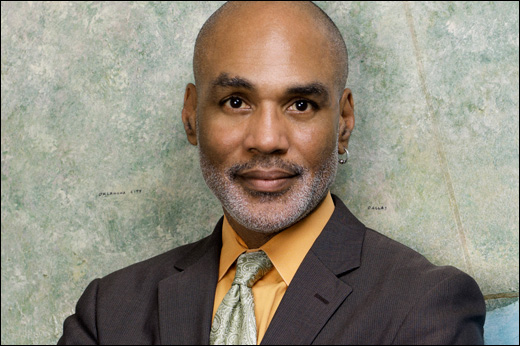
On the anniversary of the National HIV/AIDS Strategy, the Office of National AIDS Policy released an update on how the nation is progressing toward its 2020 goals. The good news is that, though much work remains to be done, new HIV diagnoses among Black women and girls have declined. The bad news is that new infections are on the rise among gay and bisexual men and we are making no progress in curbing the epidemic in the South. In this issue ONAP director Amy Lansky offers a video overview of where our nation is and where we are going.