News 2010
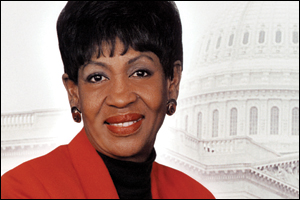
Letter from Congresswoman Maxine Waters About Minority AIDS Initiative Funding
Call your congressional representative or send them the letter below by Thursday, March 11th. The Honorable David Obey The Honorable Todd Tiahrt Dear ________: We write to request that you provide an appropriation of $610 million for the Minority AIDS Initiative in the Labor, Health and Human Services and Education Appropriations bill for fiscal year 2011. We also request that you state clearly the amounts designated for each agency in this initiative, either in the bill itself or the accompanying report language. Racial and ethnic minorities are severely and disproportionately impacted by the HIV/AIDS epidemic in the United States. According to the Centers for Disease Control and Prevention (CDC), African Americans accounted for 51% of HIV/AIDS diagnoses in 2007, although only 12% of the population is black. Hispanics accounted for 18% of HIV/AIDS diagnoses, although only 15% of the population is Hispanic. Asian Americans accounted for 1% of HIV/AIDS diagnoses, and American Indians/Alaska Natives and Native Hawaiians/Pacific Islanders each accounted for up to 1%. Combined, minorities represented more than 70% of HIV/AIDS diagnoses in 2007. These statistics demonstrate the tremendous importance of the Minority AIDS Initiative. This critical initiative provides funds to community based organizations and health care providers to help them address the HIV/AIDS epidemic within the minority populations they serve. The Minority AIDS Initiative is designed to enable organizations and providers in minority communities to improve their capacity to deliver culturally and linguistically appropriate care and services. Thus, it fills gaps in prevention, testing, treatment, surveillance, infrastructure, outreach and education across communities of color. We urge you to provide $610 million for the Minority AIDS Initiative in fiscal year 2011. We thank you for your attention to our concerns, and we look forward to working with you to expand programs for the prevention and treatment of HIV/AIDS in minority communities throughout the United States. Sincerely,
Chairman
Subcommittee on Labor, Health and Human Services and Education Appropriations
2358 Rayburn Building
Ranking Member
Subcommittee on Labor, Health and Human Services and Education Appropriations
1016 Longworth Building
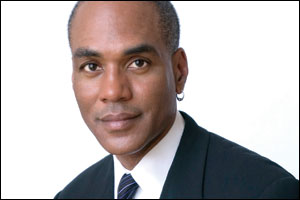
Opinion Editorial by CEO and Founder Phill Wilson
The Power of Prayerful Advocacy
On Sunday, March 7, people of all faiths came together to kick off the National Week of Prayer for the Healing of AIDS, organized by the Balm in Gilead. All week, people in churches, mosques and temples will unite with purpose, compassion and hope. Through the power of God's love, we will educate one another about HIV prevention, encourage and support HIV testing, advocate for compassionate care and treatment for everyone in every community, and unconditionally love all people living with and affected by HIV/AIDS. Simultaneously, Congresswoman Maxine Waters (D-Calif.) is circulating a letter within the U.S. House of Representatives asking the Appropriations Committee to apportion $610 million for the Minority AIDS Initiative in fiscal year 2011. This would constitute a more than 50 percent increase over the current year's funding level of $402.9 million for the initiative, yet it's far less than the AIDS epidemic in communities of color warrants. The Obama administration's 2011 budget proposes only a 2 percent bump. I've been living with HIV for more than 29 years, so I know about the power of prayer as well as of political advocacy. The National Week of Prayer must include advocacy. I pray that people of faith will join the Balm in Gilead, the Black AIDS Institute and others in supporting Congresswoman Waters' efforts to increase resources to fight AIDS in our communities. If you are interested in responding to Congresswoman Waters' call, contact your representative today to tell him or her to sign this letter by close of business Thursday, March 11. In 2008 the Centers for Disease Control and Prevention reported that the HIV epidemic in the United States was at least 40 percent larger than the CDC had previously believed. Each year, more than 56,000 Americans contract HIV. Half of those infected are Black; 70 percent are minorities. If you've been following this column, you already know that Black people account for two-thirds of new HIV cases among women and 70 percent of those among adolescents. In 2006 Black men between the ages of 13 and 29 accounted for more new HIV infections among gay or bisexual men than any other race or ethnicity. Let's be clear: Young people 13 to 29 years old are our sons and grandsons! More than half of the Black gay and bisexual men who became infected that year were younger than 30. We should be concerned. We should be outraged. We should be doing more! For more than a decade, Black leaders have been telling politicians that our community is experiencing an AIDS state of emergency. Most politicians have been slow to respond. Funding levels remain far too low to end the epidemic, so it continues to spread. Several actions taken by the Obama administration cause us to believe that we might finally be being heard. A 2 percent bump in the appropriations for the Minority AIDS Initiative, however, is not one of them. Clearly our nation is not moving fast enough. Every nine-and-a-half minutes another American gets infected. Our representatives who "get it" need our support--those who don't need a kick in the butt. As of last week, the following representatives had already agreed to sign Congresswoman Waters' letter: Howard Berman of Calif., Madeleine Z. Bordallo of Guam, Robert Brady of Pa., Judy Chu of Calif., Donna M. Christensen of the U.S. Virgin Islands, Yvette D. Clarke of N.Y., Emanuel Cleaver II of Mo., Bill Delahunt of Mass., Keith Ellison of Minn., Al Green of Texas, Raul Grijalva of Ariz., Luis Gutiérrez of Ill., Alcee L. Hastings of Fla., Mazie K. Hirono of Hawaii, Sheila Jackson Lee of Texas, Hank Johnson of Ga., Carolyn Kilpatrick of Mich., Carolyn Maloney of N.Y., Jim McDermott of Wash., Gregory Meeks of N.Y., Gwen Moore of Wis., Jerrold Nadler of N.Y., Eleanor Holmes Norton of the District of Columbia, Bill Pascrell of N.J., Charles Rangel of N.Y., Laura Richardson of Calif., Ileana Ros-Lehtinen of Fla., Lucille Roybal-Allard of Calif., Bobby L. Rush of Ill., Jan Schakowsky of Ill., Bobby Scott of Va., Edolphus Towns of N.Y., Nydia M. Velázquez of N.Y., Henry A. Waxman of Calif. and David Wu of Ore. If your member's name is not on the list and you think it should be, contact them immediately. Here's the deal, folks: If we can't end the AIDS epidemic in Black America, we can't end the AIDS epidemic in America. An emergency among Black Americans constitutes an emergency for all Americans. As we go, so goes the nation. Let the prayerful action begin. Yours in the struggle, Phill
Opinion Editorial by CEO and Founder Phill Wilson
Greater Empowerment for Black Women
March is Women's History Month, and next Wednesday, March 10, is National Women and Girls HIV/AIDS Awareness Day, a campaign that promotes greater awareness for women of how to keep from becoming infected with HIV. This exercise is particularly important for Black women because while most Black people know the facts about HIV, many times we don't act as if we know. Although Black women account for 12 percent of women in the United States, they make up almost 70 percent of women believed to have AIDS. The AIDS rate among Black women is nearly 22 times higher than that of their White peers. In 2006, AIDS was the third leading cause of death among African American women ages 25 to 44. Tragically, many of the young women who die became infected as teenagers. But just as Harriet Tubman, one of the most celebrated women in Black history, transcended her circumstances by first escaping slavery and then creating a way for others to save themselves, every Black female can both protect herself from HIV and help create an environment in which other Black people can protect themselves. But how can Black women do this in a world where they shoulder disproportionate family responsibilities, are often poorer and in worse health than other women, and are frequently abused and disrespected? And how can our community help them? One of the most important decisions that a Black woman can make is to find out her HIV status. Hilda Hutcherson, M.D., a clinical professor of obstetrics and gynecology at Columbia University Medical Center, says it best: "If you love yourself, you will insist upon your partner getting tested, and you will insist that you get tested as well." Even today, one in five Americans living with HIV don't even know that they have it. But there is no longer any excuse for this state of affairs. HIV testing is readily available--often at no or reduced cost--at many doctors' offices, public health centers, community outreach events and churches. And if you're scared of blood or needles, you can ask for an oral test, in which a swab is merely run across the inside of your cheek. Generally results are available in less than an hour. But no matter which method you select or where you decide to get it done, every sexually active Black woman needs to get HIV-tested at least once a year--and more often if you have more than one partner, are concerned about your partner's sexual faithfulness, or are uncertain of his or her status. Black women can also empower themselves by taking greater control of their lives--sexual or otherwise. Most women have the power to decide whether or not they will be intimate with someone and what the intimacy will entail. But there are a tremendous number of factors--from not having enough money, to feeling a low sense of self-worth, to worrying about violence in their relationships--that keep Black women from expressing this power in every aspect of their lives, including sexual decision making. Our community needs to support Black women as they make constructive choices about life--about education, childbearing, their future and, of course, their sexual well-being. We also need to change our cultural norms to celebrate a woman loving herself and having enough self-esteem to carry condoms and insist on using them. On top of that, it's essential that Black women start taking better care of themselves--mentally, physically, emotionally and spiritually. Between caring for their children, handling their job, looking after their elders and keeping up with their partner's well-being, many Black women place self-care last on their list of concerns. We need to change that aspect of Black American culture. It's time that we allow Black women to place themselves at the top of the priority list so that they can make healthier food choices for themselves and everyone else, find time to exercise, obtain their degrees or upgrade their skills, and engage in other replenishing activities. Because the truth is, when a Black woman becomes ill or her well-being otherwise suffers, the community of people depending on her struggles as well. For women who are already HIV positive, taking care of yourself includes seeking medical treatment and adhering to the drug and self-care regimen that your doctor prescribes. Black women can save themselves because Black women are greater than AIDS. Phill Wilson is president and CEO of the Black AIDS Institute.
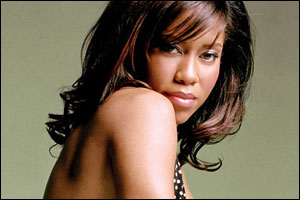
Q&A: Regina King, Actor and AIDS Activist
Talk about grabbing headlines. When actress Regina King wanted to encourage more people to get tested for HIV, she decided to do something that most Hollywood actresses would run away from as if trying to escape a monster in a horror flick: She underwent a public HIV screening. In 2007 King--a star of such seminal films as Poetic Justice, Jerry Maguire, Enemy of the State and Ray--joined other Black celebrities, such as Sheryl Lee Ralph, Rockmond Dunbar and Henry Simmons, to get checked for HIV as part of the Black AIDS Institute's Test 1 Million campaign. The campaign's goal is to have one million Black Americans screened for HIV by 2010 to increase awareness about the need to be proactive. For this private star, that brave act of public exposure aptly demonstrated how strongly she feels about this issue. King, who can be seen weekly on TNT as a star of the critically acclaimed cop show Southland, told blackaids.org that she is anxious to find any way possible to reach more young people with the message, Get tested now. What made you become involved in the fight against AIDS? How has the disease personally touched your life? When you signed on to support the Test 1 Million campaign, you were adamant that you wanted to have your results revealed publicly. Why did you think it was important to take such a proactive and unusual stance? Are there still things that surprise you about how HIV and AIDS are affecting the African American community? Do you have the opportunity to talk to young Black girls about this issue? Nick Chiles is a prize-winning journalist and author who lives in Georgia. Read more about him at chilmill.com.
The obvious reasons--the way it's affected our community more than anyone else's. We just have to educate. The more people that are involved--the more people are talking about it, putting the right information out there--the more I think our numbers will start to decrease.
One of my close friends has been living with HIV for 17 years. A lot of my education regarding it early on came from him living and learning through it. It's definitely showed me it's not a death sentence. Initially that's how most people regarded HIV: as an immediate death sentence. I think that alone makes a lot of people apprehensive about testing.
I hope that people seeing that I was strong enough or bold enough to have my results broadcasted, so to speak, would encourage or inspire people to take the test silently. It doesn't have to be something everyone has to know about, but you should know your own HIV status. I thought my celebrity could encourage someone else to be responsible about their life--and, if they are sexually active, other people's lives.
The numbers are always surprising, that they continue to rise. I'm surprised how many people are not interested in knowing their status. And so many people are not making sure they know their partner's status. Too many of us can lay down and have sex with a person and know we're okay, we've been tested and test ourselves regularly, but we don't make sure we find out that information about the person we're with. We're still having a lot of casual sex. That's amazing to me. It doesn't make any sense to go through all that you're supposed to do to keep yourself safe and not demand that of someone else.…If you love yourself and love the other person enough, make it something you guys do as a date: "Let's go get our test."
I try to speak at high schools, try to make them have girls-only assemblies so I can get female time. There are things that I think are important for young girls that they aren't aware of. A lot of girls can have sex but believe masturbation is taboo. But they think premarital sex isn't. I can't get my mind around that.
New Initiative to address HIV/AIDS among Black Americans 40 and older Heads to Houston, TX
Houston TX —The estimated rate of HIV occurrence in Houston is almost two times the national rate of new infections, with Black American’s accounting for over half of new infections. To help curb these numbers the Black AIDS Institute – the nation’s only HIV/AIDS think tank focused exclusively on Black people – is bringing its latest initiative to Houston. Trump AIDS is a unique national campaign that combines the traditional Black pastime of bid whist –a popular card game among Black Americans aged 40-plus – with community health outreach efforts designed to help educate an often overlooked HIV/AIDS demographic. Backed by the Houston Sun, Rolling Out Magazine, DSHSHIVSTD program, St Hope Foundation, Bee Busy, Inc. and other local organizations, Trump AIDS also helps raise money to fight the disease in Black communities. The program launched in Atlanta, Georgia, on January 15th and is now heading to Houston, Texas, beginning February 26th at the SRO Sports Bar & Café, 444 Northwest Mall, 9800 Hempstead Road. For a complete list of cities hosting events and to register, please visit TrumpAIDS.org. “AIDS does not only affect a select demographic such as youth, women or gay men,” says actor and AIDS activist Danny Glover, who is a celebrity co-chair of Trump AIDS. “It affects all groups of people. That is why Trump AIDS is such an important campaign for Black people to support and participate in.” Jackée Harry, the other celebrity co-chair, adds, “We must unite as a community—for the sake of our community. To do nothing is to be part of the problem.” “I am thrilled to have Trump AIDS and the Health Fair in Houston because I think the tournament is unique in that it’s targeting African Americans, many of whom believe they are immune to HIV,” says Norman Mitchell, CEO of Bee Busy, Inc. “I think this event is an excellent way to help change that,” he adds. Jeffrey Campbell with the St. Hope Foundation, Inc. echoes Mr. Mitchell’s sentiments. He says, “Trump AIDS is a great idea! Houston has a large number of Bid Whist players who I think will be open to getting tested and receiving information because it’s a part of a game that they love so much.” The health fair features free onsite HIV testing for all tournament attendees, players and guests. All are welcome to participate. The winner of the Houston tournament automatically qualifies for the national tournament to be held in Las Vegas in November, and a chance to win $45,000.00 in prizes. Other participants are able to qualify for the national tournament and have their travel expenses to Las Vegas paid by raising $3,000.00. The participants who raise the most money will join Jackee Harry, Danny Glover and others in a celebrity Bid Whist tournament. “Rates of HIV in persons over 50 years of age are 12 times higher among African Americans than among whites,” according to Timothy G. Heckman, Ph.D. “Older people do not consider themselves at risk. Physicians rarely talk to older patients about sex or other risk behaviors.” “Trump AIDS is an unprecedented event that will provide Black people who are not actively engaged in the HIV battle with access to important health information,” says Black AIDS Institute COO Aron Myers. “This is a tremendous opportunity for the Atlanta community and good citizenship for all.” “There’s no way to end the AIDS epidemic in Black communities without targeting this population,” adds Black AIDS Institute founder and CEO Phill Wilson. “The Black AIDS Institute has spent the last decade meeting Black folks where they are. Trump AIDS is a perfect example of identifying an indigenous pastime in our community and using it to deliver culturally effective messaging. Everything about this effort, from the date and city where we launched the campaign, to its celebrity co-chairs—Danny Glover and Jackée Harry—celebrate the Black experience.” Participants will be encouraged to get involved in the fight to end the AIDS epidemic in the Black community while having fun and potentially winning prizes. About the Black AIDS Institute Founded in May of 1999, the Black AIDS Institute is the only national HIV/AIDS think tank focused exclusively on Black people. The Institute's Mission is to stop the AIDS pandemic in Black communities by engaging and mobilizing Black institutions and individuals in efforts to confront HIV. The Institute interprets public and private sector HIV policies, conducts trainings, offers technical assistance, disseminates information and provides advocacy mobilization from a uniquely and unapologetically Black point of view. For more information, please visit www.BlackAIDS.org.