News 2010
NAACP Names New Board Chair
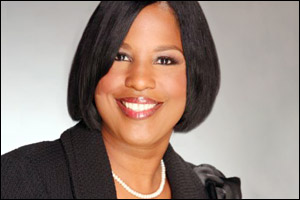
The National Association for the Advancement of Colored People (NAACP) has announced the selection of Roslyn M. Brock, 44, as chairwoman of the board. Previously the board's vice chairwoman, Brock will assume the position from Julian Bond, 70, furthering the generational change signaled when the civil-rights organization selected Benjamin T. Jealous, 37, as its president. Brock is the fourth woman and the youngest person ever to serve as board chair. “We’re looking at a generational shift in our communities,” Ms. Brock says. “We have a 48-year-old president in the White House, an NAACP president who was 35 at the time of his election and a 44-year-old board chair. The wisdom of those who stood the test of time got us to this point, and the youth are who will ensure the future legacy of this organization.” The NAACP is now led by people too young to have experienced legalized segregation. Brock became involved with the NAACP over 25 years ago, when she served as a youth board member and has served in many capacities. She was groomed for the position by Bond and other NAACP elders, including former chairwoman Myrlie Evers-Williams. She is currently vice president of Bon Secours Health Care in Maryland and has more than 20 years of experience in health care administration and policy.
Danny Glover's Labor of Love
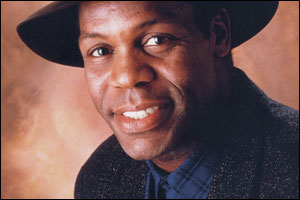
As the rest of the world watched Haiti begin its arduous climb out of the chaos of January's catastrophic earthquake, veteran actor, humanitarian and Black AIDS Institute board member Danny Glover took one look at all the developments and shook his head. As he saw it, U.S. military personnel had moved in a little too quickly to take control of the country's rescue and recovery efforts, and now they were at the forefront of the island's peacekeeping operations too, beating countries like France, the United Kingdom and China to the punch. While many in the Haitian government have responded positively to U.S. efforts to help the country regain stability, Glover is concerned about potential underlying motives. He says we may be overlooking what could be the United States' covert attempt at neocolonialism. "Twenty thousand troops on the ground, and you can't get water and food to the people?" he asked. "We have to make sure this is not a militarization process all under the guise of security.…Rescuers were coming from all over Latin America--Brazil, Venezuela--[and] even Europe to help Haiti. And yet the U.S. has control over the airspace and determines who lands and doesn't land there. This is of concern to a lot of people." It's hard to fault Glover for being a bit protective. A longtime fan of the island--Latin America's first independent nation and the world's first Black-led republic--the actor fell in love with Haiti when he first traveled there in 1973 for a dose of culture and history. "Before I went, I didn't know anything about the Haitian revolution," he said. "I didn't know anything [about] its heroes: Toussaint L'Ouverture, Jean-Jacques Dessalines and others. But I came to learn that the U.S. played a role in undermining Haiti's sovereignty over the years. It purposely attempted to maintain a relationship [with Haiti] that would bring about a legacy of instability." Glover has felt so strongly about this issue that he vowed 25 years ago to finance and direct a movie about the 18th-century slave uprising that led to Haiti's independence, despite concerns about the movie's commercial prospects, given that it would have a Black director and no White stars. Although he has managed to raise more than $18 million for the project--much of it coming from his longtime friend Venezuelan president Hugo Chávez, who gave Glover permission to shoot the film in his country--the epic has been stalled. "Everything has changed with the world economy, and it's made raising money for the film difficult," Glover says of his labor of love, for which he has been able to get commitments from stars like Don Cheadle, Mos Def, Wesley Snipes and Angela Bassett. "But I'm not abandoning it," he adds. "Perhaps maybe now with what's just happened in Haiti, people will understand why this story is so important. It may soon be the perfect time…we'll see." One thing's for sure, though: For Glover, the timing has never been better to up the ante in the war on HIV. The actor is pulling triple duty as a board member for the Black AIDS Institute, a UNICEF ambassador and a global ambassador for the United Nations Development Program. In the latter capacity, he has traveled from Trinidad and Tobago to Tanzania to support programs that promote HIV testing, the prevention of mother-to-child transmission, and stigma reduction. "My brother lives with HIV/AIDS. He has been living with HIV for the past 20 years," Glover told young people in Tanzania, UNICEF reports. "The work and the responsibility we have are not simply to our immediate families but also to the community that we are living in."
To that end, Glover has submitted written testimony about the AIDS pandemic to the U.S. Congress: "We have the moral responsibility to make a difference while we can: not only for those currently living but for those future generations as well." He also co-chairs, along with actress Jackée Harry, the Trump AIDS National Bid Whist Tournament. The initiative, which will promote HIV awareness and testing in more than 25 cities nationwide, is sponsored by the Black AIDS Institute. When he's not helping to battle the epidemic, the Emmy-nominated thespian has his 9-to-5 to keep him busy. He's starring in a slew of upcoming films, including the comedy Death at a Funeral, with Chris Rock and Martin Lawrence; and the animated adventure Alpha and Omega, with Christina Ricci and Justin Long. Tomika Anderson is a freelance writer based in Brooklyn, New York. Her work has appeared in Essence, POZ, Real Health and Ebony magazines, among others.
HBCU Student Leaders Pledge to Play their Part in the Fight against AIDS
More than 70 student leaders from 22 Historically Black Colleges and Universities (HBCUs) gathered on the campus of Clark Atlanta University for the 2010 LIFEAIDS (Leaders in the Fight to Eradicate AIDS) Black Student Mobilization Summit. The Summit, held in conjunction with the ACT Against AIDS Initiative, provided the students with an interactive learning experience where they could gain knowledge, identify challenges and resources, and make commitments to promote HIV awareness, prevention, testing, treatment, and fight stigma -- but most of all, end the AIDS epidemic.
The weekend kicked off with dinner and an open mic, where students performed poetry, songs and other pieces. Friday night’s festivities also included a film festival and discussion of three short films centered on HIV from the Black AIDS Short Subject Film competition. The films covered a variety of themes including HIV and the church, stigma, HIV testing, and HIV and women. Even though many of the students had not taken an HIV test, most were well acquainted with the notion of getting tested. A junior from Howard University, Nijeul Porter confessed that Howard does a great job of offering HIV testing. “I can see the testing trucks in my head right now,” he said shaking his head, disappointed with himself, “this was a reality check.” Nijeul is not the only one who had assumed that he was immune to HIV. Many students realized that they need to take a blunt “in your face” approach to spreading the word on campus that Black youth are contracting the virus in large numbers. In 2006, Black youth made up nearly 70 percent of new AIDS diagnosis among teens in the U.S. On Saturday facilitators conducted workshops on Social Networking and HIV 101, where students learned the difference between HIV and AIDS, and the four fluids--blood, semen, vaginal secretions and breast milk--by which an individual can contract HIV. In a second workshop, Fact vs. Fiction, students were reassured that kissing does not transmit the virus except under extreme circumstances, like when there are open sores in the infected person’s mouth and blood is present. Students were also given opportunities to voice their opinions on stigma, policy and possible vaccines like PEP and PREP. Students also talked about their own initiatives for HIV prevention. Nicole Carter, an RA at Benedict College, acknowledged that condoms aren’t allowed in the dorms and neither is visitation. She admits to keeping a stash for students on her hall because “I’d rather [students] get caught being safe then to get 'caught' being unsafe and get 'caught' twice.” Community activist Marvelyn Brown and the Beyond the Diagnosis skits forced students to re-think their behavior and encourage others to do the same. Celeste Davis from University of Arkansas Pine Bluff calls the weekend “the ultimate gift." On Sunday morning the students participated in workshops on working with the media and starting and organizing an HIV/AIDS event on their campuses. Each student group presented their plans for raising HIV/AIDS awareness at their school. The summit concluded with each individual making a personal commitment to take specific action before the end of the semester to help end the AIDS epidemic in their community. LIFEAIDS is an initiative sponsored by the Black AIDS Institute and The Magic Johnson Foundation in conjunction with the Center for Disease Control and the Act Against AIDS campaign. For more information on the LIFEAIDS initiative contact Lenee Richards at
Letter to the Editor
The Budget and Beyond: A Call to Action for the HIV/AIDS Community and Government Officials: What we need beyond increased funding to end HIV/AIDS in this U.S. While we applaud the President’s request to increase HIV/AIDS funding by $40 million (1.7 percent) in the Fiscal Year 2011 budget, I am concerned that this number falls short after the 8 years of flat-funding under the previous administration. Sometimes we count our blessings no matter how small they are, but we should never turn a blind eye to fully funding what is needed to care and treat and prevent HIV/AIDS. The budget, the framework of how we spend resources, impacts the major federal agencies that oversee HIV/AIDS programming in the U.S. As HIV/AIDS advocates, we must hold government officials accountable during the appropriations process: it is imperative that AIDS dollars are disbursed in a manner that reflects the impact of the epidemic. This means ensuring that communities hardest hit by the AIDS epidemic receive the funding they need. In 2008, the Centers for Disease Control and Prevention (CDC) reported that HIV incidence was 40 percent higher than previously estimated, with over 55,500 new HIV cases occurring in the U.S. annually. Of these cases, 70 percent were in communities of color. African Americans alone accounted for just under half of all new HIV infections, followed by Latinos, who showed a significant increase in HIV incidence at 18%. Incidence rates among Asian and Pacific Islander and Native American/Alaska Native communities showed dramatic increases as well. The AIDS community--and federal agencies--must look beyond HIV funding when it comes to mitigating HIV/AIDS in the U.S. We must address the socioeconomic determinants that have undermined the overall health and welfare of communities heavily impacted by AIDS: lack of affordable housing; limited access to education and health care; and high rates of malnutrition, substance use, incarceration and poverty. These determinants have helped lay the foundation for HIV/AIDS in minority communities and must be addressed through appropriate resources--and the will of the AIDS community. I believe that re-investment in America’s health infrastructure through health reform and increased HIV/AIDS funding will lead us into an era where sound public policy, evidence-based health and HIV/AIDS programming; and community meet and produce great outcomes. Ravinia Hayes-Cozier is director of government relations and public policy for the National Minority AIDS Council in Washington, DC. The views expressed in this letter are not necessarily those of the Black AIDS Institute.
Q&A: Gregorio Millett, Senior Policy Adviser, Office of National AIDS Policy
Q&A: Gregorio Millett, Senior Policy Adviser, Office of National AIDS Policy
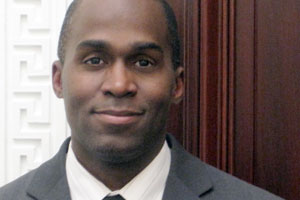
Longtime HIV researcher and activist Gregorio Millett, M.P.H., formerly with the Centers for Disease Control and Prevention (CDC) and now working at the White House's Office of National AIDS Policy, is helping to lead the Obama administration's effort to develop our country's first National HIV/AIDS Strategy. We caught up with Millett to find out what motivates him and how the Black community figures into the plan. What inspired you to take up the cause of addressing HIV/AIDS? I grew up in New York City in the 1980s and 1990s. My father worked as a microbiologist at St. Vincent's Hospital in Greenwich Village, which at the time was ground zero for the AIDS epidemic on the East Coast. People everywhere were visibly sick. I had just graduated from college and was contemplating law school to pursue a career in civil rights. I watched Black men whom I admired deeply--like Craig Harris, Donald Woods, Essex Hemphill--pass away. I decided that I needed to do my part. I started attending ACT UP meetings and volunteered to lead workshops for GMHC [Gay Men's Health Crisis], teaching Black and Latino men who have sex with men [MSMs] about HIV prevention. Eventually I realized that I could make a greater impact in public health rather than law school. What personally motivates your HIV work? Another gross generalization that I tried to shed light on through research was the "down low" and its relationship to HIV infection among African Americans. My colleagues and I were among the first to scientifically prove with quantitative data that identifying as "down low" was not associated with greater sexual-risk behaviors with male or female partners; nor was it associated with a greater likelihood of HIV infection. Dr. Kevin Fenton at the CDC recently used the data to dispute the role of the "down low" in HIV-infection rates among African Americans. Here at the White House, I hope to inform HIV policy--and particularly the National HIV/AIDS Strategy--by bringing my knowledge of scientific data in HIV-prevention research, HIV epidemiological studies and behavioral/biomedical interventions. Why is a national AIDS strategy important to the well-being of Black people? What is the timeline for creating the strategy and for the community to get involved? What surprised you most or was most unexpected at the town hall meetings? Sheryl Huggins Salomon is a Brooklyn, N.Y.-based writer and editor who can be found @sherylhugg on Twitter.
I have always hated gross generalization to explain complex problems. I used to bristle at the stigmatization of Black gay men--that HIV prevalence was likely higher in our community because of promiscuous sex and rampant drug abuse. It compelled me to conduct a series of research studies while at the Centers for Disease Control and Prevention that proved that Black men who have sex with men, and African Americans generally, do not engage in higher-risk behaviors that place us at greater risk for HIV infection. In fact, I found that existing community prevalence, density of sexual networks and less access to care likely explained the racial disparities in infection rates.
A: African Americans make up 12 percent of the population but 46 percent of new HIV infections each year in the United States. We also make up about half of the more than one million people living with HIV in the U.S. We are more likely to be HIV-positive and not be aware of our diagnosis than other communities, more likely to be diagnosed with AIDS rather than HIV, less likely to access HIV care after being diagnosed and more likely to die from HIV, even in the era post antiretroviral therapy.
We are balancing competing pressures: moving quickly in light of the urgent need, and being deliberate and thorough. In terms of community input, [since August 2009] we convened 14 community discussions with nearly 5,000 people nationally, and we received more than 500 comments from our online Call to Action. There will be additional opportunities for community members to comment on the strategy through Presidential Advisory Council on HIV/AIDS meetings.
The persistence of HIV stigma and discrimination. We heard stories of HIV-positive individuals in urban coastal cities having difficulty accessing dental care. We heard about providers in rural America who were afraid to touch or to go near people living with HIV. I have been involved in HIV work since the early '90s--HIV stigma was a major stumbling block then and remains a stumbling block two decades later.