News 2009
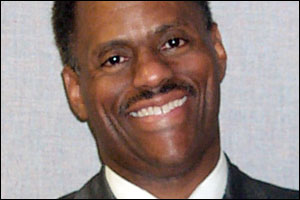
Milan will continue to serve on the Institute Board as Chair Emeritus
JESSE MILAN STEPS DOWN AS BLACK AIDS INSTITUTE CHAIR
Jesse Milan, Jr. steps down after seven years serving as Board Chairman for the Black AIDS Institute. Milan, replaced by incoming Chairman A. Cornelius Baker, will continue to serve on the Institute Board as Chair Emeritus.
At a recent Board meeting, Institute Board Members and CEO and Founder Phill Wilson expressed heartfelt appreciation to Mr. Milan for his tireless leadership on behalf of the Institute.
Milan has spent most of his professional life in the AIDS struggle. He is Vice President and Director of Community Health Systems at the Altarum Institute and leads their efforts in HIV/AIDS and other health disparity issues from its offices in Washington, DC. Prior to joining Altarum in 2008, Milan spent 10 years at Constella Group/SRA International where he served as Vice President of the Health Communications Division. Upon his hiring, Milan served as project director for the National Prevention Information Network (NPIN). During his tenure, he expanded the project to cover HIV/AID, STDs, and TB. Later as Vice President for Constella Group’s Center for Global Health Convergence, Milan managed Constella’s Advisory Board, fostered public-private partnership opportunities in the domestic and international arena, and served as corporate philanthropy officer. He served for five years as co-chair of the CDC/HRSA Advisory Committee on HIV and STD Prevention and Treatment, at the appointment of the U.S. Secretary of Health and Human Services. In 2009, he served as co-chair of the External Peer Review of the CDC’s Division of HIV/AIDS Prevention’s $700 million domestic HIV/AIDS prevention portfolio. The committee’s report was presented last month to the CDC’s Board of Scientific Advisors. Milan also directed the $21 million City of Philadelphia’s Department of Public Health AIDS office, and also served as Health Department co-chair of the Philadelphia HIV Community Planning Group, Chair of the Philadelphia Ryan White Title 1 Planning Council, and was President of three other nationally recognized HIV/AIDS organizations.
Jesse Milan, Jr. has graciously shared his 27 years of living with HIV experiences through volunteerism, lectures, broadcast interviews and international speaking tours, at the 2000 Democratic National Convention and earlier this year at the White House to help launch the CDC’s new Act Against AIDS campaign. He leverages his secular resources and the public to gain more secure footing in the crusade.
Milan leaves people with HIV/AIDS with these thoughts, “Do not feel alone, and know that there are people and organizations that are ready and willing to embrace and help.”
As long as people like Jesse Milan, Jr. are around—we at the Black AIDS Institute hold this statement to be true.

Q&A: White House AIDS Czar Jeffrey Crowley
Q&A: White House AIDS Czar Jeffrey Crowley
This fall, Jeffrey Crowley, director of the Obama Administration's Office of National AIDS Policy (ONAP), traveled with his team to a dozen cities across the country, seeking opinions about how to reduce HIV infections and improve the quality of healthcare and support services available to people living with HIV/AIDS.
In addition to these White House-sponsored discussions (see list of locations where these meetings took place), "unofficial" grassroots town-hall meetings were held from Dallas to New Orleans to Detroit. Input was also solicited on the ONAP website. As the official community discussions draw to a close, we spoke with Crowley about what his office has learned about HIV/AIDS in Black America through these discussions and the next steps needed to create the National HIV/AIDS Strategy that President Obama has promised.
Q: What did you discover about AIDS in Black America from these meetings that you just didn't know before?
A: We learned that [the community known as] "Black America" is diverse. For example, we heard from African Americans who are very engaged in HIV work and were willing to publicly disclose their status when they were HIV positive. In other places, we observed that elected officials were less engaged in responding to HIV/AIDS and many people were unwilling to speak about HIV/AIDS in public, all of which fuel stigma.
Q. Did anything in particular strike you during the Jackson, Mississippi, testimony?
A. Many people mentioned experiences with health professionals who didn't seem to understand the facts about HIV and how it's spread. Doctors and nurses would still refuse to treat people with HIV or even stand at a distance to avoid physical contact. However, this was not unique to the South.
This raises questions about enforcing existing antidiscrimination laws, and it demonstrates the level of misinformation and ignorance that still exists in the U.S., even among some health care professionals. It suggests that we need to take a fresh look at basic HIV education for physicians and other health-care providers.
Q. What happens after the Town Halls are over?
A. A report summarizing major themes across the community discussions, both at the official and unofficial town-hall meetings, and the online Call to Action will be released on the Office of National AIDS Policy website in early 2010.
The working group that will be assisting us in crafting the National HIV/AIDS Strategy will consider recommendations received from the public along with recommendations and insights shared by the Presidential Advisory Council on HIV/AIDS, a committee of high-level experts in HIV/AIDS and other related areas. The public will be given an opportunity to review and comment on the strategy before it is finalized.
Q. Based on what you've seen so far, describe one concrete step that needs to be implemented to address AIDS among Black Americans?
A. According to Centers for Disease Control and Prevention, African-Americans are the only racial or ethnic community where a greater proportion of HIV-positive individuals are unaware of their HIV status rather than aware. While testing is not the only thing we need to do, we need to increase the number of African-Americans who get screened for HIV regularly and link people who test HIV-positive to receive appropriate treatment.
It's not too late to submit your comments about a National HIV/AIDS Strategy. The final community discussions will be held in New York on December 4 and in Puerto Rico on December 14. Or you can e-mail your recommendations to
Diana Scholl is a New York-based writer and AIDS activist, who blogs about AIDS policy and activism for the Housing Works AIDS Issues Update and contributes to New York Magazine.
Take a Moment to be Greater Than
Take a Moment to be Greater Than
Greater Than AIDS is a movement inspired by the notion that as Black Americans we have been greater than any challenge we have ever faced.
Click Here to Become Greater Than
Celebrate World AIDS Day by joining the Greater Than AIDS movement and passing the Greater Than AIDS video to a friend. Just as AIDS started one person at a time—it will end one person at a time.
Become a fan on Facebook
As Black America, we’ve been greater than any challenge we’ve ever faced. And, with your help, we too can be greater than AIDS. Click here to join us and find out what you can do.
The Black AIDS Institute Welcomes New Board Members
INSTITUTE ANNOUNCES 2010 BOARD ELECTION RESULTS
The Black AIDS Institute recently held Board of Director elections to determine executive leadership for 2010.
The new Board Members are a highly diverse group of leaders with specialties in public policy, law, finance, government health programs, editorial, and business entrepreneurship. The Board also comes from a wide range of personal backgrounds including both heterosexual and gay Black men and women, some living with HIV themselves, and representing multiple age groups.
The newly elected Executive Committee brings a wealth of diverse experience and includes incoming Chairman A. Cornelius Baker, Senior Communications Advisor for AED Center on AIDS & Community Health, National Policy Advisor for the National Black Gay Men’s Advocacy Coalition and former Executive Director of the National Association of People with AIDS (NAPWA), a Black gay man who has over two decades of experience in policy and government at the local and national; 1st Vice President Cheryl Cooper, former Chief of Staff for AARP and former Executive Director of the National Council of Negro Women, Inc.; 2nd Vice President Chris Cathcart, Executive Director One Diaspora Group, a highly sought after public speaker and author on philanthropy; Treasurer Sid Porter, a CPA and retired controller for the City of Inglewood, a person living with HIV; Secretary Grazell Howard, an attorney and former Vice President of the National Coalition of 100 Black Women; and Chair Emeritus Jesse Milan, Jr., Vice President and Director of Health Services for the Altarum Institute and 2008 recipient of the Hero in the Struggle award.
"The Black AIDS Institute represents the best of our community's leadership to end the HIV epidemic,” says Black AIDS Institute Board Chairman Cornelius Baker. “During the next year, we will continue to champion the needs of men, women and children throughout the African Disapora whose lives have been plagued by this disease. I am very honored to chair its Board of Directors at this critical moment.”
Three new people were elected to the Board of Directors including Angela Bronner Helm, Senior Programming Manager (editor) for AOL Black Voices Life and Style; Harry Simpson, Executive Director of CEO Point of Change, Inc. and responsible for HIV and substance abuse treatment programs; and Eugene Cornelius, Deputy Associate Administrator for Field Operations of the U.S. Small Business Administration.
“I am confident the newly elected leadership brings the necessary diverse skill sets the Institute needs to move forward in our mission to end the struggle against HIV/AIDS in Black communities,” says Black AIDS Institute CEO and Founder Phill Wilson.

Institute Staff Address Key Topics and Host an Outreach Booth
Black AIDS Institute at U.S. Conference on AIDS
The Black AIDS Institute participates in the National Minority AIDS Council sponsored U.S. Conference on AIDS with presentations on Black HIV Mobilization in the South and the Black AIDS Media Partnership. The Institute also hosted an outreach booth to encourage participation in the Institute’s African American HIV University (AAHU) and Test 1 Million programs.
Institute Training and Capacity Building Manager Raniyah Abdus-Samad and Training and Capacity Specialist Janet Quezada conducted an educational workshop on the Challenges and Successes in Implementing HIV/AIDS Mobilization Programs in the South: Experiences from 3 Southern States--Georgia, Louisiana, and Arkansas.
Institute CEO and founder Phill Wilson presented on the Black AIDS Media Partnership (BAMP) at both the Act Against AIDS plenary and the Women’s Institute session at the conference. The Media Partnership is the driving force behind the national Greater Than AIDS campaign created jointly by the Black AIDS Institute and the Kaiser Family Foundation.
For more information on the Greater Than AIDS campaign, visit www.greaterthan.org.
For a copy of the Challenges and Successes in Implementing HIV/AIDS Mobilization Programs in the South presentation, email