News 2008
Opinion Editorial
The Black AIDS Crisis – Time to Turn Words into Action
By Phill Wilson, Exec. Dir. Black AIDS Institute
Black America's response to the AIDS crisis is finally gaining momentum. More Black people than ever before know someone with HIV/AIDS and/or are talking about it. In light of this progress, it is tempting to think that the AIDS epidemic in our community is under control. But this is no time to be complacent. Black people are still being diagnosed, progressing to AIDS and dying from the disease more often than any other racial group in America . To be fair, the progress we've made against AIDS is remarkable. High-profile community members ranging from Oprah to Obama have taken HIV tests in front of the television cameras in a bid to encourage other Black Americans to get tested. And just last month, many of our community leaders came together with the Centers for Disease Control in Atlanta to plan the next phase of the “Heightened National Response to the HIV Crisis among African Americans,” which is spawning innovative HIV prevention campaigns across the United States. This is exactly what's needed – we need to take responsibility for the health of our community. And in some ways, all this increased public education is beginning to pay off. In a recent survey, Black people were the only ethnic group to say that HIV is the number one health problem in America . So why do I still say, “AIDS in America today is a Black disease?” The truth is, while awareness – and lip service – about this disease may be rising, too many of us still don't know our HIV status, aren't in appropriate care and treatment, and aren't taking concrete steps to protect ourselves and our loved ones from becoming infected. When it comes to this disease, we've got to walk the talk. The facts remain startling. Over 50% of HIV-positive African Americans do not know they are HIV positive. For those who do get tested, it is often too late: Too late for treatment to be fully effective, too late to stop the progression from HIV to AIDS and too late to prevent significantly more AIDS-related deaths in our communities. And there is a cruel irony here: Many of our people are dying just as HIV treatment reaches new heights. Today's medications mean HIV can be successfully treated over the long term with just 1 or 2 pills a day. This is amazing progress compared to just a decade ago, when treatment was difficult to take and involved lots of pills. But because we're not getting tested for HIV early and often, many of our brothers and sisters are missing out on these advances. Behind all of this is the ongoing challenge of HIV stigma. Too many people are still too scared to take the test for fear of how others may react to a positive diagnosis. And too many people are discouraged by damaging misinformation and myths in our community about HIV. But times have changed. Today, the stigma Black America really needs to be concerned about is the shame of not getting tested, and thereby not doing what it takes to end the AIDS epidemic in our communities. It is time for each one of us to take responsibility for the health – and the future – of our community. I am one of a growing army of Black folks who are determined to safeguard our future. For now, AIDS is a Black disease. But when we have a clear plan, with specific goals and objectives, we do overcome. We learned that with the civil rights movement in the 1960s. And I can assure you, we will learn that as we work to end the AIDS epidemic in Black America. In fact, at the Black AIDS Institute, we already have a plan to stop AIDS. Our “Test One Million” campaign will: Black America can win the battle against HIV/AIDS. But it's going to take all of us to play our part – and be part of the solution. We need regular HIV testing for all Black people, access to early treatment for those of us who test positive, and education to combat the misinformation and stigma that surrounds HIV. Yes, Black people are finally talking about HIV/AIDS. And now it's time to turn words into action. Take control. Talk to your family and loved ones about HIV and get tested at least once a year. Phill Wilson was diagnosed with HIV over a quarter century ago. He is the founder and chief executive officer of the Black AIDS Institute. For more information about the Test One Million campaign or to find free confidential HIV testing in your area, go to www.blackaids.org .

News
TAVIS SMILEY DISCUSSES HIV/AIDS WITH PHILL WILSON, PARNESSA SEELE AND BENY PRIMM
"There are an estimated 1.2 million Americans living with HIV/AIDS and nearly one quarter of them don't know they are infected. In Black communities, it is even worse: there are roughly 600,000 Black folks living with HIV and over 50% of us don't know that we have the virus. This is one of those issues where we can have universal agreement; whether you're on the left or right, you are Democrat or Republican or Independant, you understand that it is critically important for people to know their status."
To listen to the entire interview, please click here for Windows Media Player or here for Quicktime.

Obama Makes History
The Black AIDS Institute joins the community in celebrating the historic milestone of Sen. Barack Obama’s presumptive primary win, making him the first Black presidential nominee of a major political party. After months of often-difficult campaigning, the electoral process has worked and the Democratic Party has made its choice.
The long electoral season is not over, however. Voters must now meaningfully weigh the policy prescriptions of both Sen. Obama and Republican nominee-to-be Sen. John McCain. America faces many great challenges in the coming years, and the senators have many contrasting ideas for how to deal with them. But here’s one question that all Black voters, whether Democrat or Republican, must demand clear, complete answers to: How will the candidates end the AIDS epidemic? More than 25 years after AIDS emerged, America still does not have an overarching strategy for dealing with its own epidemic. We wisely demand that any poorer nation asking for our help in fighting AIDS first come up with just such a plan, yet our national response remains haphazard. No wonder the U.S. epidemic is now larger than ever, at an estimated 1.2 million people infected. And no wonder the impact has become so lopsided, with Blacks accounting for nearly half of those newly infected every year. In November 2007, the Black AIDS Institute surveyed all announced candidates in both parties and reviewed their public records on AIDS. The report, We Demand Accountability, found striking differences between the Republican and Democratic fields, with all Democratic candidates being far more likely to have stated or shown decisive support for strategies to end the epidemic. But questions remain unanswered for both Sens. Obama and McCain. Laudably, Sen. Obama long ago published his plan for dealing with AIDS. In it, he vows to craft and begin implementing “in the first year of his presidency … a comprehensive, HIV/AIDS strategy that includes all federal agencies.” Sen. Obama has also pledged to support both syringe exchange programs and comprehensive sex education in schools, as well as to end the federal government’s promotion of abstinence-only sex education. Meanwhile, he as led by example on the urgent issue of Black Americans learning their HIV status. During a 2006 trip through sub-Saharan Africa, Sen. Obama took an HIV test with his wife Michelle and has continued to use his bully pulpit to highlight the need for HIV testing. On treatment access, Sen. Obama’s AIDS platform declares his "strong support" for the Ryan White CARE Act, which is the primary vehicle for federal funding of the AIDS care safety net, and he has cosponsored a bill to make Medicaid more accessible to people living with HIV. But his platform’s primary solution to the building AIDS treatment crisis in America is the broader health care reform he has proposed. While AIDS certainly must be addressed holistically, voters must insist Sen. Obama explain what he will do to ensure poor and uninsured people living with HIV/AIDS get access to life-saving treatment now, whether his broader reforms are passed or not. Sen. McCain, meanwhile, has said little about how he will respond to the epidemic. He has not published an AIDS platform and has not answered queries from several AIDS organization, the Institute included. As a long-serving senator, his record is similarly sparse. Though he was an original cosponsor of the CARE Act, he has not been meaningfully involved in AIDS treatment policymaking since. Nor has he supported efforts to expand Medicaid access to people living with HIV. Sen. McCain has however repeatedly backed legislation that discriminates against people living with HIV/AIDS. He has supported the existing ban people living with the virus entering the U.S.; a bill seeking to involuntarily test patients for HIV before surgery; and one seeking to imprison HIV-positive health care workers who participate in surgery. (Standard safety procedures for all surgeries remove risk of HIV transmission between doctor and patient.) Republican voters must demand Sen. McCain explain his thoughts on these troubling positions and, more to the point, outline his strategy for ending the epidemic in America. To learn more about the records and positions of Sens. Obama and McCain, and to read a primer of what questions Black voters should demand any candidate answer about AIDS, check out our report, We Demand Accountability, at www.BlackAIDS.org.
NAACP ED Statement
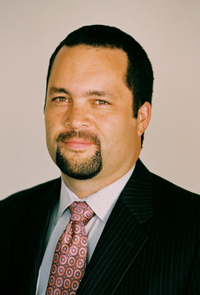
The Black AIDS Institute joins the rest of the community in welcoming Benjamin Jealous as the NAACP's next executive director. We salute the NAACP for having the vision to embrace new leadership from the ranks of Black America's next generation of pioneers. The talented, young Jealous' work on behalf of Black America make him an exciting candidate to lead the storied institution into the 21st century.
We are particularly encouraged by Jealous' past commitment to leading in the struggle against AIDS in our communities. As executive director of the National Newspaper Publishers Association at the turn of the century, Jealous bravely led the agency into a foundational partnership with the Black AIDS Institute. He opened the organization to our team of expert journalists covering AIDS, inviting us to provide technical assistance to NNPA's member newspapers and file groundbreaking stories for its invaluable news wire. With Jealous' leadership, NNPA and the Institute brought daily news and analysis back home from the historic 2000 International AIDS Conference in Durban, South Africa. Our reports filled local Black newspapers around the country with cutting edge science, profiles of people living with and fighting against HIV worldwide, and feature stories explaining the epidemic in both our communities and those throughout the African Diaspora. The journalism partnership Jealous helped build continues today, generating hundreds of stories about HIV/AIDS a year for millions of Black readers. The Institute looks forward to once again working with Jealous to educate and mobilize our community against HIV/AIDS. The NAACP has been a key leader in the Black AIDS Mobilization Against HIV/AIDS, and we're certain Jealous will continue to build upon the organization's indispensable role. Welcome aboard Benjamin!
Honoring Same-Gender Families Saves Lives
The Black AIDS Institute applauds the California Supreme Court's decision to strike down the state's law limiting marriage to opposite sex couples. The ruling is a blow against homophobia and sexual stigmatization and, therefore, a blow against HIV/AIDS.
It is by now clear that shame and stigma surrounding sexuality-whether gay, straight or bisexual-is deadly. When our public policies reinforce a social order in which some relationships are valued more than others, we push people to the margins. When we refuse to affirm open, healthy relationships, we encourage hidden, self-damaging ones. And that's something Black America cannot afford. As a community, we can no longer accept the plague ravaging members of our families. Study after study has shown HIV infection rates among Black gay and bisexual men to exceed those in some of the hardest hit corners of the globe. A seven-city U.S. Centers for Disease Control and Prevention study found 46 percent of Black gay and bi men to already be HIV positive. And the toll is particularly high among young men: A New York City health department study last fall found that a stunning nine out of 10 HIV infections among gay and bisexual men under age 20 were among Blacks and Latinos. Many different factors come together to drive these trends, ranging from the social to the biological. And far too many questions remain unanswered: Research shows, for instance, that despite the racial disparity in sexually transmitted infections, Black gay and bisexual men take fewer sexual risks than their peers. We must dig deeper to understand these sorts of complexities surrounding our sexual health. One villain, however, is clear: Sexual shame and fear. And public policies that devalue loving, supportive relationships help spread these emotional vectors of disease. Moreover, our nation's sexual caste system is not only unhealthy, it's immoral. "Homophobia is as morally wrong and as unacceptable as racism," the late Coretta Scott King reminded us. "We ought to extend to gay and lesbian people the same respect and dignity we claim for ourselves. Every person is a child of God, and every human being is entitled to full human rights." From child custody to health benefits, our government denies those rights daily through intrusions into the family decisions of same-gender couples. They are denied access to more than 1,000 legal rights and responsibilities that marriage brings. It's an injustice carried out against a broad swath of society. The 2000 Census found same-sex households in 99.3 percent of U.S counties. And not just white people: 10.5 percent of those households were Black and 11.9 percent were Latino. And not just the couples themselves: 34 percent of the female couples and 22 percent of the male couples were raising at least one child in their home. The Black AIDS Institute welcomes the day when every state follows the lead of California in working towards true equality for all of our families.