News 2008
U.S. LEADS GLOBAL EFFORTS AGAINST AIDS, BUT NEGLECTS THE EPIDEMIC IN BLACK AMERICA, SAYS NEW REPORT
Black AIDS Institute Report Finds AIDS in segments of Black America as Severe as in Many African Countries, But Receives Much Less Attention.
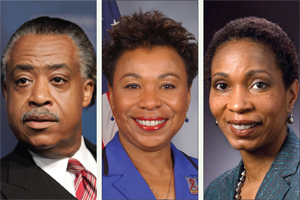
"More Black Americans are infected with HIV than the total populations of people living with HIV in seven of the 15 countries served by PEPFAR," noted Phill Wilson, CEO of the Black AIDS Institute and one of the authors of the report, referring to the U.S. government’s program of extraordinary aid for countries severely impacted by the epidemic. "Were Black America a separate country, it would elicit major concern and extensive assistance from the U.S. government. Instead, the national response to AIDS among Black Americans has been lethargic and often neglectful." "Left Behind!" illustrates a clear and startling gap between the U.S. government’s appropriate concern about AIDS overseas, and its ongoing denial of the epidemic at home – despite the fact that, in areas of the United States such as Detroit, Newark, New York, Washington D.C. and the Deep South, HIV levels among segments of the Black community approach those of many severely affected countries in Africa. For example, HIV prevalence among middle-aged Black men in Manhattan is almost as high as overall prevalence in South Africa, home to the world’s largest population of people living with HIV. The report points out that, while the U.S. government requires countries receiving PEPFAR support have a national AIDS strategy in place, the United States itself has no strategy for its own epidemic, and was one of 40 countries that failed to fulfill its commitment to report to the Joint United Nations program on HIV/AIDS (UNAIDS) on its response to AIDS at home. At the same time that the United States has dramatically, and appropriately scaled up funding for AIDS overseas, it has simultaneously cut real spending for domestic HIV prevention and care initiatives – even as HIV caseloads in Black America have risen sharply. "U.S. policy treats AIDS as a foreign policy priority, but virtually ignores the epidemic among Black citizens here at home," said Rev. Al Sharpton, founder and CEO of the National Action Network (NAN). "U.S. policy makers seem to be much more interested in the epidemic in Botswana than the epidemic in Louisiana. This is an unnecessary and deadly choice. Both need urgent attention." According to the report: "The AIDS pandemic, including the epidemic right here at home, is a worldwide crisis. That is why we must ensure it is addressed it in a truly global way," said Barbara Lee, member of Congress from California and a co-author of the legislation that created PEPFAR. A Misdirected Response "The 'concentrated epidemic' approach reflects a fundamental misunderstanding of the social networks of Blacks in America. We are experiencing an epidemic with significant transmission beyond vulnerable populations. Nothing short of a mass Black mobilization will be sufficient to turn around the AIDS epidemic in Black America," noted Wilson. "The U.S. should understand from its work in countries with similar epidemiological profiles that a more effective approach for Black America would include a mix of targeted programs for high-risk populations; broad-based initiatives that mobilize entire communities; and efforts to address the role of concurrent partnerships and the rapid spread of HIV transmission in social networks." "Black women are particularly affected by the domestic AIDS response and attention to their needs are inadequate. Lives are lost as a result," said Dr. Helene Gayle, President/CEO of CARE. "As in other parts of the world, Black women in the U.S. often face increased vulnerability to HIV due to lack of a perception of power in sexual relationships and low self-esteem. Many cannot insist on abstinence or the use of condoms because of fear of emotional or physical abuse by their partners. Development of female-initiated prevention methods is not only a critical priority for Black women overseas, but also for Black women here at home." The report illustrates that young people in Black America, as in other parts of the world, are often at highest risk of infection because of inadequate knowledge of HIV infection, a high prevalence of inter-generational relationships, and a shortage of youth-tailored HIV prevention programs. And it points out that the silence that masks the particularly high risk of HIV confronting men who have sex with men in Africa and other heavily impacted regions also exacerbates AIDS in Black America. "Among men who have sex with men worldwide, Blacks in the U.S. may have the highest HIV prevalence. In the U.S., Black gay men experience more than twice the rate of infection as their White counterparts," noted Jesse Milan, Vice President of the non-profit health management consultancy Altarum. "Black men who have sex with men in the U.S. share important attributes related to HIV risk with their peers in other regions, including the experience of severe stigma and discrimination that often impedes HIV prevention efforts. When it comes to AIDS treatment, the report shows that many of the same factors that contribute to excessive rates of HIV illness and deaths in developing countries also apply to Black America – including late initiation of treatment, a high prevalence of co-occurring medical conditions, and impediments to treatment adherence. Reversing the AIDS Epidemic in Black America: An Action Agenda "America has claimed a leadership role in the fight against the global HIV epidemic," said Wilson. "Yet, America's failure to respond to its own epidemic among its Black citizens undermines its credibility in addressing AIDS epidemic worldwide. For the U.S. to truly be a global AIDS leader, it must put its own house in order, too." Click Here to View "Left Behind! Black America: A Neglected Priority in the Global AIDS Epidemic"
(Los Angeles, CA) -- The United States leads the global response to HIV/AIDS, but fails to mobilize the same commitment to address the large and growing epidemic within its own borders, finds a new report released today by the Black AIDS Institute. "Left Behind! Black America: A Neglected Priority in the Global AIDS Epidemic" praises the United States for it vital efforts to address HIV worldwide, but criticizes the government's profoundly inadequate response to the epidemic within its own borders, where Black Americans are most severely affected by the disease.
"Left Behind! Black America: A Neglected Priority in the Global AIDS Epidemic" incorporates a new analysis by the Black AIDS Institute showing how Black America would rank on the global health and HIV scale if it were a separate country. The results put the U.S. government’s neglect of its own citizens’ healthcare into stark relief.
• Standing on its own, Black America would constitute the world’s 35th most populous country, but would rank 16th in the world in the number of people living with HIV.
• A free-standing Black America would rank 105th worldwide in life expectancy and 88th in infant mortality. Blacks in the U.S. have a lower life expectancy than do citizens of Algeria, the Dominican Republic or Sri Lanka.
• Outside of sub-Saharan Africa, only four countries – and only two in the Western Hemisphere – have adult HIV prevalence as high as the conservative estimate (2% among adults) for Black America. Blacks represent about one in eight Americans, but account for one in two people living with HIV in the U.S.
• Despite extraordinary improvements in HIV treatment, AIDS remains the leading cause of death among Black women between 25-34 years and the second leading cause of death in Black men between 35-44 years.
• Black women in the U.S. are 23 times more likely than White women to be diagnosed with AIDS.
• Blacks make up 70% of new HIV diagnoses among teenagers and 65% of HIV-infected newborns.
"Left Behind!" posits that the Federal government is taking a fundamentally flawed approach to the epidemic in Black America, applying the prevention paradigm developed for concentrated epidemics, which focuses almost exclusively on so-called "high-risk" groups.
"Left Behind! Black America: A Neglected Priority in the Global AIDS Epidemic" presents a clear action agenda for bringing the U.S. response to AIDS at home on a par with U.S.-supported efforts to fight the epidemic overseas. Among these, the report calls for immediate action to:
• Enhance support for community mobilization against HIV in Black America, including efforts to mobilize Black America to fight stigma, overcome prejudice, and promote solidarity against the epidemic. Leading Black organizations, constituencies and media outlets are struggling to promote AIDS information and prevention with little or no government support. Far greater government support is needed to maximize the impact of community responses to the epidemic in Black America.
• Significantly increase support for the scale-up of essential HIV prevention, treatment and care services in Black America. In particular, the report notes the dire need for increased funding for HIV prevention efforts in Black America; the virtual absence of prevention strategies designed for Black Americans; and the need to prioritize research on HIV vulnerability and infection patterns that Black America shares with other countries.
• Break the silence on AIDS in Black America. The report calls on global AIDS leaders to speak out on the neglect of the epidemic in Black America. While the U.S. government should be lauded for the PEPFAR initiative, it must also be held accountable for its failure to address the epidemic within its borders.
CNN: Black in America
The Black AIDS Institute applauds CNN's groundbreaking "Black in America" series for including a focus on HIV/AIDS in the African American community. The overall series, a two-part special, is among the most ambitious efforts by a broadcast news outlet to explore Black life in America in many years. And its producers’ decision to zero in on the AIDS epidemic suggests the series is not interested in platitudes but in meaningful exploration of the challenges our community faces today.
As part of its episode exploring "Black Women & Family," which will air again Saturday, the series highlighted the epidemic’s impact among Black women. Today, Black women account for 64 percent of all women living with HIV/AIDS. Behind this startling statistic stand real lives and heroic struggles to live with this virus. CNN's special bravely highlighted these lives by profiling Marvelyn Brown, the author of a new memoir entitled The Naked Truth, and will increase the pressure upon policymakers, funders and community leaders to take action to reverse this ugly trend. Many will feel CNN’s special is, however, too ambitious for its own good. As the series' title implies, it aims to explore a strikingly broad subject—being Black in America—in a mere six hours of broadcast. As always, the effort to discuss race as a "special" issue rather than as an ongoing, foundational part of American life necessarily means oversimplifying the conversation. For instance, the special fails to explore HIV’s devastating impact among Black gay and bisexual men. In one significant federal study, researchers found that 46 percent of the Black gay and bisexual men they tested in seven major cities were HIV positive. That infection rate makes America's Black gay and bisexual men among the hardest hit populations on the planet. That's a story that must be told if we are to do something about it. CNN’s special also fails to examine the real energy erupting today in Black America to fight this epidemic. For years, we've talked about what Black America has done wrong—and too many of us have indeed waited far too long to mobilize. But that unfortunate history is changing every day. Black families, ministers, civil rights leaders, celebrities, elected officials and people from all walks of life are stepping up to lead the fight against AIDS in our community. Our community clearly has much work to do. But just as clearly, Black leaders and institutions have begun to engage in the fight. For sure, we are no where near where we need to be and many more institutions and leaders must join the battle in order to reach our goal of ending the AIDS epidemic in America, but, the era of Black America turning a blind eye to the AIDS epidemic id over. This mobilization is also a story that must also be told. We have roundly criticized those who failed to act. And now we must vigorously support those who are bravely making change in our neighborhoods. Their work is, after all, what will bring about the biggest AIDS story of all: an end to this epidemic.
Video
BLACK CELEBRITIES SHARE PERSONAL STORIES ABOUT HIV/AIDS
Video produced by Young Black Hollywood.
National Event
BLACK CELEBRITIES AND CIVIC LEADERS JOIN 'TEST 1 MILLION' CAMPAIGN
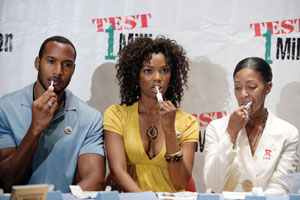
June 23, 2008 (Los Angeles) – In preparation for National HIV Testing Day, Black celebrities on Friday, June 27th, at 8:30AM (PST) are teaming up with the Black AIDS Institute, the Los Angeles Sentinel newspaper, KJLH 102.3 FM, Southern Christian Leadership Council, the Brotherhood Crusade, National Coalition of 100 Black Women, and the Beverly Hills/Hollywood branch of the NAACP for the 2nd Annual “Test 1 Million” HIV/AIDS awareness campaign. Community members and celebrities will host a free HIV screening event and press conference where they will be tested for HIV in front of the cameras. The group will announce the “Test 1 Million” HIV/AIDS campaign, a call-to-action for 1 million Black Americans to get screened for HIV by December 1, 2009 (World AIDS Day). AIDS is the leading cause of death for Black women aged 25-34 years , and it is estimated that up to 46% of Black gay men may already be HIV-positive, and according to the CDC, there are over 260,000 people in the U.S. infected with HIV who don't know they are infected. Celebrities including " Eric "Lil E" Wright ," Jimmy Jean-Louis ("Heroes"), rapper Coolio , Harold Perrineau ("Lost"), Al Reynolds , Darius McCrary ("Family Matters"), Erica Hubbard ("Lincoln Heights"), Oren Williams ("Lincoln Heights"), Zachary Williams ("Roswell," "The Parkers"), Nicole Lyons (first female to race professionally in the NHRA Pro Stock and NASCAR Busch Series), recording artist Bobby Tinsley , Brian White ("The Family Stone", "Stomp the Yard" and "The Game Plan"), NBA veteran Doug Christie & his wife Jackie, Terrel Tilford , Victoria Platt-Tilford , singer Jody Watley , Tasha Smith (“Tyler Perry's Why Did I Get Married”) have agreed to participate in the unprecedented event, being held at the Los Angeles Sentinel newspaper (3800 Crenshaw Boulevard), to illustrate their personal commitments to ending the AIDS epidemic in Black America (Full list of participants below) . Black Americans can find testing sites in their local communities by logging on to www.blackaids.org and entering their zip code. “AIDS in America today is a Black disease. Nobody wants to talk about that, and nobody wants to own that. That silence is killing us,” said Black AIDS Institute Executive Director and Founder Phill Wilson . “That's why we're calling for 1 million Black Americans to get tested for HIV in the next year – Knowing your HIV status can save your life, and every one of us has a responsibility to ourselves and our communities to know our status and to talk with our family members and loved ones about their status.” This event is part of a national Mass Black Response to the AIDS epidemic sponsored by the Black AIDS Institute, The Balm in Gilead , the National Black Leadership Commission on AIDS and leading national Black Institutions. This Black AIDS Mobilization (BAM) is committed to ending the AIDS epidemic in Black America by 2012 by: "As a 14-year-old Black kid growing up in Paris, I was the only student forced to take an AIDS test to be able to go to London on a school trip because I was from Haiti,” said Jimmy Jean-Louis , star of the hit TV show “Heroes.” “That experience brought awareness to me about the epidemic, and since then it became a lifestyle for me to fight the disease. To take an AIDS test can cause you to be fearful, but it is extremely liberating to know your HIV status. I know my status – I'm number 1 in a million." Celebrity participants include : Eric "Lil E" Wright ," Jimmy Jean-Louis ("Heroes"), rapper Coolio , Harold Perrineau ("Lost"), Al Reynolds , Darius McCrary ("Family Matters"), Erica Hubbard ("Lincoln Heights"), Oren Williams ("Lincoln Heights"), Zachary Williams ("Roswell," "The Parkers"), Nicole Lyons (first female to race professionally in the NHRA Pro Stock and NASCAR Busch Series), recording artist Bobby Tinsley , Brian White ("The Family Stone", "Stomp the Yard" and "The Game Plan"), NBA veteran Doug Christie & his wife Jackie, Terrel Tilford , Victoria Platt-Tilford , singer Jody Watley , Tasha Smith (“Tyler Perry's Why Did I Get Married”). Elected officials and community participants include: Rep. Maxine Waters (D-CA), Rep. Diane Watson (D-CA), Danny Bakewell Sr ., the Bakewell Company, Danny Bakewell Jr ., publisher, Los Angeles Sentinel, Charisse Bremond Weaver , the Brotherhood Crusade, State Sen. (elect) Rob Wright , 25th District, Eric Perrodin , Mayor of Compton, Roosevelt Dorn , Mayor of Inglewood, Ron Hanson , NAACP, Willis Edwards , NAACP, Rev. Eric Lee , SCLC, Marva Smith , Coalition of 100 Black Women, Dove Pinkney , Coalition of 100 Black Women , K.W. Tullis , National Action Network. HIV and AIDS disproportionately affect Black America:
Eazy-E Eric “Little E” Wright,Jimmy Jean-Louis, rapper Coolio,
singer Jody Watley and others to call for HIV screenings
of 1 million Black Americans by Dec. 1, 2009

For Media Use
2008 National HIV AIDS Testing Day Online Toolkit
Join the Black AIDS Institute in commemorating the 2nd Annual “Test 1 Million HIV Awareness Campaign” day on Friday, June 27, 2008 . Last year, the Black AIDS Institute, Screen Actors Guild (SAG),and The American Federation of Television and Radio Artists (AFTRA), in partnership with Artists for a New South Africa, the Magic Johnson Foundation, the NAACP, Black Hollywood Education and Resource Center, Pan African Film Festival, BET Networks/RAP IT UP, and TV One launched the “Test 1 Million” campaign, a call-to-action to raise awareness of the urgent need to stop the spread of HIV in Black communities, and to get 1 million Black Americans screened for HIV by December 1, 2009 (World AIDS Day). National HIV Testing Day (NHTD) is an annual campaign to encourage at-risk individuals to receive voluntary HIV counseling and testing. Recently, The Centers for Disease Control and Prevention released a study that showed higher prevalence of STDs and STIs among Black youth. Syphilis rates, for instance, are holding steady or declining among other youth groups, but are increasing among African American teens -- and skyrocketing among Black males. Already, we know that Blacks account for 69 percent of new HIV/AIDS cases among American teens every year. This study suggests that number will get worse before it gets better. 14- to 19-year- old girls were tested for a handful of common sexually transmitted infections -- chlamydia, herpes, trichomoniasis and human papilloma virus, or HPV. More than a quarter of the girls had at least one of the infections, as did 48 percent of Black girls. They found that black youth report more active sex lives than their peers -- they're more likely to have ever had sex, to start by age 13, and to have multiple sex partners in their lifetime. While there are many unanswered questions about HIV's ongoing spread, one thing is clear: Untreated STDs make it happen a lot easier. If you have an untreated STD or STI and have unprotected sex with someone who is HIV positive, you are as much as five times more likely to contract the virus. If half of all Black teen girls have or have had an STI, the potential growth in the AIDS epidemic is breathtaking. The Black AIDS Institute developed this online toolkit to assist agencies and the media in carrying out their National HIV Testing Day activities. For more information contact Kelly Dunn at (213) 353-3610 or Title: The Black AIDS Crisis--Time to Turn Words into Action (ADOBE PDF) 2008 Black AIDS Institute Nat'l HIV Testing Day Activities:
Press Release/Tip Sheet:
Op-Eds
Author: Phill Wilson| Author Biography & Headshot
Word Count: 816Resources
Television and Radio PSAs
Promotional Artwork