News 2006
STATEMENT: Ryan White Act
Our Real Fight is Over How Little Congress Spends on AIDS Care and Treatment
The AIDS community has rarely found itself as starkly divided as it does this summer. Predictably, the source of our problems is money. We are fighting with one another over table scraps, when we should instead be demanding the federal government place a higher priority on the lives of poor and working-class people living with HIV and AIDS.
Since 2001, the Ryan White CARE Act budget has grown by a mere $300 million, to $2.1 billion in fiscal year 2006. As of January 2006 we were spending $200 million a day on the war in Iraq, according to the Congressional Budget Office – which means we nearly triple the annual AIDS budget every month.
Meanwhile, the U.S. government estimates an additional 200,000 Americans have contracted HIV since 2001.
The CARE Act, which congress must re-approve every five years, stands alongside Medicaid as the mechanism through which the federal government helps people without resources afford AIDS care and treatment. It has languished on the congressional workbench since last session, however, as AIDS advocates and their representatives have staked out opposing positions on how the bill should be reformed.
Southern AIDS service providers have argued that Ryan White must be rewritten to remove a built-in bias that funnels money to the large metropolitan areas where the epidemic began. Today, they note, 41 percent of people living with HIV/AIDS reside in the South; in 2004, Southern states boasted 7 of the 10 highest rates of AIDS cases per capita, nationally.
And the South’s burgeoning epidemic is uniquely Black. All told, eight of the nation’s 10 Blackest epidemics are in Southern states, at least in part due to the region’s racial demographics.
Those states are clearly struggling to keep up with the building crisis. North Carolina and Alabama consistently have hundreds of low-income, uninsured people on waiting lists to get government-subsidized HIV meds. The dispersed geography means people often must travel across counties to find an AIDS service provider for counseling, medical care, substance abuse treatment and other services.
Clearly, these states need greater help from the federal government in combating this epidemic. Access to quality AIDS care should not depend on where you live in a nation as wealthy as ours.
The White House and many congress members have signaled their support for such reforms, and bills in both the House and Senate would reshape the CARE Act to funnel more money to rural areas.
New York Sen. Hillary Clinton has angered many AIDS service providers and activists in Southern and rural states by holding up passage of those bills, arguing they will dangerously cut New York's funding. Members of New York’s House delegation have echoed Clinton’s concerns, most recently in an op-ed written by Reps. Eliot Engel and Ed Towns, published in today’s Washington Post.
Sen. Clinton and her colleagues are right to insist that help for rural states not come at the expense of the large metropolitan areas that have spent decades working to bring their own epidemics under control. There are more people living with HIV/AIDS in America today than at any time in history, and AIDS service providers in places like New York City, Chicago and Oakland are having trouble keeping up with the grimly growing demand.
But the dilemma these two realities present is a false one. It is possible to meet both new and old challenges -- our government has simply chosen not to do so. Robbing Peter to pay Paul is an absurd strategy to end the epidemic and will fail both the new southern/rural epidemic and the more established, yet still growing urban ones.
And so, as we head into this election season, we must think about whether our government’s priorities match our own. Rather than fighting among ourselves about how to divvy up wholly inadequate resources, we must all demand that our elected officials fight to make sure our government spends its money on the things we value.
No matter how the Ryan White CARE Act gets rewritten, it will amount to meaningless words on worthless paper if Congress continues its refusal to adequately fund the program.
Letter to Editor
Philadelphia Reader Appreciates Web Site Content
I am thankful for your web site. I live in Southwest Philadelphia this area is being hit hard by the disease like many of our African American Community. Your web site provides me with info I may not have found anywhere else. I cannot tell you how I found the site but I'm happy I did and I check it everyday.
I even informed my co-workers and the company HIV coordinator I made it his favorite. I told him info change all the time and the soldier need to be inform. I am the registrar at this company, but on the weekends and all day I remind people in our community to be safe. I am also a facilitator. All summer I spent time talking about HIV/AIDS to the youth and parents in the community. The parents- how to use a condom, teachable moments, continuous dialogue, communication barriers etc.. The children basic info- four main ways you can become infected, high risk behavior, how to prevent infection, how to use condoms and answer a lot of questions. I learned that no one is talking to our children about HIV/AIDS. They are still guessing, receiving and learning from each others, which means they are getting wrong info and putting themselves at risk. Your info is easy to read and understand, even for a high school graduate like myself. I plan to start a parent group at an elementary school in the community and will talk to parents about how they can better communicate with their children about HIV/AIDS. I believe strongly our children need to be informed early about HIV/AIDS and how the disease is affecting and killing us globally. Sincerely, Crystal Fields PEPE PROGRAM Parents Empowering Parents In Their Environment

Statement: Why It's a Black Thang
A Rose by Another Name
By Phill Wilson
When we started a think tank to focus on AIDS in Black America seven years ago, we had one goal above all else: Convince Black people that AIDS was our problem. Our slogan -- “Our People, Our Problem, Our Solution” – is just a catchy way of saying the obvious: we can’t fix something until we at least acknowledge it’s broken. Well, we’ve come a long way, baby. And Black America’s increasing clarity of mission surrounding AIDS has never been more prominently displayed than it was last month, when tens of thousands of AIDS experts and advocates gathered in Toronto, Canada, for the International AIDS Conference. There, African American leaders took center stage to, as NAACP Chair Julian Bond put it, “accept ownership and fight [HIV/AIDS] with everything we have.” An historic contingent of Black leaders, most of whom represent traditional Black institutions, convened a press conference on Monday, Aug. 14 to launch a mass Black Mobilization. Each of these groups agreed to push AIDS to the top of their agendas and incorporate it into the fabric of their work. African Americans had finally made a statement to the world: In 2006, AIDS in America is a Black disease. These leaders get it, and they’re taking action as a result. But, sadly, there are still some out there missing the boat. In a Sept. 4 editorial the Boston Globe warned that "ghettoization of the AIDS epidemic weakens the fight against it." Having witnessed the outpouring of Black leadership in Toronto, the Globe saw not a community finally ready to stand up and fight for itself but one walking into a trap. And it articulated a perspective that has paralyzed Black folks for too long. By calling AIDS “a Black disease,” the Globe warned, we risk turning away allies within the community who fear heaping yet another stigma upon Black America. Certainly, that fear has kept some of our brightest minds and most influential players out of the struggle. With drugs, poverty and scores of other preventable but deadly health problems already plaguing Black neighborhoods, nobody wants to load more onto our plate. Moreover, the Globe's reasoning continued, by “labeling” AIDS a Black disease we give the powers-that-be an easy out. It's a Black thang, they'll think, we don't understand -- and don't have to. Or, worse, as University of Chicago political scientist Cathy Cohen told the Globe, calling AIDS Black gives white policy makers license to develop "some kind of cultural narrative that black people somehow brought it on themselves." The problem is the Globe describes exactly what both white and Black leaders have already spent the past 25 deadly years doing. Refusing to acknowledge the epidemic's vastly disproportionate impact on African Americans has done nothing to change that ugly reality. We tried putting our heads in the sand and not acknowledging the carnage unfolding in our neighborhoods. We tried convincing policy makers that this was everybody's problem, equally shared. We tried acting like it wasn't a Black disease -- and all that happened was the disease kept getting Blacker. We looked up and found that roughly half of all Americans living with AIDS and half all Americans getting HIV each year are Black. We found that three quarters of women getting it are Black, and that nearly half of Black gay and bisexual men may already be infected. We found Black people with HIV eight times more likely to die from the disease than whites. That's where not "labeling" AIDS a Black disease has got us. Furthermore, the Globe missed a crucial point. Black leaders were issuing a call to action to Black America. Others will hear the call and do whatever they will do. But Black America can no longer afford to worry about that. We can’t afford to trifle with the politics of America’s culture wars, whether they come from the left or the right. It is time for Black people to take ownership of the AIDS epidemic -- and responsibility for ending it. Individuals, traditional Black organizations and policymakers must all begin to hold ourselves accountable. Confronting the truth about AIDS is the only way to usher in this new era of accountability. As of January 2006, Washington was spending $200 million a day on the war in Iraq, according to the Congressional Budget Office. That means each month our war spending nearly triples what we spend on HIV/AIDS care in the United States all year. This is not acceptable, and our community must not allow it to continue. Federal funding for AIDS care is but one of many issues that our community must now take up – our challenges include reforming and properly funding Medicaid, holding the prison system accountable for the health of the Black men and women in its charge, demanding HIV prevention based on tested science rather than political ideology, and more. We are where we are with this epidemic because of denial and a lack of leadership. It didn’t have to be this way, and I wish it weren’t. But wishing it was not so is not the same as making it not so. I cringe every time I say, “AIDS in America is a Black disease” -- but not as much as I cringe every time I get a call from a Black teenager who just tested positive for HIV, or a Black woman who just found out she has AIDS, or someone letting me know that yet another of my brothers or sisters has died. To bring all of this to an end, first and foremost African Americans must acknowledge that AIDS is in fact our problem. We can’t fix what we won’t admit is broken.
World AIDS Day 2006
By Phill Wilson
AIDS in America today is a black disease that can only be stopped if each of us does our part--from churches to civil rights organization, from media organizations to academic institutions, cultural organizations to policy making bodies, every institution in Black America must make ending the AIDS epidemic a top priority. No matter how you look at it, thru the lens of gender, sexual orientation, age, socio-economic status or region of the country where you live, black people bear the brunt of the AIDS epidemic in this country. African Americans are 13 percent of the U.S. population, but we represent nearly 50 percent (or 600,000) of the estimated 1.2 million Americans living with AIDS. Blacks account for 54 percent of the new diagnosis in the country, 63 percent of the new cases among youth, and nearly 70 percemt of the new cases among women. Fortunately, our institutions are beginning to step forward. During the XVI International AIDS Conference in Toronto in August, the Black AIDS Institute in partnership with major civil rights organizations issued a Call to Action that was answered by politicians and leaders of eight civic organizations. These forward-thinking leaders agreed to take action to reduce the HIV rates in Black Americans over the next five years; to increase the percentage of African Americans living with HIV who know their HIV status; to increase the percentage of African Americans living with HIV who are in appropriate care and treatment. Since then, NAACP Chairman Julian Bond and President Bruce Gordon publicly took HIV tests during the organization’s national conference in Washington, D.C., and encouraged the thousands of people present to also take the test. As part of the 9th Annual World AIDS Day commemorate, Bishop T.D. Jakes, pastor of the 30,000-member The Potter’s House will publicly take an HIV test during a church-sponsored community AIDS rally in Dallas. We’re on the right road, but a long way from ending the epidemic. The CDC estimates that at least 25 percent of the 1.2 million Americans with HIV are unaware of their status. The agency is recommending that routine HIV testing be implemented in all health care facilities, including emergency rooms. People who don’t know they’re infected are less likely to protect their partners and completely unable to receive treatment. In order to keep those already infected healthy and to help them avoid the further spread of the virus, we have to identify them and get them into care. The operative here is “getting them into care.” Before we can get people into care we must encourage the black community to take ownership of the disease, to understand the science of the disease and to participate in comprehensive, age-appropriate and culturally-competent prevention methods. This year’s World AIDS Day theme is “Stop AIDS. Keep the Promise.” Ending AIDS is possible and achievable, as long as we mobilize our resources, put aside our differences and fight like our lives depend on it. We’re calling on Black America — from individuals to political, religious and cultural leaders — to commit to taking action against HIV/AIDS by engaging in a coordinated campaign to develop a national commitment to end the AIDS epidemic in our communities by making fighting AIDS a top priority and setting concrete measurable goals and objectives with real deadlines. Black leaders, institutions and cultural icons must identify strategies and activities that match their unique niches and capabilities. We must build a new sense of urgency in Black America, so that no one accepts the idea that the presence of HIV and AIDS is inevitable.
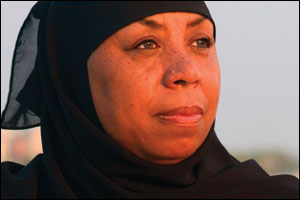
Rashidah Abdul-Khabeer Turns Compassion into Action
By Randy Boyd
As an epidemiology nurse in a major medical center in Philadelphia in 1983, Rashidah Abdul-Khabeer saw right away how AIDS was going to affect the Black community. At the time, the national profile for persons with AIDS was white, gay and male, but the first patient Abdul-Khabeer encountered was a Black, gay male prostitute. “The radiologist told the patient he had AIDS, then left the room, leaving me to explain ‘AIDS’ to this young man,” says Abdul-Khabeer. “That’s when I realized: that’s how people are going to deal with AIDS in the Black community: give them words, then walk away.” Abdul-Khabeer formulated a plan. She began a campaign of public speaking to heighten awareness, but when she realized the AIDS Task Force of Philadelphia was not focused on the Black community at large, “I just stopped and created a new organization.” “The organization” is the Circle of Care, a program of the Family Planning Council, a private, non-profit organization whose mission is to provide access to high-quality health and prevention services to primarily low-income individuals and families. The Circle of Care provides HIV-related care and services to children and their families, as well as to HIV-positive pregnant women. As deputy director, Abdul-Khabeer is responsible for the daily oversight of the programs within the Circle of Care, which include clinical and specialty HIV medical care, case management and support services, and perinatal transmission prevention and prevention education. Abdul-Khabeer was honored Thursday, Nov. 16 as one of Black AIDS Institute's Heroes In The Struggle. “In the beginning,” says Abdul-Khabeer, “people died very quickly. We were just trying to stem the tide and keep up with policy, issues, and finding out what resources were being allocated to what community.” Now she looks back at that time as 15 years of laying the groundwork, 15 years of trying to galvanize the Black community, and of begging Black congressional leadership to speak about AIDS. “It took a decade for people to say things, but they are at the forefront now. They had to realize it wasn’t just white gay men, that it was IV drug users, mothers and children.” Since those early days, Abdul-Khabeer has been involved nonstop in the struggle. In 1985, she founded BEBASHI, Blacks Educating Blacks About Sexual Health Issues, a Philadelphia community-based organization providing sexual health education, case management and support services. Abdul-Khabeer is also a founding member of the Philadelphia AIDS Consortium, the Minority AIDS Project of Philadelphia and the National Minority AIDS Council in Washington, D.C. In addition, she has served as a consultant on AIDS education, services and policy development with the Centers for Disease Control and Prevention, the Health Resource Services Administration (a branch of the United States Department of Health and Human Services), MACRO International (an international Washington/Atlanta-based health consulting firm), the Philadelphia Department of Public Health as nurse epidemiologist, and numerous community-based organizations. Her expertise includes community organizing, organizational development, proposal writing, program development, implementation and evaluation, and grants management. In all, Abdul-Khabeer has advocated extensively for social and civil rights for racial, ethnic and sexual minorities for more than 30 years. “To correct long-standing injustices,” is the answer Abdul-Khabeer gives when asked what motivates her continued efforts. She’s also quick to point out the reactions of the families in the Circle of Care as a constant source of fuel and inspiration. “Our families stay with us. We nurture them. They remain close to us and influence our program immensely. Seeing long-term survivors and babies who survived grow into adulthood and stay in the circle—we are embraced by people who truly walk the walk.”
Abdul-Khabeer has served as guest lecturer and faculty for several educational programs, including the Pennsylvania AIDS Education and Training Center, the Family Planning Council Training 3 Program, the New York Planned Parenthood Nurse Practitioners Training Program, the Philadelphia Department of Public Health, Lincoln University, MCP Hahnemann University, Cheyney University, and the University of Pennsylvania School of Nursing. Additionally, she collaborates in the field of HIV, reproductive health and family planning with the Division of Early Childhood, Women and Youth Health of the Philadelphia Department of Health, and the University of Nebraska’s National HIV Prevention Program.
Throughout all her work and experience, Abdul-Khabeer’s biggest message remains clear. “If you’re infected, stay in care.” And to the community at large: “Knowing your status is critical. You can’t assume you’re not affected because you’re not in some artificial category.” While testing is readily available, Abdul-Khabeer believes not enough is being done to help people connect on an emotional level (to being tested). She cites the story of a woman who was seven months pregnant and would not get tested because she believed her husband to be faithful…until he left her, after which she tested positive. Abdul-Khabeer also encourages the world not to ignore the realities of communities at risk, citing the fact that many Black families get their healthcare from ER facilities, where it’s not practical to test for HIV. To others, these obstacles might seem like daunting barriers, but to Rashidah Abdul-Khabeer, the rewards of her work far outweigh the struggle. “I can’t imagine there won’t be some part of my life that doesn’t involve AIDS. To see the diminishing mortality rates is rewarding. We don’t see people dying the way they used to. It really isn’t a death sentence because of care. The longer I can contribute to that, the better I feel. I can’t think of anything I’ve done in life where I feel more positive.”