News 2006
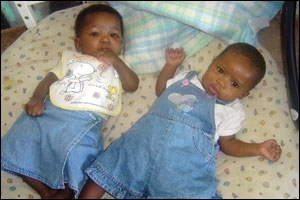
MASEUR, LESOTHO -- The Beautiful Gate Orphanage has 20-25 infants and toddlers under 5 years old. Most of the babies are abandoned on streets are in hospitals. Some are among the more than 25,000 HIV positive children born in the country each year.
Commentary
By Sharon Egiebor
It’s easy to sit back and criticize Madonna’s actions when she adopted 13-month-old David Banda from Malawi. She appeared to pay her way through the adoption process by offering more than $3 million in donations to the country, and she didn’t wait the obligatory 18 months before moving the toddler from a rural Malawi village to her luxurious home in London. The criticism was so negative that Madonna apparently felt compelled to do an “Oprah” interview to explain herself. However, she did a really good deed – reawakening the world’s attention to the millions of orphans and vulnerable children in third world countries. The United Nations estimates that there are over a million orphans in Malawi, half of whom have lost one or both parents to AIDS, according to the UN Children's Fund (UNICEF). Between 1990 and 2000, an estimated 6.4 million children in Eastern and Southern Africa lost their mother or both parents to AIDS. Another 3 million children in West and Central Africa lost parents. Little David’s mother died shortly after his birth from complications of malaria, one of the three major diseases tied to poverty and death rates in many of these countries –HIV/AIDS, tuberculosis and malaria. "However, this does not mean that the extended family system is falling apart or disintegrating,” Penson Kilembe, director of Social Welfare in the Malawi Ministry of Women and Child Development told IRIN News in October. “If this were the case, then we would have many children in the streets or in the orphanage homes.” The extended family system is a strong tradition in the Southern African country, but almost half the population struggles to live on less than US$1 a day, HIV/AIDS affects nearly a million of Malawi's 12 million people, including 83,000 children, and nearly a third of infected mothers pass the virus to their babies. IRIN reported. David’s father Yohane Banda said he placed the child in an orphanage because he could not afford to care for him. Last year, I visited Maseru, Lesotho where my colleagues and I toured the Beautiful Gate Lesotho Orphanage, an organization operated by international and interdenominational Christian missionaries. On any given day they have between 21 and 25 children between the ages of 1 week and 3 years old, says Roy Haakensen, who co-founded the orphanage with his wife Sue in 2001. The agency is temporarily housed in a rented light and airy, multi-level home. The courtyard was sunny, and the infants were clean and comfortable. The agency hires Lesotho women to care for the children thereby exposing them daily to Lesotho culture.
The women rock the babies, feed them and speak to them in their native tongue. On the day we visited, Sue Haakensen showed off the dozens of bottles in the refrigerator, the infant room and the toddler room. She explained the daily care rituals and discussed their goal to find the extended family that would be willing to adopt the children.
There is a four-star chart system on the wall – Red for children who may have family and have been in care less than three months; blue for children undergoing the adoption process; green for those newly adopted; and no star for children who are available for adoption. Sometimes the mother died without leaving next of kin information. Other times, the babies were founded abandoned along sewer filled gullies that flow through the mountainous neighborhoods. It was hard looking into the soft, sweet faces and walking away. So for 20 minutes, I didn’t. I sat down in the enclosed playpen, located in the garage outside and with a 3-year-old boy and attempted to play. I pulled out the car and went zoom. He looked at me. I picked up blocks and stacked them. He looked at me. No smile, no acknowledgement of my presence and most hurtful, no joy. During the hour that we stayed on the compound the little boy never smiled and barely spoke. They’re missing what children need most, parents. I could see how Madonna, who has the where with all and the social clout, was so quickly taken with young David. Who could turn away, knowing the dire need the children are in? But the thing Madonna didn’t consider was the cultural and family ties each child is entitled to. Of course, David will live in the lap of luxury, but how will he learn his native tongue of , who will teach him the country’s history and how realistic is it to expect Madonna to return on a regular basis for David to maintain a close relationship with his natural father and extended family? Taken the children home is an arrogant European concept that says the West knows what is best for everyone. Unfortunately, we don’t. The Family Health International and other agencies that are working to meet the needs of orphans and other vulnerable children suggest a more comprehensive approach. Changes in government policies and law; Better medical care, socioeconomic support, psychological support, education, human rights and solid, community based programs. There is no quick fix to the problem and money alone won’t fix it. At Beautiful Gate, they accept volunteers who with the proper training can spend months helping to fulfill the needs of the orphanage. When I returned from South Africa last year, I issued a plea to my family and friends. Join the problem solvers. We can’t all be Madonna, but we can be a helping hand.
A 2006 Heroes In The Struggle
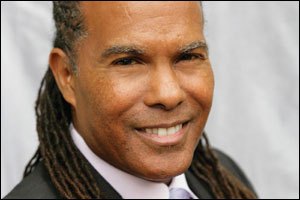
If it is as Emerson stated that every institution is but the lengthened shadow of one person, then the Agape International Spiritual Center, the Association for Global New Thought, and the Season for Nonviolence are indeed extensions of Dr. Michael Beckwith and his vision of one human family united on a foundation of peace based on the spiritual origin of every man, woman and child. Beckwith’s life is a living testament to building community. In the 1970’s, he began a journey that to this day embraces the major religions, philosophies and cultures of East and West. Beckwith will be honored Thursday, Nov. 16 at 6 p.m. at the Directors Guild of America as one of Black AIDS Institute's Heroes In The Struggle. To purchase tickets online, click here. “I greatly admire what you are doing to bring about the Beloved Community,” wrote Coretta Scott King, “which is certainly what my dear husband worked for and ultimately gave his life.” In l986, Beckwith founded a transdenominational community, which today counts a membership of 9,000 devoted to the study and practice of the New Thought-Ancient Wisdom tradition of spirituality. Agape’s outreach ministries feed the homeless, serve individuals who are imprisoned and their families, partner with community service organizations active in children’s schools, camps and shelters, and develops programs that advocate the preservation of the planet’s environmental resources. "With so much to be done to serve our brothers, sisters and children who suffer from HIV/AIDS, it touches me deeply to see how so many communities, organizations and individuals are reaching out," Beckwith said. "How can we do less when we know the statistics involving women, men and children, when we know that entire continents are affected? We must continue to have compassion, to offer our hearts, hands and resources until our work is done." Beckwith’s inner vision reveals a world joined together by humankind’s highest development spiritually, philosophically, educationally, scientifically, governmentally and socially. His renown as a harbinger of the world’s quest for peace has drawn into his visionary orbit those whose names are synonymous with this goal. Arun Gandhi, grandson of Mohandas K. Gandhi, shares with Beckwith the national co-directorship of A Season for Nonviolence. SNV promotes and teaches the principles of nonviolence embodied by Mahatma Gandhi and Dr. Martin Luther King, Jr. and is endorsed by UNESCO on behalf of its Culture of Peace and Nonviolence Appeal by Nobel Peace Laureates. Other notable supporters include Dr. C.T. Vivian, Dr. A.T. Ariyaratne of Sri Lanka, His Holiness the Dalai Lama of Tibet, Coretta Scott King and Dr. Robert Muller. Convened by the Association of Global New Thought, A Season for Nonviolence is a grassroots campaign whose participants are spiritually motivated social activists in more than 100 U.S. cities in 40 states and in 10 countries. Its inauguration in l998 at the United Nations marked its first of what is now five years of commemorating the 50th and 30th memorial anniversaries of M.K. Gandhi and Martin Luther King, respectively. Throughout its 64-day campaign across the nation, over 300 events and programs are facilitated, including inter-racial healing, Days of Dialogue, memorial marches and more. Each year SNV presents the Gandhi-King Season for Nonviolence Award to an individual whose life and mission embody the Kingian and Gandhian principles of nonviolence, compassion and peace. This award was first presented to Secretary-General Kofi Annan in 1998 at the U.N., Nelson Mandela in l999 at Cape Town, South Africa during the Parliament of the World’s Religions Conference, and Global Kids in 2000. The Association for Global New Thought exists for the purpose of compassionately participating in the unfinished work to which the Dalai Lama refers. As its voice, Beckwith guides activities such as AGNT’s annual Awakened World conference bringing together scientists, sociologists, spiritual leaders, economists, and international forecasters—individuals with proven track records in guiding humanity to its highest potential. Each year the Synthesis Dialogues are held with His Holiness, the Dalai Lama of Tibet drawing together impresarios of peace -- the true lovers of humankind. Beckwith is the author of “Forty Day Mind Fast-Soul Feast” and “A Manifesto of Peace.” His humanitarian activities have attracted to him and to Agape International accolades from many organizations, a few of which include: • 2004-- Africa Peace Award (which he shares with notables including former President William Clinton, Nelson Mandela, Archbishop Desmond Tutu) from the Africa Achievement Awards • 2003 -- In November Beckwith and Agape were read into the Congressional Record during the 108th Congress, First Session • 2002- - California Legislature Assembly Award for Meritorious Service to Humanity • 2002 -- World Festival of Sacred Music Local Hero Award • 2001 -- Gandhi-King-Ikeda Award from Morehouse College • 2000 --Thomas Kilgore Prophetic Witness Award from the Southern Christian Leadership • 2000 -- Howard Thurman Stained Glass Window Award, Morehouse College • l999 -- Induction into the Assembly of the Parliament of the World’s Religions • 1999 -- Humanitarian Award from the National Conference for Compassion and Justice "Everyone of us has a gift within that is a healing agent. So instead of asking ourselves "why" AIDS is among us, let us activate that healing gift by taking action! Let us take a stand without reservation and know that if we help one human being it touches the entire world, it touches the very Spirit of Life," Beckwith said.

Obituary
By Stephanie Ward
Reeling from the effects of a sudden heart attack, Karen Williams was dealt a double blow from doctors in 1999 when she was diagnosed with AIDS. Shocked beyond belief, Williams spun off into a depression that lasted three years. After finally coming to grips with the disease, Williams made a decision to learn all that she could for herself and to help the growing number of African Americans that were contracting the disease annually. “I think that the way I contracted the disease is not as important as how it has changed my life,” she said in a recent testimonial. Williams, 57, lost her battle with the disease Oct. 23 dying from congested heart failure. Funeral services where held Oct. 30 at Bethel AME Church in Wilmington, DE, which she credits with teaching her so much about AIDS and giving her the courage to counsel others. Her life, in recent years had been devoted to the fight against and for the prevention of HIV/AIDS. Williams worked as a peer educator, and HIV counselor and tester at The Beautiful Gate Outreach Center, a ministry of Bethel AME Church in Wilmington, DE. She was also a fellow at the African American HIV University, a comprehensive program to develop, place, and support a cadre of highly-trained African American peer treatment educators sponsored by Black AIDS Institute in Los Angeles. Williams was very proud of her accomplishments and her work at The Beautiful Gate Outreach Center. “Thanks to The Beautiful Gate Outreach Center, I have learned so much about this disease that I am now able to discuss it in an intelligent manner to anyone who asks a question. I don’t necessarily go around telling everyone that I have AIDS, but at least I am not as ashamed or guilt-ridden as I had been,” she wrote in a testimony before she died. Renee Palmore Beamon, executive director of The Beautiful Gate Outreach Center, said Williams was committed to AIDS education and had had an impact on many of the clients that she worked with. “She had a warm spirit and she wanted those living with AIDS to excel,” Beamon said. Beamon said William’s health was always an issues, but she never complained or let her illness stop her.” Vallerie Wagner, chief operating officer for the AIDS university, said that Williams had a very pleasant personality and was very diligent about learning so that she could take what she learned back to her community. George Billinger Jr. was William’s teacher at the university. He said his fondest memories of Williams were when she realized that she had the highest score in the class. “She was shocked,” he said. “So much so that she couldn’t talk. It was a moving and tender moment.” Williams had other achievements in the area of AIDS education; she received a volunteer appreciation award for outstanding community service by the Philadelphia AIDS Consortium as an Americorps volunteer for Beautiful Gate. William’s daughter Akiesha Williams remembered how her mother was passionate about AIDS education, but in the beginning, it was difficult for her to even tell her daughter that she had the disease. “She had her niece to call me and tell me,” she said. Besides her daughter, William’s leaves a son, Hasan Rasheed, and other close relatives and friends. She was a Philadelphia native who went on to graduate from Temple University with a degree in Criminal Justice. She moved to Wilmington, DE in 1999 and joined Bethel AME Church. She joined Beautiful Gate as a volunteer and then became an employee.

Heroes In The Struggle
Singer Cheryl Lynn, famous for her “Got to Be Real,” will be the featured artist for the 6th Annual Heroes In The Struggle. The event will be held at 6 p.m., Thursday, Nov. 16 at The Directors Guild of America. Lynn, who was born Cheryl Lynn Smith in Los Angeles, got her start on the “Gong Show,” which spoofed amateur talent shows. Lynn walked off the “Gong Show” stage with a contract in hand, and the song rose to No. 1 in practically every country in the free world. Penned by Lynn, along with producer David Paich and David Foster, “Got to Be Real,” not only became a national dance club anthem, it achieved the number one position in Billboard Magazine, and was recently named the #2 dance song of all time by several dance music associations. Buy Tickets to the show online Lynn recorded a string of hits for CBS Records, including the classic duet produced by and performed with Luther Vandross, “If This World Were Mine.” The recording was supported by a cross-country tour featuring the dynamic couple. The musical marriage of Lynn and guitarist/producer Ray Parker, Jr., yielded the hit single, “Shake It up Tonight,” which further embodied Lynn in the dance clubs of America and around the world. Newcomers Jimmy Jam and Terry Lewis who went on to produce mega hits for super star Janet Jackson, had their first number one record when they produced “Encore,” recorded by Lynn in 1984. “Got to Be Real,” has become a mainstay in pop culture. The song has been featured in such films as “Paris Is Burning,” “Carlito’s Way,” “Keeping the Faith,” “Shark Tale” and “Pink Panther.” Movie mogul Jeffrey Katzenberg personally phoned and requested that Lynn, along with Jimmy Jam and Terry Lewis compose a song for the “Shark Tale” soundtrack, “Sweet Kind of Life.” The inclusion of “Got to Be Real,” in an episode of the popular TV show, “Sex in the City” won a prestigious Golden Globe award. The hip hop/rap era could not ignore the popularity of “Got To Be Real,” as it has been sampled by a list of artists that include YoYo, Mary J. Blige, Will Smith, Fat Joe, and Father MC. It was hip hop queen Blige who covered the song for the "Shark Tale” soundtrack. A proven “world” artist, Lynn has successfully toured Japan for the past 15 years. Her recording, “Good Time” produced by Teddy Riley, and remixed by Jr. Vasquez and Dallas Austin, was a mega hit on the Japanese charts. Often referred to as “the song that won’t go away,” “Got to Be Real,” has been featured in such national commercial endorsements as Clairol, Hanes, and KIA. It’s been a long journey since the initial recording of “Got to Be Real,” and it has taken on a life of its own!
Diaspora
By Sharon Egiebor
MASERU, LESOTHO – They clamored around the travel bus, hands outstretched, reaching to the foreign visitors for small change, candy and any favor that passed through the doors. Some 3,000 people came out for the opening celebration of the country’s first pediatric HIV/AIDS clinic that featured the king, the prime minister, local celebrities, foreign dignitaries and journalists. The deep-seated poverty surrounding Lesotho’s 45 percent unemployment rate was obvious. It was the end of school term for most of the children and the beginning of summer vacation. Education is a priority. The country has an 81 percent literacy rate. Blue sweaters were tattered, some with the backs completely unraveled. Grey school uniform pants were hanging on with threads; zippers broken, legs up to the calf and skintight. Black jumpers were short. The sleeves of yellow or white blouses crawled up the arm. Girls and boys both had outgrown or wore down shoes. Some of the children wore no socks and the backs of their rough feet hung outside the shoes. The long black socks on several children had multiple runs. Lesotho’s family structure was always close-knit. Extended family lived nearby. If a parent died, an extended family member stepped in to take the child. Children always had a place to stay. HIV/AIDS changed the landscape, say health care workers, clinic volunteers and social activists. The average lifespan has dropped from the mid-50s in 1970 to under 34 years old in 2006, according to the CIA World Fact Book. As in most of southern Africa, the pandemic started with the parents, who then left children, many of them infected with HIV. Today children and orphans are head of households, are living with grandparents, who can barely support themselves. Now, with 270,000 women and children with HIV/AIDS, the country has the third highest prevalence rate in the world. “We don’t always have time for funerals,” said Sophie Motsamai, a research nurse for Senkantana, a former leprosy center turned into a community-based HIV/AIDS treatment center. “If the coffin is there, they just bury it. There is no funeral.” Senkantana, which opened May 17, 2003, went from 50 patients the first day to 1,000, said Motsamai. In 2004, the non-government center received three years of funding from Secure The Future Foundation, which is supported by the Bristol-Meyers Squibb pharmaceutical company. The funding allowed the health center to provide the country’s first antiretroviral therapy drugs, a combination of three or four drugs that fight the virus at the cellular level. “At first they were carried in wheel barrels and on stretchers,” said Dr. Satti, the doctor in charge. ‘Now, people are going back into the community and to work.” Samara Ntoi, 25, said he started the drugs in March 2004 when his CDC count was under 100, well below the level most U.S. HIV patients begin taking the drug cocktail. Within two months, his count rose to 201. It was 320 in four month and 340 when interviewed for this article on Dec. 1, 2005. “I just want to thank my family for the support they have given me, most especially my wife,” he said. “We are very encouraged that the ARVs is giving us an opportunity to live and take care of our children.” But the medication is not reaching enough people. According to UNAIDS, 90 percent or more of the people who need the drugs were not receiving them by mid-2005. Motsamai said it is difficult for many people to reach the clinics. The country, which is surrounded on all sides by the republic of South Africa, is mountainous and most residents walk everywhere. The dirt roads that climb the mount paths are narrow and unpaved. Unfortunately, Motsamai says because of the all good work the clinic does, it is having an odd response in the community. Clinic clients receive $10 Rand for transportation, food subsidies and nutritional education. Starvation and constant hunger, besides the obvious issues, also negatively affect the effectiveness of the ARVs. “People say they want to get HIV so they can come to the clinic,” she said. This is one in an occasionaly series about Sharon Egiebor's trip to southern Africa. This story was reported on World AIDS Day 2005 when the community was celebrating the opening of its first HIV/AIDS Pediatric Health Center, which would triple the number of pediatricians treating children with HIV in the country. The Baylor-Bristol-Meyers Squibb Children’s Clinical Center of Excellence in Lesotho is one of five planned facilities on the African continent. The first opened in Gaborone, Botswana in 2003 and has 1,400 children under treatment, according to clinic officials. A center in Swaziland opened in February. Two more are planned for 2007 – one each in Burkina Faso and Uganda.