News 2006
Diaspora
By Yvonne Barlow
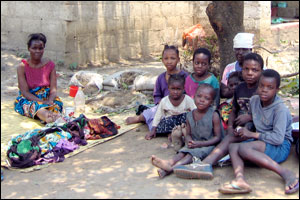
LUSAKA, ZAMBIA -- Justina Mwansa is a widow with two children. She lives in a one-room home, which she shares with her mother and eight orphans that were left with her after relatives died of AIDS. Mwansa earns a living washing the laundry of middle class Zambians, and she sells whatever she can grow from her garden. But, for a few hours each day, Mwansa steps away from her difficult life and volunteers to care for three neighbors suffering from AIDS. She bathes, feeds and ensures they take their medicines. “I want to take care of friends who are sick. It is like God’s work and I want to do this work,” she said. A few hundred yards away lives Lomance Phiri, a widow with seven children and five orphans under her guardianship. Phiri also volunteers to care for AIDS sufferers. “I nursed my husband when he died of TB and wanted to learn to give that care to others,” Phiri said. The women were trained by VK Home-Based Care, a grassroots organization based in Garden Township, a dusty settlement of around 150,000 people on the outskirts of Lusaka. Elsie Choompa, the director, is a nurse who runs the VK medical clinic in Garden Township. She takes no pay and neither does her assistant, Peter Kalemeera, who coordinates the needs of those seeking help with those volunteering assistance. The project started in 2002 after a friend asked Choompa to help a relative dying of AIDS. Choompa’s own sister was also dying from the disease and she realized that care in the home was far better than any assistance given at overstretched hospitals. At the beginning, she ran the volunteer project while keeping a part-time nursing job, but as more people needed help, she was forced to resign from paid employment. She and her three young daughters live on financial support from her ex-husband. She said it would be nice to have an income but, “It is better to see the project work, to see patients recover, see their lives improve.” Kalameera initially began volunteering for the VK project after his son was diagnosed with HIV. He was a social development worker with foreign charities for 25 years, and when his contract ended, he offered his time to the VK project. His family lives on his wife’s earnings. He said life is hard. “We struggle to eat and, once in a while, I write a project proposal for a group to earn a little bit of money.” But he believes the project is vital. “It is important for the client that new ideas of home-based care do not collapse,” he said. Many of their clients are sick and alone with no one to ensure they eat well or take their medicines. VK provides caregivers with a 10-day training program in which they learn about basic nursing care and how to recognize complications of AIDS. Anna Wilima was ill with HIV and tuberculosis when Kalameera found her a caregiver. The widow lived with her daughter, who worked long hours in order to pay for rent and keep. As a result, Wilima was alone for much of the day. Her weight dropped to 44 kilograms and her immunity to infection was desperately low. She would often take her ARV medicines on an empty stomach, which would make her feel sick and dizzy. “I wanted to collapse,” she said. VK found Wilima a caregiver and, after two months, she is gaining weight and feeling stronger. When she is well she said she wants to train to be a care giver. News of the group’s work is spreading and other communities are copying the idea, according to Maurice Shakwamba, who facilitates HIV programs for Voluntary Services Overseas in Zambia. “It works well,” Choompa said. “Patients are always happier in their own homes, and others are learning about HIV and not to be afraid.”
Op-Ed
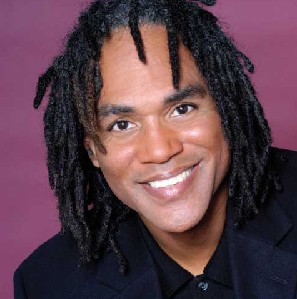
By Phill Wilson
Rep. Nancy Pelosi, the presumed new speaker of the House, says voters sent a clear, simple message on Election Day: “It’s time for a new direction.” That was the Democratic leader’s own message all year on the campaign stump, and it’s her promise now, as her party regains control of Congress for the first time in 12 years. The Black AIDS Institute couldn’t agree more. And we desperately hope the Democrats are serious about charting that new course, because Washington has allowed the AIDS epidemic in Black America to run amok for far too long. Congress has failed to do the hard work of reforming the 16-year-old CARE Act to keep up with an ever-changing epidemic. The law was due for congressional reauthorization in 2005, but the pols have yet to act on that mandate. Lawmakers – including Democrats -- have been too busy bickering over how best to divide up inadequate funding among the varied cities and states to see the bigger picture: There’s not enough money in the program. Given the disproportionate impact the AIDS epidemic is having on Black America, Congress’s decision to break without reauthorizing the Ryan White Care—one of the primary resources for care and treatment of poor people living with HIV/AIDS—was a direct assault on the health and welfare of Black America. While the Administration and Congress fiddled, the AIDS Drug Assistance Program (ADAP) has collapsed. ADAP subsidizes lifesaving anti-HIV drugs for about 30 percent of those getting treated in the U.S. Just recently week, AIDS advocates in South Carolina announced that three people have died while languishing on the state’s 300-person waiting list for AIDS treatment. As of the last reporting period, there were waiting lists in six states—a number that will most certainly grow if Congress does not set a new direction in the fight against HIV/AIDS quickly. Funding for the Ryan White CARE Act has remained all but flat during the last three Congresses. Meanwhile, the U.S. government estimates an additional 200,000 Americans have contracted HIV since 2001. According to the Congressional Budget Office, as of January 2006 we were spending $200 million a day on the war in Iraq. According the coalition of local officials and advocates that has monitored the program since its inception, with the equivalent of what we spend in Iraq in one day, we could fully fund the AIDS Drug Assistance Program. But, the AIDS Drug Assistance Program is not the only part of our national response to the domestic AIDS epidemic that is failing. Local health departments and clinics around the country, particularly in the South, report having to cut or limit services they offer in order to meet growing demands with limited resources. Addiction treatment, support groups, transportation assistance – all have had to fall by the wayside in some places. The Centers for Disease Control’s prevention efforts are being starved by lack of resources. Who suffers? African Americans represent nearly 50 percent of the estimated 1.2 million Americans living with AIDS today and 54 percent of the new cases in our country. When care and treatment services are cut, Black people don’t have access to treatment. When HIV prevention efforts are undermined, Black people get infected with HIV. If Pelosi is good for her word, she’ll indeed steer a dramatically new direction on AIDS. She can start by demanding that the House pass a budget that adequately funds comprehensive prevention efforts, and puts enough funding into the CARE Act to keep Americans living with HIV/AIDS alive no matter what state they live in.
A 2006 Heroes In The Struggle
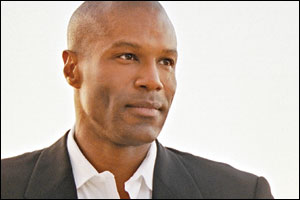
Many times the photographer is the person behind the scenes, with the personality blocked by the lens. Duane Cramer is so bubbly, outgoing that most people only notice later that they were being photographed. Cramer is a freelance photographer based in San Francisco who uses his skills to highlight social issues. He tirelessly advocates for HIV/AIDS awareness. He is deeply involved with community events and community organizations. Cramer was a founding member on the board of directors of the of San Francisco LGBT Community Center, Board Emeritus, NAMES Project Foundation AIDS Memorial Quilt. Board Emeritus, co-chair for the Millennium March on Washington for Equality in 2000. He currently serves as vice president on the board of directors of Frameline. He donates significant time to the Black AIDS Institute. In 2001 the San Francisco community elected Cramer as one of the Grand Marshals for the San Francisco GLBTQ Pride Celebration. “As a Black Gay artist living with HIV, I work to find the connection between my human experience and the human experience of the subjects I capture with my camera,” said Cramer. “And I look for subjects and projects where that connection can be maximized--whether it's realizing the term "African Orphan" applies to me (as well as the 10 million AIDS orphans in Africa) or volunteering my time to chronicle Black Heroes In The Struggle against AIDS, I look for the human bond.” At 6 p.m. Thursday, Nov. 16, the Black AIDS Institute will honor him as one of its 2006 Heroes In The Struggle. To purchase tickets, click here. Cramer lost his father Joe J. Cramer, Jr. PhD to AIDS in September 1986. The elder Cramer was associate dean of the Business School at Howard University in Washington, D.C. He also was a professor at Pennsylvania State University, and the University of Southern California. Cramer Sr. also was a faculty Fellow at Arthur Andersen & Co. world headquarters in Chicago. Cramer himself has been living with the HIV virus since September 1996. Cramer made a panel in the AIDS Memorial Project’s National School Quilt Program for his father with his two sisters and mother in 1996. It was a painful but healing process for the family. The panel was part of the last full display of the entire AIDS Quilt on the national mall in Washington, D.C. Before the display ended, Cramer escorted Vice President Al Gore and Tipper Gore through the exhibit. In 1998, Xerox Corporation, his former employer, awarded Cramer a one-year Social Service Leave. He used the time to travel with sections of the quilt to large cities – as well as small towns like Loachapoka, Ala., where he spoke to elementary and high school students about HIV/AIDS. He often took the “12X12” with his father’s panel (AIDS Quilt Block number 4680) and spoke about his death – as well as his experience with HIV – and worked with local school staff and AIDS Service Organizations to share HIV prevention strategies. He focused on schools with high populations of African American and Latino students. He also conducted and facilitated extensive outreach to NAMES project Chapter networks in communities of color. He also collaborated with The Balm in Gilead to utilize the quilt in the African American church. “Many others have the same experience of loosing a parent to AIDS. The only way to help stop the shame, guilt and spread of this virus is to talk about what is happening in our families, particularly in the African American community,” Cramer said. “This disease is preventable. I am calling for everyone to shout out and take action. If we don’t, black people will be extinct. We are all connected. HIV/AIDS affects all of us.” In December 2000 Cramer was awarded the Umoja award by Black Brothers Esteem (San Francisco AIDS Foundation) for his outstanding community service and leadership.
Cramer is very active in the arts community. His photographic images have appeared in publications internationally including “Harper's Bazaar” (Latin America), “Blue” (Australia), “Oggi” (Italy), “OUT” and the “Advocate.” His subject matter extends from portraiture and fashion to architecture and journalism. Cramer is particularly noted for his nudes – images at once sensitive, thoughtful and erotic. In the September 2002 “Blue” magazine (Australia) issue #40, he was profiled as one of “The Magnificent Seven Photographers” in the world contributing to the publication.
Born in Bloomington, Ind., in 1962, he earned a degree in finance and marketing from the University of Southern California in 1984. Cramer had a career with Xerox Corporation that lasted 18 years. Cramer’s tenure with Xerox ended in 2003. During his years at Xerox, he held numerous sales and management positions within the company ranging from account manager, product manager to integrated sales manager. Profiles on Cramer have been published in, “ARISE” Magazine, “Blue” (Australia), Manner Aktuell (Germany), “Mate” (Europe), “Venus” Magazine, “OUT” magazine, the “Advocate, The Bay Area Reporter, The Spectrum Newspaper, The Bay Times Newspaper, The San Francisco Chronicle (2001 and 2005), and The San Francisco Examiner (2000 and 2005). Cramer has appeared on ABC World News Now, C-SPAN, MSNBC, CNET, VH1 and has been interviewed by numerous other international television and radio stations. Cramer said he believes that by being “out” honest and open sharing his personal experience positive change will occur. In 2005, Cramer traveled to Nakuru, Kenya in with his partner Tom to do volunteer work for AIDS Educare, a new service organization. He spent significant time with the community leaders, medical professionals and AIDS orphans. They visited churches, hospitals, schools and slums. Shortly after he left Africa, the school he visited was re-named the Duane Cramer Academy in his honor for the lasting impression he made on the children. . · His current project is volunteering a significant amount of time and resources to produce images for the Black AIDS Institute’s “I’M COMMMITTED” and “GOT AIDS?” Public Service Announcement Campaigns. A few notable people already captured include Julian Bond, (NAACP Chair), Jesse Jackson Sr., Honorable Maxine Waters, Iyanla Vansant, Honorable Barbara Lee, and actress/entertainer/AIDS Activist Sheryl Lee Ralph. · In 2006 Cramer embarked on a national exhibition of his black and white photographs called ELEGANT, which positively reflected the broad spectrum of the community. It includes a diverse selection of LGBT individuals. Diverse in gender (including a transgender woman), ethnicity and race. The “Advocate” magazine featured one of his photographs on the cover and an 8-page photo spread inside of male/female and transgender nudes. This was unprecedented. · Cramer has created the photography for several high profile (and often controversial) HIV/AIDS Prevention print campaigns in the USA, which have attracted media attention worldwide. Recent ones include: “HIV (not fabulous)” - 2005 www.staynegative.org, “HIV is a Gay Disease” 2006 www.ownitendit.org, and “HIV Disclosure” 2006 www.DISCLOSEHIV.org.
A 2006 Heroes In The Struggle
By Anna Macias
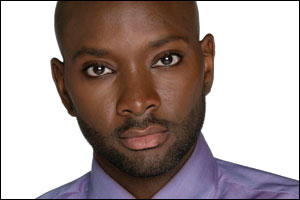
Patrik-Ian Polk hasn’t discovered a cure for AIDS, lobbied Congress for AIDS funding or consoled dying patients. But he earned the title “Heroes In The Struggle” against HIV/AIDS because he’s brilliantly used his gifts as a screenwriter, director and producer to entertain and captivate an audience while educating them about prevention. His works promote compassion and respect for those afflicted with the virus. Black AIDS Institute is honoring Polk and five other individuals at its 6th Annual Heroes In the Struggle Gala and Reception at 6 p.m., Thursday, Nov. 16 at the Directors Guild of America. This year’s theme is “That’s What Friends are Still For,” in tribute to Dionne Warwick and Friends. To purchase tickets, click here . On nights when “Noah’s Arc” airs on LOGO, MTV/Viacom’s lesbian and gay network, TV-watching parties are held in homes across the country. Groups of friends gather to enjoy the riveting plots. The audiences argue, laugh or cry over the realistic and hip characters portrayed on the screen. Polk is the creator, producer and lead writer of the acclaimed TV series “Noah’s Arc,” which is often described as “Sex and the City” with gay characters. “Noah’s Arc” is about four black gay men living in Los Angeles. “I know there are a lot of gay black men watching our show,” Polk said. “I want to present as many realistic messages about HIV/AIDS as possible. One of our lead characters runs an AIDS service organization. On the show, we see people getting tested and getting their results. One of the lead characters has been involved with an HIV-positive partner. We explore the realities of what it’s like to date someone who is HIV positive. The show puts out safe sex messages in a way that hits home but is not preachy.” “Noah’s Arc’s” first season is available on DVD in stores now, and repeats of the second season are airing. All 18 episodes of the show are available for download on iTunes. Polk said he hopes the show will have a third season. “We are waiting to hear about a third season…. It looks good and we’re very hopeful,” he said. “We want to continue to do more of the same. The HIV/AIDS issue is not going anywhere. As long as the show exists, I will continue to address the issue. I will also look to address the issue in my other work as well. I will always be a friend to the cause.” Doug Spearman, an actor who plays Dr. Chance on “Noah’s Arc,” said Polk’s commitment to the cause transcends the battle against HIV/AIDS. “Patrik, through his creative work, inspires black gay men to walk with dignity.” “The stories Patrik writes show gay black men in a positive light,” Spearman said. “It celebrates out loud what Patrik is and what I am.” Spearman said Polk boldly tells the stories of many gay black men, and judging by email and fan letters the show receives, each episode touches countless gay and straight people across the country. “Patrik lives with no apology,” Spearman said. “That’s what makes Patrik Patrik. He’s an artist, a romantic, a dreamer. He’s a visionary and he’s making an impact on our society.” Spearman said it’s obvious by reading Polk’s webpage on “My Space” that viewers identify with “Noah’s Arc.” The actor and longtime friend of Polk’s also has been invited to parties in Los Angeles where young people gather to enjoy an episode of “Noah’s Arc.” “People are debating over this show as if it were ‘Crossfire,’ ” Spearman said. “They talk about what the characters are wearing, how they comb their hair, who they’re dating and what’s going to happen next. The characters are compelling… and they help black gay men across the country not feel so isolated.” In addition to planning future episodes of “Noah’s Arc,” Polk is casting the feature film “Blackbird,” based on the novel by Larry Duplechan. This coming-of-age story about a high school student will be filmed in Polk’s hometown of Hattiesburg, Miss., this winter.
Polk attended Brandeis University in Waltham, Mass., and the University of Southern Mississippi in Hattiesburg, where he earned a degree in film and theatre. He took graduate classes at the University of Southern California School of Cinema-Television, where he wrote and directed a number of short films.
In 2000, Polk debuted as a director with "Punks," an independent feature that he also wrote and produced. Often described as a male version of “Waiting to Exhale," “Punks” picked up several international awards. Polk said that when he learned he would be recognized as a “Heroes In The Struggle,” he struggled to understand why he was worthy of such an honor. “It’s exciting. It’s flattering. I don’t know that I feel like I deserve such an honor,” he said. “There are doctors, lobbyists and activists who do a lot of hard work in the fight against AIDS, so I ask, ‘Why me?’ ” Polk said he does feel a strong sense of obligation and commitment to spreading the word against AIDS and HIV in a world where black gay men have the highest rates of new infections. “It’s always been important to me as a gay black man,” he said. “I’ve been working for many, many years with Camp Pacific Heartland, an organization for kids with HIV/AIDS.” His desire to work to prevent the spread of HIV and AIDS is always collaboration with others, he said. And one great influence and supporter of his work has been Phill Wilson, executive director of the Black AIDS Institute. “I draw my inspiration from the efforts of the tireless people like Phill Wilson, who have made this kind of work their life’s work. It’s difficult to imagine myself worthy of this kind of award…It’s a cool thing, and I’m happy to be involved.”
Anna Macias is a freelance writer based in Dallas, Texas.
Diaspora
By Yvonne Barlow
LUSAKA, ZAMBIA -- Musonda Chellah’s eyes shine when she talks about eating lots of fresh vegetables and taking care of her health. But her plump skin and wide smile conceal a deadly disease. Chellah is HIV positive. She believes she got the disease from her husband. “I was depressed. I told my husband, ‘You got this, you brought this to me,” she said. His health declined two years ago. He stopped work and lay in bed most of the day. The family relied on handouts from relatives. Chellah felt herself grow weak, and she worried about what would happen to their 1-year-old son. Then in August 2005, the Zambian government announced that antiretroviral treatment would be free to all who tested positive for HIV. As a result of the free therapy, Chellah’s husband has returned to work and he is providing financial support for his family. She smiles as she talks of the turnaround in health. “Some people look at us surprised. They say: ‘You are HIV positive! Are you sure?’ ” The announcement of free antiretroviral therapy was almost too late for Clementine Mumbwa. The 43-year-old secretary was diagnosed HIV positive in 1998. She was in good health for two years but then developed coughing fits and flu-like illnesses. She paid for three months of antiretroviral medicines and then ran out of money. Doctors advised her not to stop taking the medicines because she could develop resistance to the drug. But, she said, “I had nothing else to sell from my house. I just couldn’t afford it.” When the government announced free treatment, Mumbwa said she called out “Free at last!” Unfortunately, her short spell of paid treatment in 2000 has left her resistant to the most common antiretroviral drugs, and she now takes second-line treatment, a more complex cocktail of medicines. These drugs are not so readily available, and Mumbwa said she worries about the pharmacy running out. But she said she celebrates every time her blood tests show a rise in her immunity levels. Funding for the treatment comes primarily from the Global Fund for AIDS, TB and Malaria, The United States President’s Emergency Plan for AIDS Relief and from the World Bank. Zambia’s HIV infections rate is estimated at 16.5 percent, one of the highest in the world. According to Central Board of Health, 64,000 Zambians were receiving free Anti-Retroviral Treatment as of June 2006, and that number is increasing as a widespread government campaign challenges people to find out their status. “Do You Know?” is posted on billboards, newspapers and television, and teams of counselors are trained to take the HIV and AIDS prevention and treatment message out to workplaces, villages and churches. Dr. Dorothy Kasonde, a physician in Lusaka who specializes in the complications of HIV and AIDS, said it is still too early to assess the impact of free ARV therapy on the population, but she believes that death rates have been reduced. However, access to treatment is not always easy. Those testing positive must have counseling and their cocktail of treatment can take doctors several days to define. Employers aren’t always keen to give workers time off for this. “Some employers don’t believe it’s their problem,” said Dr. George Rubanga, physician with Afya Mzuri, an occupational health charity that takes the HIV message to the mines, factories and large farms staked across this vast country. There is little doubt, Rubanga said, that free treatment relieves the symptoms of HIV and allows sufferers to work and provide for their families. Mumbwa said free ARV treatment means that testing positive for HIV is no longer a death sentence. Chellah said it puts the infection into perspective. “It’s like diabetes and asthma – there is no cure, but it can be treated,” she said.