News 2005-Older
Column: In Times Like These...
By 'Rolake Odetoyinbo
Hey you, I guess you’re called HIV. Now, listen to me and listen attentively. Open your hyper-active, blocked ears and let’s talk. I think I’ve ignored you long enough and now you think you reign. This is the very last time you’re going to cause me discomfort. I’m simply sick and tired of you acting up when the mood seizes you. What exactly do you think you’re doing giving me shingles and making me cry? I haven’t wept over you in two years and I think that phase of my life is over. I won’t lie here sick, nursing this herpes zoster you’ve caused. I give you plenty of food, so just eat and leave me alone. You’re a devourer, and I pay tithes for the likes of you. HIV, you’re nothing but a bloody coward, hiding and mutating like a slimy chameleon. The only place you thrive is where there is shame, silence and fear, so I refuse to carry you around as my secret. You’re neither a ghost nor a spirit; you’re nothing but a stinking blinking virus! I’m all out to halt your spread everywhere, starting with my body. I have chosen to speak openly about you; I will shout out from the roof tops and let the whole world hear. Some clueless people say accepting you’re in my blood stream is the reason why I haven’t received a healing; they say openly proclaiming I’m HIV Positive gives you strength to carry on. When I allow their talk get to me and mess up my head, you laugh, get excited and act up, but I refuse to share this secret with the devil. I’ll keep talking about you. I’ll go on learning and revealing your secrets. All the foolish myths and misconceptions about you must be exposed for what they are. And to you CD4 and CD8 cells: Aren’t you meant to be soldiers? Isn’t that why God put you in my body? Better wake up and fight like the soldiers that you are. You are not alone in this war, so just keep telling me when you need extra help and I’ll get all you need for us to win this battle. You’re now getting very expensive extra help from acyclovir, so stand your ground against this buster called HIV. Remember this is a war you’ve got to win, otherwise, HIV will kill you all. And to add insult to injury, it’s going to use your very souls to make more copies of itself. You are the legal occupants of this body. You own the house, and HIV is a hated, unwelcome, intruding parasite. I hope you know this HIV doesn’t want to die and that is exactly what would happen if I die, so it isn’t ‘Rolake it wants to kill but you. Better let that sink into your nucleus. My dear DNA: Stop accepting the false order, you are the most important and influential thing on this side of earth. RNA is inferior to you, so identify it and refuse its commands. Receptors, don’t allow this intruder attach. I’ll tell you a secret -- that 419 chameleon just disguises when it knocks, so cell membrane, stop opening up to allow it in. My whole body system, say no to this descendant of its father who is only out to steal, kill and destroy. You are fearfully and wonderfully made, so let’s show this demon who is greater and stronger. Your word is law. Stand up for your lives. Together, we all can work to defeat AIDS -- and defeat it, we must. HIV, you won’t dare do this to me again. I must work this week to earn a living. I must feed you, feed me, take care of my family, pay the hospital for my tests, maintain the car, pay phone bills, buy selenium, Centrum, Vitamins and all the million and one things I need to remain productive and comfortable. Whether you like it or not, I must go down to Enugu to talk about you, and then I’ve got to go see those dear people you’re harassing in Owerri, so I need my strength and I’m not changing my plans for you. Obviously, you need attention and want to be noticed. Now the whole world is talking about you, but just behave yourself otherwise; I’ll get almighty ARV to fight you. We both know you dread this, but if you keep harassing me, slowing me down or killing my CD4 cells, ARV is what you’ll get. Kapish? Good, so just shut up and lie low or better still, get out! I’m too busy to indulge your every foolish whim. ’Rolake Odetoyinbo is a member of Nigeria’s Positive Action for Treatment Access. Her column appears monthly on BlackAIDS.org.
Newsmaker
By Rashad Burgess
Rashad Burgess is a program officer for the Centers for Disease Control and Prevention. During the 2005 HIV Prevention Leadership Summit in late July, Burgess, a black gay man who has been working in HIV since early in the epidemic, delivered the following keynote address. The annual meeting brings together organizations, individuals and local officials funded by the CDC to do HIV prevention work. It is considered a central event for shaping the year's priorities. Noting that he wanted to do "something different" from the usual numbers-crunching in his speech, Burgess spoke from a personal perspective about the summer's startling new research on HIV infection rates among Black gay and bisexual men. Good Afternoon! Usually when we at CDC speak during plenary sessions we give you power point presentations, statistics, graphs and charts, and many words or phrases that most people work very hard to understand, including me. Well, this afternoon I was asked to do something different, out of the ordinary and, for some, maybe even strange coming from CDC. I am charged with making a Call for Action. Now because of my own belief systems and the vision of those that asked me to speak, I am bringing all of me and my experience to this talk -- from previously managing a HIV Prevention program on the south side of Chicago, to my time spent on a community planning group, to my work at the Chicago Department of Public Health, in developing the MOCHA Coalition, and my current role as Team Leader at CDC. But this talk is rooted not only in my professional life, it also comes from my personal life as a Black gay Christian man -- someone who grew up in a time where I saw so many men like myself become ill and die, one by one in profound silence and shame. So this may not be the norm, but hopefully it will be a call that will ring far beyond these walls and this building. Over the past several years, CDC has released significant data describing the awful impact that HIV is having on Black ‘men who have sex with men.’ In case you missed it, let me remind you of some of the highlights of what this data have shown us. First, in 2000, Dr. Linda Valleroy of the CDC released data from a six-city Young Men’s Study showing that approximately one in three -- 33% -- of young Black MSM ages 23-29 were HIV positive. Secondly, in 2001, from the same study we found that the HIV incidence [the rate of new infections each year] among young Black MSM was 15%. Well, here we are in 2005 and the story continues to be dire -- and for too many of us even worse. In June of this year CDC released an analysis of data from five cities participating in the National HIV Behavioral Surveillance system and the results were saddening to say the least. Of MSM of all races, 25% were HIV positive with 48% unaware of their status. When the data was stratified by race the HIV prevalence rate for Black MSM was 46%, and two-thirds were unaware of their HIV status. That means that nearly half of all of the Black MSM that were tested in this study were HIV positive and the far majority did not know it. When I first heard this information, I remember initially thinking to myself: Well that was what we expected. I mean this is consistent with the results of the Young Men’s Study. Also, many of the CBOs who do work with Black MSM have seen relatively high rates in their counseling and testing programs. So this wasn’t necessarily new. We knew things were bad. But once I got beyond my initial attempt to validate the newly released data by connecting it with what I already knew, it hit me that there was no emotion behind my analysis. I did not feel anything. I did not feel what I believe I should have felt -- the feelings of anger, sadness, hysteria, or outrage! So why? How could I hear that nearly half of us anywhere in this country are HIV positive and most don’t know it, and it not sadden or outrage me. This was frightening. Had I been bitten by the bug? You know, the bug of apathy and numbness? Had I lost the emotion that one experiences whenever a community, anywhere, is devastated by any disease at these proportions? Had I gotten so used to people who look like and feel like me living with HIV that I no longer possessed the vision for us to live without HIV? It seems as if it has become the norm for Black MSM -- Black gay men, Black same-gender-loving men -- to have disproportionately high rates of HIV infection, which are equal to and surpass some sub-Saharan African Countries. This is not OK! This is not right! This is not normal! I must be moved! All of us must be moved. We must not accept that it is OK for anyone else of any group to become infected with HIV. When we hear that potentionally one-third to one half of a single community may be HIV positive, right here in our own back yard, churches, schools, clubs, cities…We must act and act now. Apathy is no longer OK. We must be outraged. It is important for me to say that since June there has been some activity, and a group of amazing African American men are mobilizing to respond. We at CDC are in the planning stages of a number of responses including a consultation with key community members and stakeholders. But I am afraid that even if these efforts are amazingly successful the problem is so big and so dire that it will not be enough. Well, I know that some of you may be asking, what can I do? Well I’m glad you asked. First we need you to be angry, outraged, mad and sad! Not accepting that it is OK that HIV infections among Black MSM are so high. Second, be willing to take the risk and raise the issue even if it doesn’t directly benefit you. Ask the questions at the next community planning group meeting: What are we doing? What have we done? Are we doing enough to address this problem? Raise your voice. Make a commitment to do something. Recently I was speaking with both my partner and grandmother about what is going on with Black gay men in HIV infections and how frustrated so many of us are. Even with some of the organizing that is taking place, I’ll take the risk and say many of us are tired, weary and frustrated that 25 years into this epidemic we are in this place. People who have given their lives to the cause of HIV have gotten tired, even the new folks are getting tired quick. So when I shared this with her she said the strangest thing to me. “Remember David,” she said. At first I didn’t know who or what she was talking about. We don’t have any relatives named David, so I was really at a loss. She continued, “Remember David and Goliath.” Now, I told you that I was going to bring all of me, and part of me is a deep church boy. So, my Grandmother knew that the reference of David and Goliath would have deep meaning for me. I am not sure how many of you know the story but it is quite an interesting story. David, a young, Israelite and unassuming man, is at the forefront of the battle between the Israelites and Philistines. And the Philistines’ great warrior is this huge, overpowering giant named Goliath, and all that encounter him deeply fear him. After much discouragement from his brothers, because they didn’t believe David was a match for Goliath, David faced him head on. He took what he had, looked the tall giant in the eyes and reached in his bag, pulled out a pebble and threw it at him, and did so three times. On the third throw he hit him in the center of his head and it pierced his skull and Goliath fell to his death. This story brought to my mind that each of us has a pebble that can be used against those forces that are working against our greater good. I began to wonder what it would mean if everyone sitting in this room took out one of their pebbles and threw it in the direction of HIV and the impact it is having on Black MSM. For some, that pebble will be in the form of raising the issue at the next community planning group meeting. For others, the pebble will be going to speak with your executive director, program director or board of directors and asking to make some programmatic expansions or shifts. For others your pebble is releasing an RFP and targeting resources to address this issue. For some the pebble is making a commitment to target more Black MSM for HIV counseling and testing. For you, the pebble may be organizing some people who care to do much more than I can even speak to. Just imagine that if David, one person, can defeat a Goliath with several throws of a pebble -- which later leads David to his kingship -- just imagine the impact if all of us picked up just one of our pebbles in our possession and directed it towards this issue. I am going to leave you today with this. I believe that if we just make a commitment to do something, to act, to pick up just one of our pebbles and direct it towards this issue, the universe will conspire for our success. Thank You.
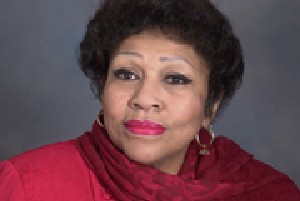
Cook County Rep. Constance Howard led the Illinois legislature in drafting the African American HIV/AIDS Response Act.
By Keith Green
Illinois Governor Rod Blagojevich signed on to a first-of-its-kind bill last Friday, August 19th, that launches his state into a massive, government-wide initiative to address the AIDS epidemic among African Americans. AIDS activists say no previous federal or state law has marshaled a similarly wide swath of public resources for work specifically targeting the Black epidemic. Dubbed the African American HIV/AIDS Response Act, the new law follows a June U.S. Centers for Disease Control and Prevention report that estimated African Americans account for nearly half of all HIV infections in the country. In Illinois, where African Americans make up only about 15 percent of the population, they account for 51 percent of diagnosed AIDS cases. The new legislation, which takes effect January 1, 2006, calls on the state to establish point people for the initiative in the Governor’s office, the Department of Human Services, the Department of Health and the Department of Corrections. A panel consisting of representatives from each of these agencies and from three HIV/AIDS service organizations, along with two former prisoners, will develop an annual report for Governor Blagojevich on the state of AIDS among Illinois’ African-American residents. The bill also mandates that “high-traffic” state agencies, such as the Department of Motor Vehicles and the secretary of state’s office, create space for community-based HIV/AIDS organizations to conduct rapid HIV testing. But the aspects of the bill that have been called both its most ambitious and its most controversial seek to get a handle on the still-shadowy epidemic behind bars. According to the U.S. Department of Justice, the AIDS case rate in the nation’s jails and prisons is three and half times that of the general population. Illinois’ prison epidemic is more intense than any in the Midwest, with 1.3 percent of inmates known to be positive. Under order of the new law, the Illinois Department of Corrections and county jails will be required to offer free voluntary testing and counseling to all inmates upon and during incarceration, as well as immediately prior to their release. Case managers will be assigned to help positive inmates transitioning out of incarceration and refer them to support services on the outside. In addition, researchers at the University of Chicago will conduct a study to examine the correlation between incarceration and HIV infection. Prison health advocates nationally have long complained that correctional facilities rarely allow such research. Initially, the legislation also authorized condom distribution to inmates. But that provision was later removed due to heavy opposition from the Department of Corrections. Only two state prison systems, Vermont and Mississippi, make condoms available to prisoners, though a handful of city jails do so. The law was originally developed by Illinois State Representative Constance A. Howard and Lloyd Kelly, who directs Howard’s “Let’s Talk, Let’s Test Foundation,” which helps raise money for Black AIDS groups throughout Chicago. Howard’s bill first called for mandatory testing of inmates, a population that some believe are largely responsible for the growing disparity in HIV infection rates among Black and white women. But many community advocates, including members of the Black Health Alert and the AIDS Foundation of Chicago, strongly opposed forced testing. “When I first looked at this bill, I encouraged my colleagues to strongly reconsider that piece,” says the Reverend Doris Green of the AIDS Foundation of Chicago. “Who are we to force anybody to do anything?” she continued. “And, more importantly than that, have we considered the effects of enforcing something of this magnitude on the lives of prisoners? Have we really considered that?” she asked. After several intense discussions and debates, lawmakers agreed to make testing an option, rather than a requirement. “The only way that we are going to beat HIV and AIDS is for everybody to know their status,” Kelly says. “I am really excited about this bill, because it increases exposure to HIV testing and expands the potential for us to let African Americans, in particular, know that this disease is a serious issue within our community.” But given the political landscape for HIV/AIDS funding nationally, some here fear that this will be just another wonderful piece of legislation without the money needed to support it. Illinois AIDS activists largely credit state government with doing its share to support local AIDS work. But Washington has all but flat-funded its HIV/AIDS-services budget since 2001. And the Bush administration recently proposed a suite of changes to the Ryan White CARE act that would shift resources from urban to rural communities, rather than pumping new money into both. “Sure, we extend our testing capabilities…that’s great and necessary,” says Montre’ Westbrook of Test Positive Aware Network in Chicago (which publishes a magazine that employs this writer). “But are we prepared to deal with an even greater number of HIV-positive people on an already way overtaxed budget?” Kelly agreed that supporting this legislation with adequate funding should be a priority. “We have always realized that you can’t eat an elephant at one time,” says Kelly, “you have to do it one bite at a time. So getting this piece of legislation into law is only the first step in our plan of action. Getting money for it is the next.” Rev. Green stated that the AIDS Foundation of Chicago is also committed to helping secure the funding necessary in order for this act to be completely effective. She warned, however, that bureaucratic hurdles must not slow down implementation. “We already have a lot of the people in place we need to carry out the plan,” she noted. “People who are well qualified to do the work. We don’t need to do a whole lot of hiring, the only thing we really need to do now is just do the work.”

By Kenyon Farrow
Last week Roc-A-Fella recording artist and producer extraordinaire Kanye West did something most would think to be career suicide for a Black hip-hop artist, and just days before dropping his sophomore effort, "Late Registration." During an August 18 MTV interview, Kanye spoke candidly about the impact of homophobia on his own life. He touchingly recounted his own insecurities as a not-masculine-enough youth and challenged hip-hop artists to end the homophobic content of their music. “I wanna just come on TV and just tell my rappers,” West said, “just tell my friends, ‘Yo, stop it fam.’” Kanye’s astounding interview is being talked about all over the world right now, but the impact is really yet to be fully seen. I certainly hope his remarks will help bring about the day when I have to hear less of the words “faggot” or “chi-chi man” every time I turn on the radio or go out to dance. But Kanye’s story may be more important for what it demonstrates about the process of social change than any particular outcome that follows. Kanye’s remarks are making such a seismic impact because no part of the explosion of media images dealing with LGBT people in recent years has come from or been targeted at the Black community. Despite all of the talk about how easily gay people have integrated into pop culture, as Kanye West points out, “the exact opposite word of ‘hip-hop,' I think, is ‘gay’” – which makes it the opposite of a defining part of young, Black life and culture. Black people must see other Black people confront homophobia, and must see LGBT people as Black people as well, if we are ever going to make real progress shifting attitudes. Kanye, bravely and boldly, has realized this fact. And his testimony couldn’t have come at a more apt time, in the midst of a summer in which we have once again heard startling news about HIV’s rampage among Black gay men – a reality that, in no small part, is driven by the Black community’s failure to embrace and support us. Kanye opened his story on MTV by talking about his close relationship with his mother, which is captured in a song on his new CD entitled “Hey Mama.” He explained that growing up with his mother meant that he also took on some of her mannerisms. When he got to high school, this fact meant he was often ridiculed for being a “fag.” And, in turn, he became very homophobic. But when Kanye learned through one of his cousins that another cousin in the family was gay, he began to rethink his stance. "It was kind of like a turning point,” he told MTV VJ Sway, “when I was like, `Yo, this is my cousin. I love him and I've been discriminating against gays.'" And there it was, the cycle of homophobia broken. Kanye’s seeing his cousin as gay helped to humanize Black LGBT people in his eyes and prompted him to in turn abandon the sort of knee-jerk attitudes that prevent people like his cousin from being able to come out in the first place. As Kanye so articulately explained in describing the roots of his own homophobia, “If you see something and you don't want to be that because there's such a negative connotation toward it, you try to separate yourself from it so much that it made me homophobic by the time I was through high school. Anybody that was gay I was like, ‘Yo, get away from me.’” It is often assumed that the Black community is more homophobic than the white gay community. But while there is certainly homophobia in the Black community, the buzz surrounding Kanye’s remarks shows the real issue may be how rarely the topic is actually addressed substantively and humanly. Black people still rely most heavily on indigenous sources for information about the world around them, particularly about issues like sexuality and health. Several studies have reminded us of this fact, and of its impact on the way we’ve responded to the AIDS epidemic – our griots, from media mavens to ministers, too often chose silence or disdain over education and communication. Not until mothers of dying gay men began to organize AIDS ministries in congregations did ministers begin to speak on the issue. And still today, as AIDS becomes a growing concern of mainstream Black organizations, we hear a deafening silence about what the epidemic means for Black gay and bisexual men in particular – the group of people most impacted by the epidemic. Black media, from entertainment to news, has largely ignored this aspect of the epidemic. Recent years have certainly seen an unprecedented increase in the amount of news coverage, TV programming and public relations efforts by white gay advocates and celebrities that has put a “face” on the gay and lesbian community. But when it comes to health and sexuality, the rising tide truly does not lift all boats equally. Black LGBT faces have been made invisible by this media blitzkrieg of white middle-class gays. While Black folks may watch Queer Eye or Will & Grace, the white gay images they project do little to sensitize straight Black viewers to the needs, issues, and concerns of Black LGBT community. And that’s what makes Kanye West’s bold statements so remarkable, and gives them such potential as a catalyst for healthier discussions around gender and sexuality in the Black community. He is a cultural icon who has a reputation for breaking molds and taking on issues in his music that people thought could not be broached in hip-hop – all while still selling millions. He also has “street cred” among Black youth, and even Black people disgruntled with the hyper-consumerism, sexism and homophobia in hip-hop respect Kanye for his work. Most importantly, he has access to the sort of mass media that can carry his message far and wide. But change cannot begin or end with Kanye West. It was really Kanye’s seeing his cousin as gay that caused his shift his thinking. While public education campaigns and more visible opposition to homophobia in the Black community is key, it is ultimately the work that we, Black LGBT people do in our families and in our communities that will make the difference. This summer may go down in history as a huge turning point for the Black lesbian, gay, bisexual and transgender community, and for our relationship to the Black community at large. On one hand, we have seen great setbacks: the down-low craze continues to demonize us; new research suggested half of us in major cities may already be positive. But on the other hand, we are engaging the community with renewed determination and hope. A few weeks ago Rev. Al Sharpton announced that he was launching a public education campaign to combat homophobia in the Black community. In early July, the Black LGBT community in the nation’s capital publicly challenged Rev. Willie Wilson’s homophobic remarks. The New York State Black Gay Network's July REVIVAL! was a direct call to challenge the spiritual violence of Black clergy, and to affirm the lives of Black LGBT people of faith. And in June, The Souls A-Fire! Conference in Chicago brought together activists, academics and artists to discuss sexuality and the Black church. Maybe we have finally reached the “sick and tired of being sick and tired” point. Everyday, I’m sensing greater resolve in the voices of weblogs, at community planning meetings and even in social spaces that suggests a collective statement: I am fed up. But I am ready to fight. Maybe it is now, when our backs are against the wall and we have nothing more to lose, that we can begin to see that what we have to everything to gain. But in order gain, we must be willing to tell our stories to our families, our neighbors, and our communities. And we must support (and continue to challenge, as we must also deal with how Black women are depicted in hip-hop) brothers and sisters like Kanye, who take great risks to get our backs.
Breakin' it Down: Finding a Vaccine
By Steve Wakefield
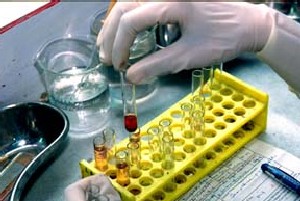
Last week, BlackAIDS.org reported on a National Institute of Allergy and Infectious Diseases survey that found a majority of African Americans believe that HIV vaccines are the best hope for controlling the global AIDS epidemic and are confident such vaccines can be made. But while most of those surveyed felt it important to help support HIV vaccine research, a majority also expressed reluctance to support a friend or family member’s participation in an actual study. The survey also showed that some of us were out of the loop on what vaccine research is all about. Nearly four out of five Blacks either thought they could get HIV through a vaccine or didn’t know whether it was possible. Nearly half of the Black respondents to the poll said they believed a vaccine exists but is being kept secret. For years, AIDS advocates have warned that not enough people of color of all stripes are participating in vaccine research. The same can be said for clinical trials of medications to treat the disease. The NIAID study suggests part of the reason for that disparity just may be that we don’t know all the facts about the process. So here’re some popular myths about vaccine research, along with the answers to set you straight. Myth: They’ve already found a vaccine that will protect me from contracting HIV. What exactly is a vaccine? It’s a substance, usually injected, that teaches your body to fend off a virus that might invade before the infection actually occurs. That way your body’s already prepped for the fight if you’re ever exposed. Some people get a flu shot every year, for instance. Most people get shots as a child so that they never have to worry about polio or measles. Studies known as “clinical trials” are being conducted to find one that works to protect us from HIV, too. It’s also possible that a vaccine could slow down the disease’s progression in people already infected with HIV. So far, over 20,000 people have helped test more than 30 potential vaccines, but we still don’t know which one will work. That means many more people are needed. Myth: You can catch HIV by volunteering for vaccine research. The people working to find an HIV vaccine are the same people who found the drugs we use to treat HIV and AIDS today. Strict rules governing medical research prevent them from testing a product that has any chance of giving someone HIV. Myth: Medical researchers can’t be trusted, especially those funded by the government. There are also local groups called Community Advisory Boards, or CABs, which take a hard look at what each study is doing to protect volunteers and help those volunteers them understand the research taking place. CABs include people who have been in other studies, nurses, college students, journalists, parents and others who understand the science and can voice community concerns. Myth: Black people can benefit from whatever vaccine they find without participating in the research. Some other vaccines are showing that gender makes a difference, perhaps race does well. We need to develop a vaccine that will work in the context of everyone’s actual day-to-day life. Do diet, exercise patterns, stress levels, the presence of other illnesses or any host of factors that vary between racial and economic groups matter? The only way to know is to do the studies with enough Black men and women participating. Myth: When they find a vaccine AIDS will be over. For more information about vaccine research, or to find study sites near you, visit the website of the HIV Vaccine Trials Network.
Truth: Nope. But we’re working hard on it, because 13,000 people get infected every day.
Truth: Nope. It is impossible to get HIV infection or develop AIDS from experimental vaccines, because they are not made from live HIV, killed HIV, weakened HIV, or HIV-infected cells of any sort. It just can’t happen.
Truth: Our community has certainly had problems with medical researchers. Tuskegee anyone? But today’s HIV vaccine studies are closely monitored by several watchdog groups, and their research teams include representatives from the communities in which the studies are taking place.
Truth: I’m afraid not. If Blacks don’t participate in large enough numbers, we will not know if the vaccine works for our lives and bodies too.
Truth: If only it were so. A vaccine is not a cure. And it will not single-handedly end the AIDS crisis. People already infected -- that is, people living with HIV today -- will still need better treatment and better care. And even with a vaccine, condom use, abstinence and other ongoing HIV-prevention efforts will still be important tools for stopping the virus’ spread.