News 2005-Older
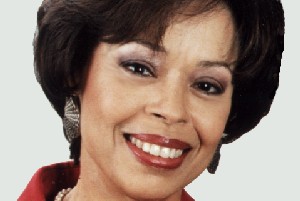
Newsmaker Interview
Here’s one of the least-discussed but more startling facts about HIV among women in America: As many as half of women living with the virus report a history of sexual abuse in their childhood, according to the U.S. Centers for Disease Control and Prevention. So Dr. Gail Wyatt, working with her colleagues at the University of California, Los Angles and CDC, have designed what CDC says is the nation’s first prevention program specifically crafted for those women. And given the dynamics of the female epidemic – Blacks account for 69 percent of new infections among women – the program is tailored for African American and Latina women in particular. During the CDC’s National HIV Prevention Conference in Atlanta this June, Dr. Wyatt presented some refreshingly good news from the study: participants were one and half times more likely to report healthier sexual behavior than a control group of women not participating in the program, including 100 percent condom use. BlackAIDS.org editor Kai Wright spoke with Dr. Wyatt about her work. BlackAIDS.org: Give me the back of the envelope version of what the project is doing and has found. So these are severe experiences that we found that HIV positive women tended to have, even when we compared positive women to negative women with similar background characteristics. And so we, at UCLA and my team, felt that an intervention that specifically targeted these experiences, and that not only helped women cope with past trauma but also living with HIV and the responsibility that requires, would be an intervention that fills the gap from those programs that simply teach condom use and risk reduction without really asking why people engage in high-risk sexual behavior. Or asking what kinds of experiences place them at increased risk. One thing you mentioned in Atlanta was that we think, ‘Why not just get out of these relationships if they’re abusive or not positive, why would you persist in things that are damaging to you?’ And you said we don’t think about the notion that any relationship may be better than no relationship. And that’s because... ? Why look at positive women? So what are the dynamics that impact adherence to treatment regimens? And explain to me what exactly the intervention you developed does? The intervention lasted 11 weeks, with a trained facilitator and co-facilitator who was herself HIV positive with a history of child sexual abuse. So that women, African American and Latina women, had an opportunity to meet together in groups and to discuss their histories of violence and trauma, and their attempts to cope with HIV and to really put together a strategy for reducing high risk sexual behavior using group support, learning skills of negotiation and also learning how to cope more effectively with their past histories of abuse. And through that you were able to measure a decrease in risk behavior? So it sounds like just getting folks to start talking about this past experience and how it impacts today. So that the infection then becomes a second form of abuse.
Dr. Wyatt: This is an issue that our society hasn’t totally embraced as one of concern. A person with a history of child sexual abuse doesn’t always tell, so many times it’s not possible to know whether there needs to be some sort of family support or therapy or intervention. But many children do tell, and they are punished because parents may blame them in some way for these events occurring. And the events themselves have to do with someone else making decisions about your body, many times insisting on silence, many times exposing children to sexual experiences that are far beyond their age or even desire to know anything about for that particular time in their life. They often involve force. And for two out of the three women in our study, a family member was involved.
Right. Availability of relationships and partners has a lot to do with why people stay in the ones that they’re in. It isn’t always that there’s other fish in the sea, and particularly for African American women. Finding another partner isn’t always easy. And the likelihood of finding and maintaining relationships if you’re HIV positive is also challenging, and I think significantly more challenging than it is for an HIV positive man.
The availability of a partner places men in a premium position; they are usually the ones who choose their relationships. Women today, particularly African American women, feel that there is a shortage of men -- and there is. They are either not interested in women, dead, or in prison. And there are fewer men in the African American community. So relationship building is not an easy task, and many women feel that they’re competing against other women who will do anything.
Well, we looked at both positive and negative women in order to compare similarities and differences in the way their relationships work out, and to better understand how being HIV positive might affect a woman’s relationships. And so when I’m answering questions based on why women stay in abusive relationships, it’s based on a longitudinal study that was funded by the National Institutes of Mental Health. For seven years, we followed 157 women -- African American, Latina, European American women. And then from that study we developed an intervention for African American and Latina women.
People with abuse histories tend to be distrustful of people who work on their bodies. So they may doctor shop, which means they go to a number of practitioners, go to emergency rooms where no one has a history on them. And as a consequence, not really have to deal on an intimate level with their bodies and how they function -– certainly not to discuss past painful experiences that may be embarrassing or humiliating for them to describe. And many health professionals don’t ask. So the issue never comes up. But we find that women tend not to pay attention to their bodies in the same way, and want to avoid exams and discussions that have to do with their adherence.
First, this is a community sample of women throughout Los Angeles County. They were not necessarily in clinics; many of these women were not taking medication at all. And I think that’s an important issue because many times clinic studies give a completely different picture in minority communities. They’re of people receiving the medicine. So when you’re not taking medicine, you’re not in any studies on HIV and risk taking behaviors. Secondly, we described sexual abuse as an unwanted experience that occurred before the age of 18 with a relative or non-relative. So women didn’t necessarily define their own experiences as sexual abuse. Many in fact blamed themselves for the incidents occurring.
Yes. And we were also able to measure an increase in adherence to HIV medication. If they were not on medication, they went on medication or went to the doctor, and began the regiment.
Talk about it, not be ashamed of it, and to also meet other women who have had similar experiences. And making the connection between past experiences, when someone takes advantage of you, and current experiences, where they may be willfully selecting partners who take advantage of them. Most of these women were infected by partners, they were men they loved or were married to. And it was a very painful experience to come to grips with the fact that two people had taken advantage of them in their lives, maybe more.
Exactly. So we’ve taken that design of the study and now we have an ongoing study with men, with hopes that we can find the same kinds of effectiveness in the intervention with men who are HIV positive and have histories of child sexual abuse.
Positive Poetry
By Precious Jackson
Hi, my name is Precious. I
want to tell you a little about myself
so you can get to know me a little
better.
I was raised by my grandmother
and step-grandfather in
South Los Angeles. Due to my
parents' drug addictions at that time,
they felt it was best that my grandmother
raise me.
I had a sheltered life, so you
know what that means. My grandmother
loved and cared a lot about
me, she did the best she could, as she
knew how. I still grew up feeling less
than adequate and unworthy. I felt
ugly, and I was thin. I remember
when I was in junior high school,
there was this black girl walking
down the hallway who was thick and
already developed. When she
walked by me I could hear her jeans
go "swish-swish". I though that if
my jeans could do that, then all the
boys would like me and I would get
the attention that I wanted. I just
wanted to fit in with the "in-crowd"
and to be accepted.
When we became sexually
active, he stated up front,"I
don't use condoms, so don't
ask." And of course, I didn't.
I felt different because most
of my friends lived with their parents,
and I didn't. My parents would
pick me up on weekends, and those
were the days I wished for all the
time while growing up. My mother
and father were so loving and caring
when I was with them. They weren't
strict and they were open-minded, so
I felt free to tell them things that I
couldn't tell my grandmother.
My grandmother didn't
allow me to make decisions about
anything, especially when I was a
teenager and even until my adult
life. I remember how my father and
grandmother always had arguments
about me. They would argue about
how she wouldn't allow me to make
my own decisions, or go out with my
girlfriends to the mall or movies.
She always called them "fast ass
heifers". I am not putting down my
grandmother at all, I love her dearly,
and I know she did the best she
knew how.
I learned co-dependent
behaviors early on as a child, and it
carried on into my adulthood. There
was a void in my life and I couldn't
figure it out. I always felt that if I
could get a man, he would complete
me - mind, body and soul. Each time
I went into a relationship, I felt like
this was it, and when it wasn't, once
again I was out there, hurt and mad.
For years, I would jump in and out of
relationships thinking that I had
found love, but what I found was
heartache and pain. I would allow
men to use and abuse me, because i
didn't want to feel rejected or make
them upset by hurting their feelings.
Whenever they wanted me to have
sex with them, even when I wasn't in
the mood, I did it anyway. Most of
the time I just wanted to cuddle, but
I didnt know how to express myself
back then. So each time I fulfilled
their needs I felt torn up inside, but I
didn't know how to stop.
It seemed the older I became, Precious Jackson is a treatment adherence counselor at Women Alive in Los Angeles. This poem originally appeared in the organization's spring 2003 newsletter.
the worse my neediness and desire
for love became. In 1996, when I was
about 25 years old, I met a man who
was light skinned, fine and tall. He
also had his own place, a car and a
deep sexy voice. I just knew I had
found my husband. When we were
dating I had asked him if he had ever
taken an HIV test. He told me that
he had, and it came back positive.He
then told me that he had taken
another test, and that it had come
negative. Back then I didn't think
anything of it because some tests were
coming back inconclusive.
A year and a half into our
relationship, he became a ward of the
California Correctional Center. In
May of 1998, I received a letter from
him stating that he had tested positive
for HIV antibodies and was HIV+. At
the time I was living with my mother,
who had been clean and sober for
nearly 14 years. After reading the
letter I knew I was HIV+ because we
didn't use protection at all. Back
when we were together and sexually
active, he had stated to me up front, "I
don't use condoms, so don't ask." And
of course, I didn't ask.
I told my mother about the
situation, and she encouraged me to
go get tested. I will never forget how
she held me as I cried like a baby.
"Baby, we are going to get through
this together," I remember her saying.
With those words of encouragement, I
went and had a test. I recieved my
results a week later, and my test came
back positive. I was HIV+. After my
diagnosis I went through more drama,
and once again my self-esteem and
self-worth were at the floor. I was
tired of going through all the drama,
and I wanted to do something about it.
I went to therapy and started working
on myself to get rid of all my personal
baggage. That's when I discovered I
didn't know how to love myself, and
that I was looking for people, places,
and things to fulfill my needs.
Today, I am still working on
myself and learning how to love and
accept me. It is only through the grace
and mercy of God, who I have allowed
to be the head of my life. Through
my spiritual journey, I found that God,
not men, places or things, complete
me.
The Black AIDS Institute family continues to pray for all of our brothers and sisters struggling with the aftermath of Hurricane Katrina. We also share the widespread concerns voiced by our community leaders that the federal response to yet another public health disaster for poor Black Americans has once again been too slow and too little, and we join the community in demanding answers as to why that is the case. One of the many building health challenges in the disaster area is keeping poor people living with HIV and AIDS healthy. The National AIDS Fund has established a Katrina HIV/AIDS Emergency Fund to support agencies working to do just that. The National AIDS Fund is also trying to identify individuals who have been relocated around the country and help link them with appropriate care. The group planned to release applications for local AIDS organizations seeking help today; those wishing to donate to the effort can do so online. The AIDS Alliance for Children, Youth & Families also established a relief fund for AIDS service agencies in the immediate aftermath of the disaster. The group announced on Friday, Sept. 9, that it has raised nearly $30,000, all of which will go directly to local programs working with people with AIDS. You can find more information about the fund and donate to its ongoing campaign online. Helping those who were in treatment when the storm struck not interrupt their drug regimen is also a challenge. The Texas Department of Health has stepped in to provide a month's supply of meds for Katrina survivors who were enrolled in ADAP programs in Alabama, Louisiana and Mississippi. Those who qualify can apply online or call (800)255-1090. BlackAIDS.org has received unconfirmed reports of other states around the country that have begun or are considering similar efforts. Gilead Sciences also announced on Wednesday, Sept. 7, that it would offer people displaced by Katrina "expidited enrollment" in its patient assistance program, through which uninsured people can get meds. Gilead will waive the standard documentation requirements for the program, which it calls "Advancing Access," and offer two months' worth of prescriptions to displaced patients who need one of the four HIV meds it manufactures (Truvada, Viread, Emtriva, or Hepsera). To apply or inquire, call (800) 226-2056. Gilead also said Wednesday it will replinish the stocks of area ADAPs that, like Texas, offer meds to displaced patients from the affected states. In Los Angeles tonight, Monday, Sept. 12, the performers who sponsor the annual DIVAS Simply Singing concert to benefit AIDS work are putting on a special benefit show to raise money for Katrina survivors. For those in the Los Angeles area, the event will be held at the El Rey Theater at 5515 Wilshire Blvd., doors opening at 7 p.m. and performance starting at 8 p.m. Admission is $25. For those looking for ways to help outside of the Los Angeles area, the National Minority AIDS Council has compiled an exhaustive resource page. It both directs people with HIV/AIDS in the disaster area to places where they can get help and offers suggestions for people looking to donate money and time. POZ magazine has also compiled a resources page.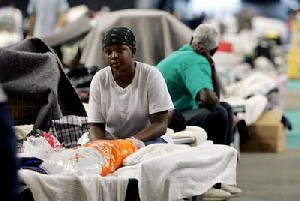
Special Report: Policy & Advocacy
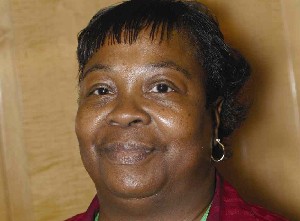
By Judith Dillard
Let me tell you the story of a nice African-American girl from Texas who didn’t think she could get HIV -- but did. It’s also the story of how she tried to kill herself over it. And it’s the story of how she found something to live for by fighting to stop the epidemic in her people —- and by joining an amazing new AIDS activism movement called The Campaign to End AIDS that’s taking her and thousands of others all the way to Washington, D.C., this October. Oh, by the way, it’s my story. My name is Judith Dillard. I’m 51 years old. I grew up in Abilene, Tex., in a close-knit family. Then I moved to L.A. with my husband. He worked for United Airlines and I was a sales associate for J.C. Penney in Culver City. But he left me for an ex-girlfriend. I took it bad—but I reacted by finding a few boyfriends of my own. Of course, I didn’t have safe sex with them. This was the 1980s -— I thought HIV was something only gay white men got. I needed back surgery in 1990, and the doctor told me that I’d need three pints of blood, but that I could use my own, so I went to the blood bank. Soon after, they let me know that I’d tested HIV positive. I was devastated. I thought I didn’t know anything about the disease except that I was going to die. I couldn’t deal with it and didn’t want to tell anybody. So I did a complete about-face. I called work and told them I wouldn’t be coming in anymore, left my whole apartment behind and got on a bus to downtown L.A. I checked into a cheap hotel and started smoking crack with people there. I just didn’t want to live. For seven years, I ran with homeless people and drug addicts on the streets of L.A. I became one of them myself. Everybody I met would ask me, “What’s someone like you doing down here?” Two years in, I confided to a girl that I had HIV —- and she told everybody on the streets. Some folks treated me like I had the plague. I’m sure in that crowd, I wasn’t the only one with HIV, but I was the only one who was out with it! Occasionally I’d go to an AIDS agency, where they’d hook me up with a doctor and a supply of meds. I’d walk out of there and dump them in the garbage. I just didn’t care. Finally, in 1997, I got busted for crack possession. The judge said I could go to prison for three years or to drug rehab. I picked rehab, where they had a program that teaches you that drugs are just the surface problem of an underlying issue. For me, that issue was HIV. I looked forward to those classes every day. They made me accept that I had to learn to live with HIV and that drugs were not the answer. Now I’ve been clean for eight years. After the rehab program, I went to a transitional housing program. That where I decided to throw myself into HIV/AIDS activism. I got involved in L.A.’s planning council for the Ryan White CARE Act for treatment and services for people with HIV/AIDS, which decides how that money is spent in L.A. When I heard a well-paid “expert” say that one of the top three needs of women of color with HIV/AIDS in L.A. was pet care, it pissed me off. I joined the Women’s Caucus of HIV and AIDS, and together we made our real top priorities clear -- housing, medical care, child care and transportation, thank you very much! Since then, I’ve worked as a benefits specialist, treatment educator and peer counselor for different AIDS services agencies in the L.A. area. I wanted to do as many things as possible to turn my life around. I moved back to Texas after my dad died last year to be closer to my mom and family, but now I’m doing the most exciting AIDS activism of my life. I’m working on the Campaign to End AIDS. C2EA is a nationwide coalition of people with HIV/AIDS and their supporters that formed early this year —- thousands of us across the country, from gay white men in New York City and San Francisco who’ve survived the disease for 25 years to African Americans from all over the country —- especially the Deep South, where HIV/AIDS is hitting our people really hard. Right now, Black folks make up over half of all new infections in the U.S. -— and I know most of my people can’t afford to pay for HIV/AIDS meds and health care. That’s why I think HIV/AIDS has become a civil rights issue in the U.S. At the same time that the disease is hitting our people hard, our government is squeezing off funding for programs that keep us alive, like Medicaid and the AIDS Drug Assistance Program. One of C2EA’s front-burner demands for 2005 is full funding for programs like that—and not just for us African Americans, but for our brothers and sisters in Africa, who are dying left and right from this disease. We also want the government to support HIV prevention based on science —- like condoms and clean needles for drug addicts -—instead of religious ideology, like abstinence-only sex ed classes. Our young people need to get all the facts if we’re going to turn this epidemic around. But the most exciting part is that, in a few weeks, thousands of us are heading to Washington, D.C., in nine caravans making their way through every state in the country. I’m one of the organizers of “Waves Across the Ocean,” which starts in San Diego on September 27 and is going all through the southwest and the south on its way up to D.C. -— including a stop in my hometown of Abilene, Tex., where my mom is hosting a rally to End the Silence on HIV/AIDS. In Phoenix, Ariz., four churches are blocking off the streets for a huge outdoor prayer service. In Charlotte, N.C., a thousand of us will march in the streets. We’ll have events like that all along the way until we get to D.C. on Oct. 8 and spend five days rallying, marching, protesting, lobbying and praying that our government leaders do the right thing when it comes to HIV/AIDS. You can be part of the Campaign, too. Go to our website or call 1.877.END.AIDS to find out which caravan is stopping in your town (or a town near you) and how you can be involved in those events. It’s even not too late if you want to come along for the ride or join us in D.C. Or even just make a donation to help folks like me make it to the capital. Ending the epidemic —- for our people and for all people —- won’t be easy, but if we keep the faith and speak as one, we can make those in power take steps to lick AIDS. Take it from me —- I know a little bit about beating the odds.

Special Report: Policy & Advocacy
Congress returns to session this week to face a breathtaking pile of fall work. Disaster relief and the Supreme Court vacancies will occupy much of lawmakers' energy, but they've got other pressing concerns too. They must pass a budget for the coming fiscal year, including for AIDS work. And they must reauthorize the law that provides funding for the vast majority of the feds' AIDS care programs. Every five years, Congress re-ups the now-$2 billion Ryan White CARE Act. During the Act's previous two reauthorizations, legislators have done little more than tinker with its workings. But a strong and growing debate among AIDS providers about the way the law works -- and the way it divides up resources -- is likely to force substantive changes this time. We'll all have to live with the decisions Congress makes for at least the next five years. So BlackAIDS.org has complied a Ryan White reauthorization primer to help you get involved in the process of shaping your future. What's Ryan White? A Fraying Safety Net It's a Black Thing What's wrong with it? Southern Discomfort Stretching a Dollar Thin What do they want to do about it? The President's AIDS Plan AIDS activists and service providers are making some recommendations of their own, but they're hardly speaking in unison. Here's the position papers of two of the Ryan White debate's primary participants: • The Southern AIDS Coalition; • The CAEAR Coalition (in conjunction with AIDS Action). What can you do about it? Step One: Speak Up
The CARE Act was a stop-gap solution to what we all thought would be a temporary crisis. Fifteen years later, it's ironically imperiled by its own sucess. In chapter one of our 2005 report "The Time is Now!", we explain how the system has succeeded -- and how it's now poised to fail.
In keeping with the epidemic's demographics -- particularly among those getting publicly-financed care -- CARE Act-funded programs serve largely Black clients. Here's a quick look how the system works and who uses it.
Southern states face an intensifying epidemic with increasingly inadequate resources. Local policymakers and service providers say they're getting short changed by the feds. Is it true? BlackAIDS.org editor Kai Wright reports from the epidemic's southern frontier for Poz magazine.
The problem with Ryan White may be less about how it divides its money and more about how few funds it has to spread around. Here's a look at the program's plummeting stock in the federal budget.
Here’s how the administration sees an “improved and modernized” treatment and care network for the poor and the positive.
The first step in impacting public policy is telling those who are making decisions for you what you want done. The independent watchdog group Project Vote Smart features online tools to help you learn who your elected officials are and how to get in touch with them.