News 2015
In This Issue

Recently the CDC released its 2013 HIV Surveillance Report. The number of new infections continues to hold steady; however, the data show that we need to double down on our efforts to end the epidemic in Black America, particularly among youth and MSM.
CDC's 2013 HIV Surveillance Report Now Available Online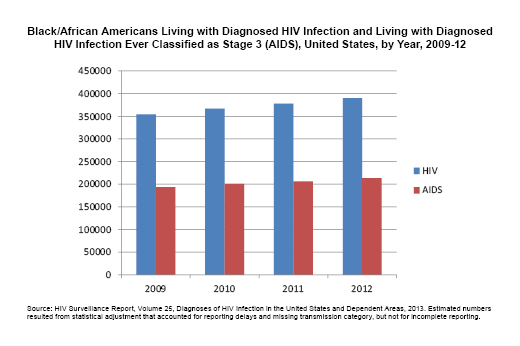
The Centers for Disease Control and Prevention's (CDC) annual HIV Surveillance Report titled Diagnoses of HIV Infection in the United States and Dependent Areas, 2013, is now available online. The report summarizes information about diagnosed HIV infection from 2009 to 2013 representative of all 50 states, the District of Columbia, and six U.S. dependent areas. Overall, HIV diagnosis rates remain stable yet disparities persist among some groups.
Read more: CDC's 2013 HIV Surveillance Report Now Available Online
NIH-Funded Scientists Create Potential Long-Acting HIV Therapeutic

Anthony S. Fauci, M.D., director of the National Institute of Allergy and Infectious Diseases
New molecule also might prevent HIV infection
Scientists have created a new molecule that shows promise for controlling HIV without daily antiretroviral drugs. The molecule foils a wider range of HIV strains in the laboratory than any known broadly neutralizing HIV antibody and is more powerful than some of the most potent of these antibodies. In addition, the molecule safely protected monkeys from infection with an HIV-like virus during a 40-week study period. Together, the data suggest that the molecule could, with further research, be used to subdue HIV in humans. The authors note that the molecule potentially could be used as both a preventative drug and as a treatment. The new findings appear in the February 18 issue of the journal Nature.
Read more: NIH-Funded Scientists Create Potential Long-Acting HIV Therapeutic
AIDSVu in 2015: Visualizing HIV With Digital Technologies to Improve Public Health Outcomes

Patrick Sullivan, Ph.D., DVM, Principal Researcher, AIDSVu.org, and Professor of Epidemiology, Rollins School of Public Health, Emory University
Editor's note – Over the past few years, AIDS.gov has asked AIDSVu to share its experiences with using digital tools to visualize the HIV epidemic. Here is AIDSVu's latest update:
Over the past five years, AIDSVu has become a leading resource for visualizing the HIV epidemic at the national, state and local levels by synthesizing large, complex HIV data and translating them into easily understandable maps. In 2015, AIDSVu is continuing to expand its HIV maps and data, with a renewed focus on how to use publicly available data to achieve public health successes. AIDSVu is exploring new ways to facilitate the use of data, assisting users in applying data to their work, and creating new shareable resources.
Indiana Medicaid Expansion May Tempt Other GOP-Led States

Then-U.S. Rep. Mike Pence (R-Ind.) speaks during a rally on Capitol Hill April 2011 in Washington. Pence is now governor of Indiana.
The deal reached between the Obama administration and Indiana Gov. Mike Pence to expand Medicaid under the president's health law should help sway reluctant Republican officials in other states because it imposes new costs on poor adults, promotes healthy behaviors and relies on financing from smokers and hospitals instead of state taxpayers, health experts say.
Read more: Indiana Medicaid Expansion May Tempt Other GOP-Led States