News 2015
New Hepatitis C Treatments Have High Cure Rates for African Americans
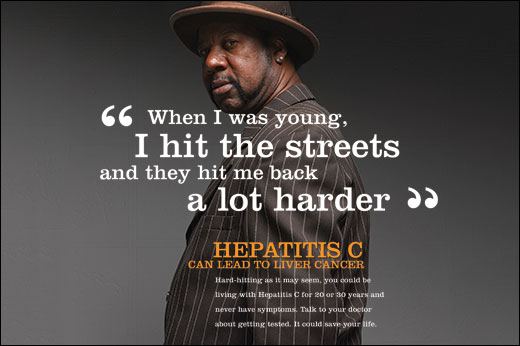
Hep C Poster
The epidemic of chronic hepatitis C virus (HCV) infection impacts over 3 million individuals in the United States, and over 50% of infected people are undiagnosed. In an effort to increase the number of people who are aware of their HCV infection and link them to care, in 2012 the U.S. Centers for Disease Control and Prevention (CDC) recommended that all persons born from 1945 through 1965 be tested for HCV, given that this group currently accounts for more than 75% of adults infected with hepatitis C in the U.S. and are five times more likely to be infected than other adults. Subsequently, in 2013, the U.S. Preventive Services Task Force also recommended a one-time HCV screening for adults born between 1945 and 1965.
Read more: New Hepatitis C Treatments Have High Cure Rates for African Americans
What's At Stake In The Supreme Court Obamacare Case

LaTasha Perry, 31, works at a community health center in Plaquemine, Louisiana. Perry says getting insured under Obamacare was cheaper than paying the penalty
The Affordable Care Act mandates that all Americans get health coverage or pay a penalty. To help people pay for that insurance, the federal government subsidizes insurance premiums for millions of Americans.
Read more: What's At Stake In The Supreme Court Obamacare Case
In This Issue
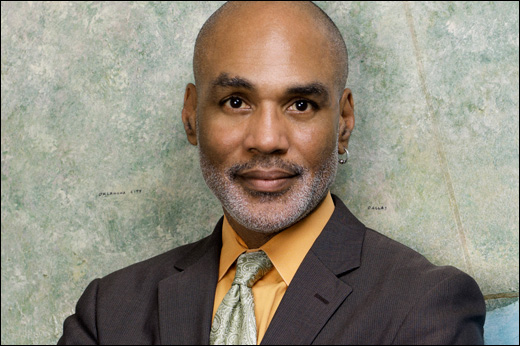
This February, the Black AIDS Institute took a delegation of Black activists to CROI 2015. As we round out our reporting on the interesting scientific research that came out of that conference, three of our delegates offer their opinions on why more Black Americans need to attend, present at and otherwise participate in CROI and other scientific conferences.
Black AIDS Institute Delegates' Takeaways From the 2015 Conference on Retroviruses and Opportunistic Infections
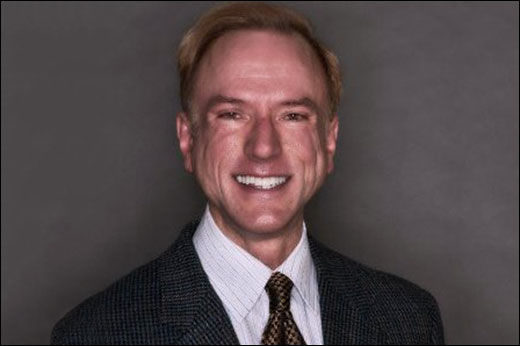
William Larson, Pharm.D., Medication Adherence Pharmacist, Allina Health Uptown Clinic, Minneapolis, Minn.
Although Black Americans are heavily involved in the prevention side of the fight to end HIV/AIDS, there are fewer Black faces advocating for scientific research or enrolling in clinical trials, where many of the dramatic breakthroughs that will usher in an AIDS-free generation have been taking place. At this year's Conference on Retroviruses and Opportunistic Infections (CROI 2015), held in Seattle, new studies were presented about both the hepatitis C cure and ways to make it more accessible. (African Americans make up 22 percent of hep C infections in the United States.) Exciting findings were also presented on pre-exposure prophylaxis (PrEP). (Go here for the final article in a four-part series on the new PrEP findings, along with links to the three other installments.)
Read more: Black AIDS Institute Delegates' Takeaways From the 2015 Conference on Retroviruses and...
Knowing Better, Doing Better, Part 1: Gerald Garth
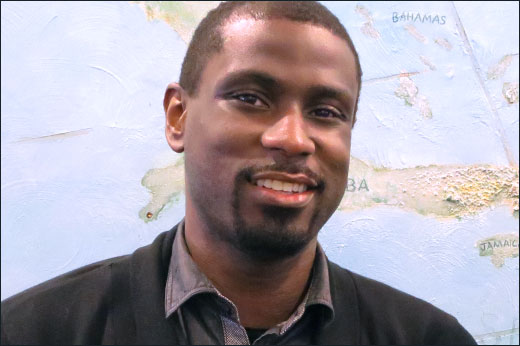
Gerald Garth, Programs Coordinator, Black AIDS Institute and an African American HIV University Science and Treatment College Fellow.
In February the Black AIDS Institute published the results of the first U.S. HIV Workforce Knowledge, Attitudes and Beliefs (KAB) Survey, the largest study ever conducted of nonmedical personnel working in HIV/AIDS in the United States. The results were alarming: The HIV/AIDS health-care providers at health departments and AIDS service and community-based organizations who were polled answered only 63 percent of questions correctly—essentially earning a grade of D for their knowledge of HIV science and treatment, while earning the equivalent of an F on treatment-related questions.
Read more: Knowing Better, Doing Better, Part 1: Garth Gerald