News 2011
Dr. Eric Goosby's Story: Fighting HIV/AIDS Around the Globe
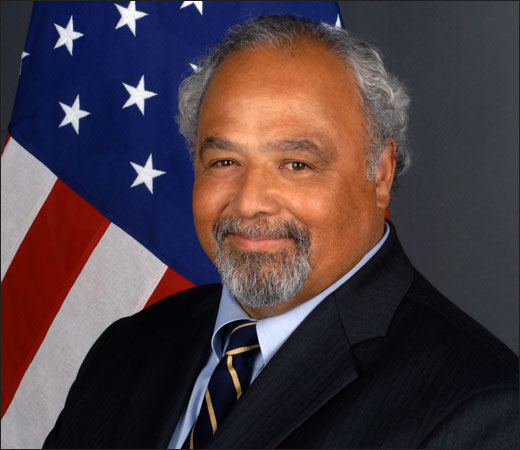
Ed. Note: This post is part of the Celebrating Black History Month series, which highlights African Americans from across the Administration whose work contributes to the President's goals for winning the future.
I live by the motto “To Live and To Serve.” In addition to the great influence of my mother and father, this perspective has led me to a career that has combined my passions for medicine and public service. After growing up in San Francisco and attending college at Princeton University, I earned an M.D. at University of California, San Francisco School of Medicine, where I also completed my internship and residency with a fellowship in General Internal Medicine/Infectious Diseases. As a young physician in the 1980s in San Francisco, I found myself in the middle of the emerging AIDS epidemic in America, which became the focus of my career. I now have almost 30 years of experience with HIV/AIDS, ranging from these early years treating patients at San Francisco General Hospital, to engagement at high- level policy leadership. In the Clinton Administration, I served as one of the President’s advisors on HIV/AIDS. As the first Director of the Ryan White Care Act at the U.S. Department of Health and Human Services, I helped develop HIV/AIDS delivery systems in the United States. After leaving government, I joined the NGO Pangaea Global AIDS Foundation as CEO and Chief Medical Officer in 2001, where I turned my focus from the domestic epidemic to the global HIV/AIDS emergency.
Read more: Dr. Eric Goosby's Story: Fighting HIV/AIDS Around the Globe
NEWS
A Call to Action: Leveraging Private Sector Support for the National HIV/AIDS Strategy

When President Obama released the National HIV/AIDS Strategy (PDF 1.2MB) in July 2010, he said, “The Federal government can’t do this alone, nor should it. Success will require the commitment of governments at all levels, businesses, faith communities, philanthropy, the scientific and medical communities, educational institutions, people living with HIV, and others.”
Read more: A Call to Action: Leveraging Private Sector Support for the National HIV/AIDS Strategy
Making Sense of the Budget Battle: The Implications for HIV/AIDS
EDITORIAL
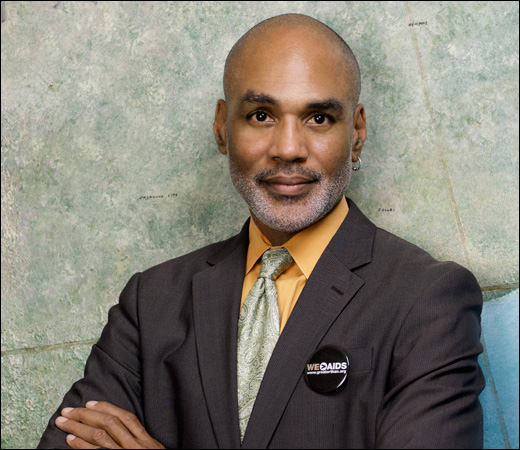
With the release of the President’s 2012 budget last week, the battle is on. Both Democrats and Republicans are talking about how to protect our nation's future by reducing the federal debt and deficit. To be completely honest, it is not so clear to me if anyone, including the American public, is serious about taking the steps necessary to accomplish either goal. In addition, while reducing the deficit and the debt are clearly important, it is also clear they are not the only barriers threatening the future of our country.
Read more: Editorial: Making Sense of the Budget Battle: The Implications for HIV/AIDS
HIV Vaccine Awareness Day is May 18th
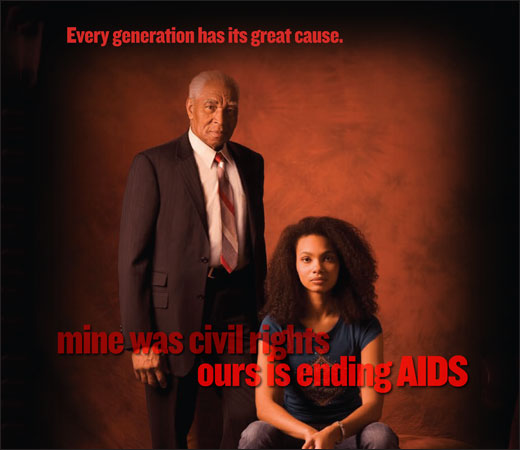
Over the next 90 days, we will be sending monthly email messages illustrating the importance of HIV vaccine education as we approach HIV Vaccine Awareness Day. Today, we begin with an introduction to vaccines and their role in reducing the impact of infectious diseases.
National HIV/AIDS Strategy Key Issue at January PACHA Meeting
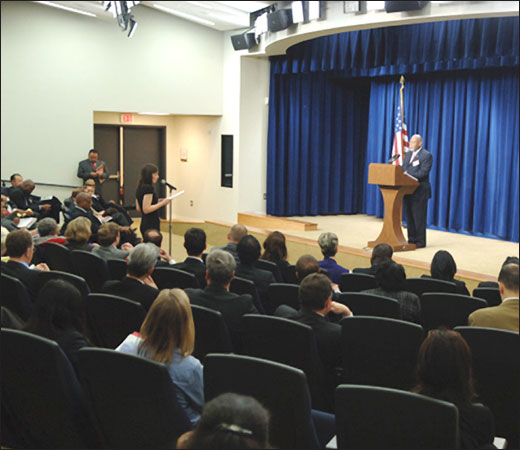
Much of the recent meeting of the Presidential Advisory Council on HIV/AIDS (PACHA) focused on implementing the National HIV/AIDS Strategy. The Strategy asks PACHA to provide, on an ongoing basis, recommendations on how to effectively implement the Strategy, as well as establish a mechanism to monitor the Strategy’s implementation. Last week, Council members heard updates from White House and agency officials, asked many questions and offered thoughtful suggestions. These are a few of the highlights.
Read more: National HIV/AIDS Strategy Key Issue at January PACHA Meeting