News 2010
STATEMENT FROM THE BLACK AIDS INSTITUTE
The Black AIDS Institute Applauds Congress’ Passage of Historic Health Care Reform Bill Significant improvements in health care experiences expected for Black people living with HIV. Washington, DC March 22, 2010. At 10:49 pm EST, the United States House of Representatives passed HR 3580, the Patient Protection & Affordability Care Act, by a vote of 219 to 212. Following the vote, Congressman James Clyburn, the majority whip and the most powerful Black member of the U.S. House of Representatives said, “I consider this to be the Civil Rights Act of the 21st Century - because I do believe that this is the one fundamental right that this country has been wrestling with now for almost a hundred years. I think tonight we took a giant step toward the establishment of a more perfect union.” The Black AIDS Institute agrees with Congressman Clyburn and enthusiastically applauds Congress’ leadership in clearing the way for the most significant U.S. health care system reform in a generation to become law. Through a narrow and hard fought vote, the House of Representatives has approved the health care reform bill passed by the Senate in December. After some procedural votes on Monday, the bill is expected to go to the President to be signed into law on Tuesday. The health care reform debate in Congress, on the news, and on the street has been marked by radically different interpretations and characterizations. While the new legislation may be a step toward the establishment of a more perfect union, it is far from perfect—the Senate still has some significant work to do during the reconciliation process before real victory can be claimed. However, the legislation already has some elements that dramatically change the healthcare prospects for the 1.2 million Americans living with HIV/AIDS. Here are four things in the legislation that are critically important for people living with HIV/AIDS or any other chronic disease: • Requires that all Americans obtain health insurance. This “individual mandate” is an approach which has already been implemented in Massachusetts since 2006. By requiring that all Americans buy or otherwise obtain coverage, the risk pool is expanded and insurance premiums may go down. As a part of this requirement, the federal government obligates itself to provide subsidies to those who are unable to afford coverage. • Ensures health insurance coverage for 32 million of the more than 40 million Americans who currently lack health insurance. This is achieved mainly through slight expansions in Medicaid and Medicare, the closing of the drug assistance donut hole, and providing subsidies to persons and families who cannot afford health insurance. • Bans insurance companies from making coverage decisions based on “pre-existing conditions.” It will no longer be legal for insurers to refuse or terminate coverage for persons living with significant health concerns (like HIV/AIDS) because of those health concerns. In the legislation, these are identified as guarantees of availability and renewability of coverage. • Prohibits life-time caps on how much health care an insurance plan will cover in an insured person’s lifetime. This is especially important for people with long-term chronic conditions. These changes have considerable positive implications for people living with HIV/AIDS. Historically, people with AIDS have experienced major barriers in obtaining health insurance and keeping it, especially when purchasing insurance as an individual. Given the potentially enormous cost of life-saving HIV treatments over a lifetime, “guaranteed availability and renewability of coverage” is a key victory for people with AIDS. Black people continue to bear the brunt of the AIDS epidemic; they are also being rocked by the tumultuous economic recession. As Black families lose their homes, jobs, and health insurance, it is critical that a bigger and stronger safety-net be available. The health care reform legislation passed last night is a major step towards health-related security for all Black Americans, especially those living with HIV/AIDS. In his address following the vote in the House, President Obama remarked, “This is what change looks like.” We commend the President and his colleagues in Congress for their tireless pursuit of meaningful reform of the U.S. health care system. We also remind them and healthcare reform advocates, especially AIDS activists, that “we have miles to go before we sleep.” Last night’s vote was nothing short of a historical watershed. It might well be what change looks like, but it is not yet meaningful enough reform. The Black AIDS Institute looks forward to working with the administration and the many stakeholders in health care on the hard work of really reforming the system and improving the health of our nation. About the Black AIDS Institute The Black AIDS Institute (The Institute) is the only national HIV/AIDS think tank in the United States focused exclusively on Black people. The Institute’s mission is to end the HIV/AIDS pandemic in Black communities by engaging and mobilizing traditional Black leaders, institutions—clergy, media, academics, civic, social, celebrities, business, elected officials—and individuals in efforts to confront HIV/AIDS. The Institute offers training and capacity building services, disseminates information, analyzes and offers critiques on private and public sector HIV policies, and provides advocacy and mobilization from a uniquely and unapologetically Black point of view. Phill Wilson, President and CEO of the Black AIDS Institute, is available for interviews and press queries.
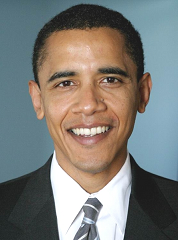
This is What Change Looks Like
After a historical vote in the House to send health reform to the President, he speaks to all Americans on the change they will finally see as they are given back control over their own health care: Good evening, everybody. Tonight, after nearly 100 years of talk and frustration, after decades of trying, and a year of sustained effort and debate, the United States Congress finally declared that America’s workers and America's families and America's small businesses deserve the security of knowing that here, in this country, neither illness nor accident should endanger the dreams they’ve worked a lifetime to achieve. Tonight, at a time when the pundits said it was no longer possible, we rose above the weight of our politics. We pushed back on the undue influence of special interests. We didn't give in to mistrust or to cynicism or to fear. Instead, we proved that we are still a people capable of doing big things and tackling our biggest challenges. We proved that this government -- a government of the people and by the people -- still works for the people. I want to thank every member of Congress who stood up tonight with courage and conviction to make health care reform a reality. And I know this wasn’t an easy vote for a lot of people. But it was the right vote. I want to thank Speaker Nancy Pelosi for her extraordinary leadership, and Majority Leader Steny Hoyer and Majority Whip Jim Clyburn for their commitment to getting the job done. I want to thank my outstanding Vice President, Joe Biden, and my wonderful Secretary of Health and Human Services, Kathleen Sebelius, for their fantastic work on this issue. I want to thank the many staffers in Congress, and my own incredible staff in the White House, who have worked tirelessly over the past year with Americans of all walks of life to forge a reform package finally worthy of the people we were sent here to serve. Today’s vote answers the dreams of so many who have fought for this reform. To every unsung American who took the time to sit down and write a letter or type out an e-mail hoping your voice would be heard -- it has been heard tonight. To the untold numbers who knocked on doors and made phone calls, who organized and mobilized out of a firm conviction that change in this country comes not from the top down, but from the bottom up -- let me reaffirm that conviction: This moment is possible because of you. Most importantly, today’s vote answers the prayers of every American who has hoped deeply for something to be done about a health care system that works for insurance companies, but not for ordinary people. For most Americans, this debate has never been about abstractions, the fight between right and left, Republican and Democrat -- it’s always been about something far more personal. It’s about every American who knows the shock of opening an envelope to see that their premiums just shot up again when times are already tough enough. It’s about every parent who knows the desperation of trying to cover a child with a chronic illness only to be told “no” again and again and again. It’s about every small business owner forced to choose between insuring employees and staying open for business. They are why we committed ourselves to this cause. Tonight’s vote is not a victory for any one party -- it's a victory for them. It's a victory for the American people. And it's a victory for common sense. Now, it probably goes without saying that tonight’s vote will give rise to a frenzy of instant analysis. There will be tallies of Washington winners and losers, predictions about what it means for Democrats and Republicans, for my poll numbers, for my administration. But long after the debate fades away and the prognostication fades away and the dust settles, what will remain standing is not the government-run system some feared, or the status quo that serves the interests of the insurance industry, but a health care system that incorporates ideas from both parties -- a system that works better for the American people. If you have health insurance, this reform just gave you more control by reining in the worst excesses and abuses of the insurance industry with some of the toughest consumer protections this country has ever known -- so that you are actually getting what you pay for. If you don’t have insurance, this reform gives you a chance to be a part of a big purchasing pool that will give you choice and competition and cheaper prices for insurance. And it includes the largest health care tax cut for working families and small businesses in history -- so that if you lose your job and you change jobs, start that new business, you’ll finally be able to purchase quality, affordable care and the security and peace of mind that comes with it. This reform is the right thing to do for our seniors. It makes Medicare stronger and more solvent, extending its life by almost a decade. And it’s the right thing to do for our future. It will reduce our deficit by more than $100 billion over the next decade, and more than $1 trillion in the decade after that. So this isn’t radical reform. But it is major reform. This legislation will not fix everything that ails our health care system. But it moves us decisively in the right direction. This is what change looks like. Now as momentous as this day is, it's not the end of this journey. On Tuesday, the Senate will take up revisions to this legislation that the House has embraced, and these are revisions that have strengthened this law and removed provisions that had no place in it. Some have predicted another siege of parliamentary maneuvering in order to delay adoption of these improvements. I hope that’s not the case. It’s time to bring this debate to a close and begin the hard work of implementing this reform properly on behalf of the American people. This year, and in years to come, we have a solemn responsibility to do it right. Nor does this day represent the end of the work that faces our country. The work of revitalizing our economy goes on. The work of promoting private sector job creation goes on. The work of putting American families’ dreams back within reach goes on. And we march on, with renewed confidence, energized by this victory on their behalf. In the end, what this day represents is another stone firmly laid in the foundation of the American Dream. Tonight, we answered the call of history as so many generations of Americans have before us. When faced with crisis, we did not shrink from our challenge -- we overcame it. We did not avoid our responsibility -- we embraced it. We did not fear our future -- we shaped it. Thank you, God bless you, and may God bless the United States of America.
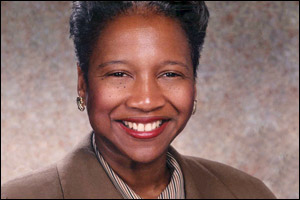
Q&A: Dr. Loretta Sweet Jemmott, Educator and HIV Expert
John B. Jemmott III, Ph.D., and his wife, Loretta Sweet Jemmott, Ph.D., both professors at the University of Pennsylvania (Penn), wouldn't in a million years call themselves media darlings. But that's what they felt like in February when their new study was released. The Jemmotts' research showed for the first time that an abstinence-only education program helped delay sexual initiation in middle school kids more than other kinds of sex education did. Quick as a finger snap, their phones blew up with calls from The New York Times, NPR, The Boston Globe, CNN and NBC. Weirder for the couple, who have been studying sex education and related issues for more than 20 years, their study became a lightning rod for political controversy. Right-leaning organizations, whose beliefs the Jemmotts do not share, hailed it as a victory for the abstinence-only sex-education programs that the George W. Bush administration forced into schools and communities. Activist group Abstinence Clearinghouse proclaimed that the study proved "comprehensive sex ed a big flop." The Jemmotts have been careful not to get sucked into the political fray. In their study, which appeared in the journal Archives of Pediatrics & Adolescent Medicine, 662 sixth- and seventh-graders in Philadelphia who attended abstinence-only classes were less likely to become sexually active than their peers who went to sessions emphasizing condom use exclusively or to classes combining lessons on abstinence and condoms. Unlike Bush-era abstinence education, however, the program that the Jemmotts created for their research sidestepped judgmental hectoring--which kids tune out anyway--and didn't depict sex outside of marriage as wrong. The Jemmotts' study hasn't ended the back-and-forth over how best to help teens and tweens avoid sexually transmitted diseases, including HIV, and how to keep girls in this age group from getting pregnant. But in the midst of the firestorm, adults need to know what to say to the young people in their lives to keep them safe and healthy--beyond "just say no." We asked Dr. Loretta Jemmott, 54--director of the Center for Health Disparities Research at Penn and the mother of two daughters, ages 11 and 13--for advice: Please explain how the abstinence-only program you used in your study is different from the ones that George W. Bush advocated during his terms. So what did you say? In your study, did you tell kids not to have sex? As school systems try to figure out the best ways to teach sex ed, it's up to parents to do the work. What are we doing wrong? True. What else? What are some of the door openers you have with your own daughters about sex? Any other advice? What are your personal feelings about abstinence? As for HIV specifically, what should parents say to kids? So once the parent gets up to speed… Journalist Linda Villarosa is the co-author of Finding Our Way: The Teen Girls' Survival Guide and a number of other books.
Those programs tell kids that they should be abstinent until marriage--which feels like a moralistic put-down if you want to have sex. We didn't say anything about marriage at all. What 12- or 13-year-old is thinking about marriage anyway?
In the beginning stages, it was more about listening than talking. After years and years of this, we've learned that our interventions work because we take the time to listen to the voices of children and also to meet with their parents, teachers and counselors. You can't design a good study sitting in your office in Penn. We needed to hear what kids this age were thinking and feeling. What were their hopes and dreams and goals, their worries and stresses? So we spent a lot of time hanging out with kids this age even before we got started.
We let them figure it out. We had very targeted discussions. We talked to the kids--and let them talk--about stuff like, why are you having sex? What would your parents say if they knew? Close your eyes and think about what you'd like to do in the next five years. How would a baby or an STD change your plans? The kids came to their own conclusions about their own lives, instead of us telling them, "Don't do this, don't do that."
Not having the conversations at all.
Not sitting down and listening to kids is the biggest problem. Then too many parents ask door-closing questions, like "Do you have a boyfriend?" One word--yes or no--and the conversation is over. Instead, you get a dialogue going by asking a question that opens the door for the child to explain, like, "Tell me about the boys in school. Who likes you?" See the difference?
In general, I try to be a friend to my daughters. I want my kids to understand that, yes, I'm your mommy and I'm gonna be in your stuff, but I also want to be your BFF [best friend forever], someone who's in your life forever, and who you can always talk to. I might say something like, "I just read that girls your ages are having sex. Do you think that's going on with girls in your group? I'm just trying to understand what makes girls your age have sex early--why do you think?" That gets a dialogue going.
Along with the information and discussions, give them the specific skills that they need to abstain. There's a lot of peer pressure at these ages. So teach them how to say no without losing someone's friendship. Try some role-playing to teach kids how to negotiate.
I'm just trying to get my daughters to wait. My message, and the message of the program is, take your time. You've got goals and dreams; focus on them, not on sex.
The clearer you are, the better you are. It's best to provide kids with the facts. But first you have to make sure you know the facts. There hasn't been a big educational push to teach adults about HIV prevention, so sometimes kids know more than their parents because they've learned about it in school or from their friends.
Explain what it is, without being too scientific, and how it gets into your body: through body fluids. But remember that knowledge alone doesn't change behavior--otherwise everybody would always wear a seat belt. So once you've provided that framework, let your kids know that their job is not to let the virus get into their bodies. That's when you can then move naturally into the discussion about sex and abstinence.

Opinion Editorial by CEO and Founder Phill Wilson
In Africa, a step backward on human rights
Hate has no place in the house of God. No one should be excluded from our love, our compassion or our concern because of race or gender, faith or ethnicity--or because of their sexual orientation. Nor should anyone be excluded from health care on any of these grounds. In my country of South Africa, we struggled for years against the evil system of apartheid that divided human beings, children of the same God, by racial classification and then denied them fundamental human rights. We knew this was wrong. Thankfully, the world supported us in our struggle for freedom and dignity. It is time to stand up for another wrong. Gay, lesbian, bisexual and transgendered people are part of so many families. They are part of the human family. They are part of God’s family. And of course they are part of the African family. But a wave of hate is spreading across my beloved continent. People are again being denied their fundamental rights and freedoms. Men have been falsely charged and imprisoned in Senegal, and health services for these men and their community have suffered. In Malawi, men have been jailed and humiliated for expressing their partnerships. Just this month, mobs in Mtwapa Township, Kenya, attacked men they suspected of being gay. Kenyan religious leaders, I am ashamed to say, threatened an HIV clinic there for providing counseling services to all members of that community, because the clerics wanted gay men excluded. Uganda’s Parliament is debating legislation that would make homosexuality punishable by life imprisonment, and more discriminatory legislation has been debated in Rwanda and Burundi. These are terrible backward steps for human rights in Africa. Our lesbian and gay brothers and sisters across Africa are living in fear. And they are living in hiding--away from care, away from the protection the state should offer to every citizen, and away from health care in the AIDS era, when all of us, especially Africans, need access to essential HIV services. That this pandering to intolerance is being done by politicians looking for scapegoats for their failures is not surprising. But it is a great wrong. An even larger offense is that it is being done in the name of God. Show me where Christ said “Love thy fellow man, except for the gay ones.” Gay people, too, are made in my God’s image. I would never worship a homophobic God. “But they are sinners,” I can hear the preachers and politicians say. “They are choosing a life of sin for which they must be punished.” My scientist and medical friends have shared with me a reality that so many gay people have confirmed, I now know it in my heart to be true. No one chooses to be gay. Sexual orientation, like skin color, is another feature of our diversity as a human family. Isn’t it amazing that we are all made in God’s image, and yet there is so much diversity among his people? Does God love his dark- or his light-skinned children less? The brave more than the timid? And does any of us know the mind of God so well that we can decide for him who is included, and who is excluded, from the circle of his love? The wave of hate that is underway must stop. Politicians who profit from exploiting this hate, from fanning it, must not be tempted by this easy way to profit from fear and misunderstanding. And my fellow clerics, of all faiths, must stand up for the principles of universal dignity and fellowship. Exclusion is never the way forward on our shared paths to freedom and justice. Desmond Tutu is archbishop emeritus of Cape Town, South Africa. He won the Nobel Peace Prize in 1984. His editorial is reprinted courtesy of the Desmond Tutu Foundation.
Disclosure Etiquette, Part 2: Preparing Yourself to Tell Others
This is the second in a series exploring the etiquette associated with telling other people that you have HIV/AIDS. I was hurting, I was scared out of my mind, and I was desperate to connect with the land of the living. My then-partner and son's father lay in intensive care in the hospital. One of the residents had pulled me aside and suggested that I get HIV-tested. I did. The results came back positive. To this day I can't remember quite how I got home. I do remember that the sounds on the subway had turned into one big hum; that the world wasn't the same; that I wanted to call my mother. "Mom, I am sick." "What do you mean, you are sick?" she responded. "I have the AIDS virus," I told her with fear in my voice. "I am so sorry for disappointing you." "Is there any medicine that they can give you?" "No." "I am on my way there," she said. "You just hold it together." Neither of us remembers the rest of the conversation well, but my mother tells me that she didn't comprehend the severity of the situation. She didn't understand it until she talked to my siblings. At that point she became overwhelmed by fear and guilt. "If I had protected and prepared her better, she would have been able to take better care of herself," she thought. Later that evening, Mom suffered a severe anxiety attack and landed in the emergency room. Whether we are newly diagnosed or have had the disease for a while, every person who is HIV-positive faces decisions regarding whether to share their serostatus with others. In Part 1 I reconsidered my previous belief that I always had to tell everyone, whether or not I was intimate with them. Yet who you decide to tell isn't always as important as what you need to consider before revealing anything at all. Particularly if you are newly HIV-positive, consider this basic advice: Prepare Yourself Before Talking to Others My mother's anxiety arose from her own lack of information about HIV/AIDS as well as from my ill-informed responses to her questions--I did not know the answers either! Only after her frightening anxiety attack did my sister educate her about HIV in a way that relieved some of her fears. There is a good chance that the person you are disclosing to may need more support at that moment than you do. So before you inform anyone, make sure that you understand the disease well enough that you can educate that person and ensure that they have or can obtain support if they need it. Honor Your Instincts Get Ready to Become One With the Universe Know That the Person Will Share a Part of Your World You May Not Want to Be Reminded Exists We all need someone to help us in our time of need. For me, that someone was my mother. Despite the risk that disclosure involves, I hope that if you haven't already shared your status with another person, you will find someone to reveal it to. And if you've already disclosed but didn't have the experience you expected, I hope that you will try again so that you get the support you need and deserve. Vanessa Johnson, J.D., who has volunteered and worked in the HIV/AIDS field for approximately 14 years, is executive vice president of the National Association of People With AIDS (NAPWA).
While writing this article, I decided to call my mother; I realized that I owed her an apology. On that fateful day some 20 years ago, my urge to tell someone had been as strong as my partner's desire to stay silent. I had been fairly certain that I could share with my mom, but I didn't realize the toll that my news would have on her.
Not everyone whom we want to disclose to is ready to hear what we want to say. So instead of just compulsively blurting it out, survey your surroundings and the situation. If you sense that the timing is not right, or the other person's vibe indicates inattentiveness, untrustworthiness or emotional and/or physical danger, trust your gut; now may not be the time.
Realize that some of the people you tell about our HIV status will inevitably tell somebody else. Who knows why folks decide to re-disclose? Their reasons are as unique and personal as are ours for sharing our status in the first place. What is important to know is that it may happen. So don't reveal the fact that you're positive until you can live with other people knowing.
Once people know, at any point they may ask you about your doctor's appointments, your medications (if you are on them) or the question I get asked the most: "How are you feeling?" I don't always want to answer, although even on those days, I am very glad that I have someone who asks.