News 2010

D.C. Agency Takes on City's HIV/AIDS Crisis
The latest figures released by the D.C. Department of Health show a glimmer of hope in the city's fight against HIV/AIDS. New AIDS cases and AIDS-related deaths dropped for a fourth consecutive year, according to the District's Annual Report 2009 Update: HIV/AIDS, Hepatitis, STD, and TB Epidemiology (PDF). However, rates of HIV continue to climb. Alarmed by the problem, local non-profit Food & Friends has stepped in to try to make a difference in the HIV/AIDS fight. On Saturday, March 6, 2010, the organization hosted a daylong community-outreach event in recognition of National Black HIV/AIDS Awareness Day (NBHAAD), an initiative to encourage Black people to get tested, educated and treated for HIV/AIDS. Seventeen HIV-focused organizations came together at the Riggs LaSalle Community Center in northeast D.C. to talk with attendees about safer sex practices, lead educational workshops on HIV/AIDS, and distribute condoms and literature. The free event, the brainchild of Food & Friends community-relations coordinator Anthony Harbour, was the first of its kind for the non-profit, which serves meals daily to people living with HIV/AIDS and other life-challenging illnesses in the greater metropolitan area. Harbour said it was important for Food & Friends to recognize NBHAAD because half of the organization's clients are living with HIV/AIDS, and nearly three-quarters are Black. "It seems only right that we do an event to acknowledge these facts by bringing together community resources and education to further prevent the spread of this disease," he said. Workshops and educational games included "HIV B.I.N.G.O." and "HIV 101 Trivia," designed to educate participants about HIV/AIDS. Attendees were encouraged to get a free, rapid oral HIV test provided by HIV-prevention agency Us Helping Us, People Into Living, Inc. (UHU) and the AHF Blair Underwood Healthcare Center, both located in the city. Nearly 50 people were tested and informed of their HIV status. Officials at Us Helping Us said that partnering with Food & Friends was a great opportunity to extend UHU's reach in the community. "This was an important event because it allowed us to provide testing in an accessible environment," said UHU program coordinator Rukie Wilson. "People are always looking for more convenient ways to get tested besides the 9-to-5, Monday-through-Friday clinical setting. This event brought HIV testing to them, and on a day that most clinics might not be open." The virus continues to devastate communities in D.C. Figures from the city's 2009 HIV/AIDS Epidemiology Update show that at the end of 2008, 16,513 D.C. residents knew they were living with HIV--a 9 percent increase from the previous year. According to city officials, the rise in confirmed HIV cases is due in part to the increased number of residents getting tested. The 2009 Update, however, also indicates that efforts to fight the spread of HIV might be working, since the number of new AIDS cases continues to drop. The city reported 525 new cases in 2008, down moderately from 663 cases the previous year. D.C.'s Black community remains disproportionately affected, accounting for three-fourths of HIV/AIDS cases. Increasing their efforts to try to stop the spread of HIV/AIDS, D.C. health officials announced a plan to distribute 500,000 free female condoms this year. The District, which has provided free male condoms for nearly a decade, is the first U.S. city to give away the new FDA-approved FC2 female condom. Harbour described the information fair, one of several efforts in cities nationwide marking the 10th annual NBHAAD, as a giant step forward in HIV/AIDS prevention. NBHAAD--founded by Concerned Black Men, Inc., of Philadelphia; Health Watch Information and Promotion Services, Inc.; Jackson State University; the National Black Alcoholism and Addictions Council; and the National Black Leadership Commission on AIDS--receives funding from the Centers for Disease Control and Prevention. D'Anthony White is a freelance journalist in Washington, D.C.
2010 Black AIDS Institute Summer Internship
The Black AIDS Institute (The Institute), founded in May 1999, is the only national HIV/AIDS think tank in the U.S. focused exclusively on Black people. The Institute's Mission is to stop the AIDS pandemic in Black communities by engaging and mobilizing traditional Black leaders, institutions and individuals in efforts to confront HIV. The Institute interprets public and private sector HIV policies, conducts trainings, offers technical assistance, disseminates information and provides advocacy mobilization from a uniquely and unapologetically Black point of view. The Institute is pleased to announce its 2010 Summer Internship Program. The Institute will select college students who have exemplified strong leadership skills, experience in HIV/AIDS education, treatment, policy and/or advocacy, and are committed to the mission of the Institute. Students will have the opportunity participate in a 12 week internship that will allow them to gain invaluable experience developing and implementing national HIV/AIDS awareness initiatives, and other non-profit and public health development skills. Projects and Responsibilities Interns may elect an internship focus track. Tracks include: Program Development, Policy & Research, media and communications, fundraising and development, and Non-Profit Finance and Administration. Interns will have meaningful and relevant assignments focused on achieving the goals of the Institute along with broadening their professional experiences. All interns will be expected to assist with administrative and logistical duties as needed, in addition to: * Serving on the steering committee and planning the fall Teach-In for Leaders in the Fight to Eradicate AIDS (LIFE AIDS) campus mobilization program. * Working on initiatives like Test 1 Million, Greater Than AIDS, Heroes In the Struggle, and African American HIV University. * Researching: Gathering data for CitySheets, HIV/AIDS Conferences and trainings. * Updating social networking pages and Blogging for BlackAIDS.org and Ledge Magazine. * Participating in staff and team meetings, and meeting regularly with management mentor. * Maintain portfolio of all work accomplished: writings, power points, presentations, public speaking etc. The internship is a wonderful opportunity for high-performing college students to gain exposure to the daily operations of the nation’s leading non-profit focusing on HIV/AIDS advocacy within the Black community; and to gain professional experience working with leaders in activism and grassroots organizing. Students enrolled in Historically Black Colleges and Universities, majoring in Health, Communications, Social Sciences, Organizational Development, and Education are encouraged to apply. Application Process Completed applications must be emailed to The internship program is from June 7 to August 27, 2010. Interns will receive three monthly stipends of $1,000. The Institute will work with students to receive academic credit if the internship program fulfills the requirements of their respective universities. It is the responsibility of the intern to make arrangements for housing and transportation for the duration of the internship. The Institute will not be able to provide housing or travel assistance. Click here to download: Internship_Application For more information or to answer any questions regarding the Institute’s internship program, contact Black AIDS Institute
1833 West Eighth Street #200
Los Angeles, California 90057-4920
www.BlackAIDS.org
213-353-3610
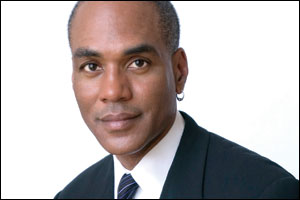
Opinion Editorial by CEO and Founder Phill Wilson
TALKING IS GREATER THAN SILENCE
Last month, I had the honor of opening the National Week of Prayer for the Healing of AIDS for a large Cincinnati church. During my conversation with the congregation, I encouraged them to consider two questions regarding the AIDS epidemic in Black communities: 1) What would Jesus do? 2) How would He guide us as people of faith? Throughout the New Testament, Jesus clearly demonstrates how He would behave if he were living today. Whether by restoring sight to the blind, healing lepers or protecting a prostitute from being stoned, Christ displayed compassion, love and mercy and alleviated suffering--no matter the affliction or impairment the person experienced, their place in society, or the social condemnation they faced. Jesus also describes how He wants people who are ill, suffering or stigmatized to be treated. In Matthew 25:37-40 we find this text: “Lord, when saw we thee a hungred, and fed thee? or thirsty, and gave thee drink? When saw we thee a stranger, and took thee in? or naked, and clothed thee? Or when saw we thee sick, or in prison, and came unto thee? And the King shall answer and say unto them, Verily I say unto you, Inasmuch as ye have done it unto one of the least of these my brethren, ye have done it unto me. Only loving God supersedes Jesus' instruction to "love your neighbor as yourself." This direction is the key to living an ethical, righteous life in accord with Christ's teachings. The life of Christ describes unequivocally how Christians should address HIV/AIDS. Jesus would not only confront the epidemic by speaking out against stigma and discrimination, He would tell us to embrace those with the disease, teach people how to protect themselves and advocate for the sick to receive appropriate care and treatment. Talking is greater than silence. I closed by asking congregants who were infected, affected, or who knew someone who was living with or had died from HIV/AIDS to stand. The Minister and First Lady of the church were quick to rise. Soon nearly the entire congregation stood. I approached those who were still seated, introduced myself, disclosed that I have been infected with HIV for 30 years and asked them to stand up with their church because now they too--like nearly 50 percent of Black Americans--know someone with HIV/AIDS. Last week I received a letter from a woman who had been in attendance that Sunday. A member of her family had recently tested positive. Until that day the family had lived in silence and shame, not disclosing this fact to anyone. Yet experiencing other members of their congregation stand up as “infected and affected" helped them to courageously tell a few members of their faith family. Talking is greater than silence because it allows us to receive needed love, help and assistance; it also liberates us. And we give those with whom we share the opportunity to live up to Jesus’ commandment. There are also practical benefits to talking about HIV. Whether or not you are HIV-positive--but particularly if you are Black--it is important for you to raise HIV with your doctor whether or not your doctor raises it with you. If you are HIV-negative, discuss your sexual and drug-using behavior so you can receive vital medical guidance and an assessment of your risk factors. In the event that your behavior jeopardizes your health, you can learn what to change. If you are uncertain of your HIV status, you gain the peace of mind of knowing. Knowing is greater than doubt. In the event that you're newly HIV-positive or are already aware of your positive status, talking to your doctor will help you receive appropriate care that can dramatically extend and enhance your life. Talking to your family and loved ones is especially important. As the family in Cincinnati experienced, when one member gets HIV, we all get HIV/AIDS--not because we become infected; HIV is not transmitted through casual contact, so drinking from the same glass, sharing eating utensils, hugging and kissing do not put you at risk--but because the whole family can carry the stigma and shame. If the HIV positive person contributes to family finances, any loss of income can destabilize the family. They may also experience unforeseen medical and other expenses. Yet Black families have a long tradition of surviving challenges. Those who weather them successfully do so because they talk to each other, care for each other and love each other. Talking is greater than silence. And Black families are greater than AIDS. Phill Wilson is the President and CEO of the Black AIDS Institute, the only HIV/AIDS think tank in the United States focused exclusively on Black people. He can be reached at

Young, Black and Newly Positive? 5 Things You Need to Know
In February I had the honor of delivering the keynote speech at the "LIFE (Leaders in the Fight to Eradicate) AIDS Black Student Mobilization Summit" at Clark Atlanta University. The conference educated Black college students about HIV/AIDS; created comfortable dialogues about sex and sexuality; and encouraged young people to become activists on campus, in their communities and within their social networks to help us end the AIDS epidemic. As happens after about 75 percent of my speaking engagements, a young person whispered to me that they, too, were HIV-positive. Because of time constraints and confidentiality issues, I'm usually unable to talk to the person at that moment, so I usually just jot down my contact info or give them a business card. But if I could talk to them or any other newly diagnosed young Black person, here's what I would tell them: 1. HIV is a noun, not an adjective. It does not describe or define who you are. You were somebody before HIV, and you are somebody now. Your character did not change; your awareness of your health status did. 2. HIV is a serious virus, so do not take it lightly. It does not waste time before attacking your immune system, so you can't waste time by letting it get a head start. Although the disease can't be cured, it is manageable and treatable. This takes complete cooperation and participation from you and may require you to step outside the box--out of your comfort zone. Taking HIV medication is only half the battle; maintaining a positive attitude and keeping stress to a minimum are also important. I suggest finding a hobby that includes body movement, and seeing a therapist to help you cope. 3. You have to be responsible for your virus. From the beginning, you have to be 100 percent committed. Your actions will help determine what HIV will and will not do to your body, and can keep the virus from controlling and consuming your life. For example, choose foods that boost the immune system so that they can join forces with your medicine to help you combat the virus. Also talk to your doctor, and research vitamins that you can take. 4. Behave proactively so that you stay a step ahead of the virus. Find and locate a doctor--usually an infectious-disease specialist--whom you respect and trust enough to talk to about all of your problems and concerns. You will have good days and bad days; days when you want to comply with your treatment regimen and days when you don't. Communicating openly with your physician is important. Health providers will know about your test results, but aside from that, they can help you address only what you choose to share with them. 5. All of these suggestions are easier said than done. Still, nothing and no one but you can hold you back from carrying them out. No matter who you are or how you became infected with the virus, I want you to know that you are greater than AIDS. You can live a fulfilling life that overcomes this disease. Marvelyn Brown, the author of The Naked Truth: Young, Beautiful, and (HIV) Positive, has been living with HIV for seven years.

Q&A: Dr. Gail Wyatt, Sex Therapist, Expert in Black Women's Sexuality
April marks Sexual Assault Awareness Month, and National Sexual Assault Prevention Day occurs on April 20. To recognize these observances, we spoke with leading psychologist and sex therapist Gail Wyatt, Ph.D., associate director of the UCLA AIDS Institute and an expert in Black women's sexuality. She is also the author of Stolen Women: Reclaiming Our Sexuality, Taking Back Our Lives. Dr. Wyatt shared her thoughts about Black women's sexuality as well as her research showing that women who were sexually assaulted during their childhood are twice as likely as other women to contract HIV/AIDS later in life. Please address the stereotype that Black women with HIV must have "done something"--such as being promiscuous--to get it. The majority of women with HIV are not IV-drug users. They are women who generally have one partner at a time. Many of the women who contract HIV did not know that their partner was engaging in risky behavior--which is having unprotected sex--with someone else. If they did know, they may have been economically dependent on him, or connected by marriage or children, so they did not insist on using condoms. Women find themselves in relationships with men all the time that they think they can trust. They might decide to have unprotected sex in order to have children. Others may be in denial--they might suspect that their partner has outside partners or is a drug user, but they have unprotected sex anyway. Or sometimes men don't want to use condoms and turn the tables on their women, insinuating that if they insist on using condoms, they must be the ones cheating. For many women the need to be in a relationship overrides the need to protect themselves. Many people think that Black women are not exercising any control over their sex lives, and it isn't true; that's not how this disease is being driven. It's being passed along through relationships. Or it's being passed along by people with multiple sex partners who don't have health care or don't trust doctors or don't listen to their physicians when they tell them they're putting themselves at risk. Is there a racial double standard? Absolutely! It all goes back to the original stereotype--that Black women are "hos."…More White women have health care or are more likely to come out of families with healthy patterns. They're used to going to the doctor, and they have access--no matter their sexual behaviors. Your research shows that Black women who experienced sexual abuse during their childhood are more likely to get HIV. Why is that? Being forced to have sex creates this thought in the minds of many women that it's okay for their partner to tell them when to have sex, how to have it, and whether or not they can talk about it with him or anybody else. After all, that was more than likely the woman's experience when she was abused, and she may not have gotten psychological help to undo this damage. A woman who has been abused--and who hasn't sought some kind of psychological help for it--often learns not to value her body, and this may cause her not to protect herself by using condoms. And you can't just teach people how to use condoms: They have to understand why they should: because their lives are valuable. Having been victimized, they may not feel that way. If you have experienced sexual trauma, what steps can you take to heal so that you're not at greater risk for HIV? The most important thing is that you must talk about your abuse with a trained professional. Feeling as if you can't control your body--or that you are worth less than you are--must be dealt with. Since most people who have experienced such abuse don't tell and don't have health care or access to health care professionals who are trained to deal with these issues, they never get the help they need. Many turn to drugs and alcohol--ways of numbing the pain--and this puts them at further risk for having unprotected sex. Talking to someone about what you experienced allows them to help you pick apart the myths and help you restore feelings of worth. And when you feel good about yourself, you don't put yourself in positions that will negatively impact your life. Help is available if you are currently experiencing sexual violence or have experienced sexual abuse in your past. If you are in immediate danger, dial 911 now. Otherwise, consult a therapist; call 800-656-HOPE (4673), the toll-free hotline of the Rape, Abuse & Incest National Network (RAINN); or chat with a trained expert via RAINN's National Sexual Assault Online Hotline. Tomika Anderson is a freelance writer based in Brooklyn, New York. Her work has appeared in Essence, POZ, Real Health and Ebony magazines, among others.