News 2010
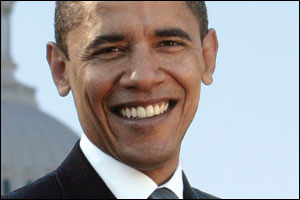
10 Questions Answered: How Health Reform Affects People Living With HIV/AIDS
Now that President Obama has signed the Patient Protection and Affordable Care Act--aka health-care reform--into law, you may wonder how it will affect people living with HIV/AIDS. When can the uninsured finally obtain the health insurance they need? Will the changes affect access to doctors or meds? Will AIDS meds be more affordable? Here, the answers to 10 specific questions about health reform's impact on those with HIV/AIDS. 1. I don't have health insurance. How does health reform affect me, and when does the new law go into effect? 2. Will the new law affect the funding of ? 3. Will it affect my ability to get meds through the AIDS Drug Assistance Program (ADAP) or the process that I go through to do so? 4. Can I still see my regular doctor and specialists? 5. How does reform help me get insurance with a preexisting condition? 6. I have private insurance and I want to switch jobs. Can I do it now? 7. I want to switch insurers. Can I? 8. I'm paying my premiums out-of-pocket. Should I expect to pay more? 9. Are there annual or lifetime limits to how much care my insurance company will cover? 10. Am I missing anything? Glenn Ellis, author of Which Doctor? What You Need to Know to Be Healthy, is a Philadelphia-based health columnist and radio commentator.
The entire law won't kick in until 2016, but more than 150 features become effective in 2010. For example, if you're a dependent younger than 26 and your parents have insurance, you can stay on or immediately be added to their policy. Twenty-six or older? Depending on your income, you may now qualify for Medicaid. Beginning June 30, 2010, the statute also establishes a high-risk health-insurance pool offering comprehensive benefits to individuals with preexisting health conditions. In 2014, permanent exchanges (PDF)--where the uninsured will be able to comparison shop for private health-insurance plans--will open, and people with health problems like HIV/AIDS who have previously been denied insurance coverage will be able to obtain a health-insurance policy.
No. But state budget crises may lead to cuts in Ryan White funds.
No.
You probably won't need to worry about this unless you switch policies or your doctors change the types of insurance they accept. Keep in mind that the changes may cause some doctors to be paid less than they receive now, causing them to switch to other practices or hospitals. Put a Plan B in place now in the event that you need to change doctors.
You can join the high-risk pool now, if insurers rejected you in the past. But those who already have insurance and a preexisting condition will have to wait until 2014 before another insurance company has to accept them--or before any insurance company won't be able to jack up their premiums.
Effective immediately, if you had a health-care plan as of March 23, 2010, your coverage can't be discontinued, whether you change or lose jobs, retire, return to school or become too sick to work. The new law even subsidizes COBRA costs for those who can't afford to pay.
Yes, although it may be hard to find a policy offering similar coverage. In 2014, insurance exchanges will offer policies featuring a full range of benefits, so you will have no problem getting the care you need.
The requirement that insurers not turn anyone down will almost certainly cause your premiums to rise. Expect large increases over the next year as insurers prepare for the new law to take effect.
The law immediately outlaws lifetime caps, or limits, on benefits and ends the practice of discontinuing the insurance coverage of people who get sick.
Well, the devil is in the details. The federal government has a huge task ahead in setting up the many systems necessary to make the new bill work. Stay informed as the law is implemented over the coming years.

Black Hollywood Heads to Ohio in Fight Against AIDS
Black Hollywood Heads to Ohio in Fight Against AIDS Statewide Celebrity tour urges Black community to get tested for HIV
For a few days in late April, the Buckeye state will become Black Hollywood East, as movie and TV stars flock to participate in the Test 1 Million Ohio Celebrity Tour. From April 21 to April 24, 2010, celebrities Danny Glover ("Death at a Funeral" and the Lethal Weapon series), Rockmond Dunbar ("Prison Break" and "The Family that Preys"), Lamman Rucker ("Meet the Browns" and "Why Did I Get Married Too?"), Vanessa Williams (Showtime’s “Soul Food") and Sheryl Lee Ralph (original Broadway "Dreamgirls" and Tony Award nominee) will visit Dayton, Oxford, Cleveland, Cincinnati, and Columbus, Ohio, to fight AIDS stigma, raise awareness about the magnitude of HIV/AIDS in Black communities, and encourage people to get tested for HIV. "There has never been an effort to mobilize the Black community in Ohio like this," says Mamie Harris, CEO and founder of IV Charis, a Cincinnati- and Northern Kentucky-based AIDS-service organization and the event co-sponsor. Other tour supporters include the Ohio Commission on Minority Health, Orasure Technologies and a statewide coalition of 27 organizations. "We hope that combining the efforts of local organizations, including colleges and universities, churches, elected officials and health departments, with a mobile 'billboard' featuring Hollywood celebrities that will travel from Detroit to Cincinnati and then across the state of Ohio will get people’s attention,” says Harris. “Rockmond Dunbar and Lamman Rucker are two of the hottest young actors in Hollywood, and to have them participate is spectacular. Danny Glover is an acting legend and a leading human rights activist. He has traveled the world and seen the devastating effects of HIV/AIDS first hand. In addition, having a brother living with HIV, Danny knows how HIV impacts Black Families. So when he speaks about the disease, it carries a lot of weight," says Phill Wilson, President and CEO of event co-sponsor the Black AIDS Institute, the only national HIV/AIDS think tank in the United States focused exclusively on Black people. "We are also lucky to have actress Vanessa Williams and Sheryl Lee Ralph, both Black AIDS Institute board members, on the tour to share their voice and knowledge.” Part of the Greater Than AIDS/Test 1 Million campaign, a national media and mobilization initiative managed by the Black AIDS Institute and the Kaiser Family Foundation, the Ohio tour will call Black leaders to action and engage Black individuals and institutions in a community-wide effort to end the AIDS epidemic. "The tour started off as a pilot project in Cincinnati but expanded across the state," explains Liz Presley-Fields, project director of EPIP, Central Community Health Board. "All of these events are organized by local Test 1 Million Ohio partners. IV Charis enhanced them and put the tour together. Things get stale when people hear the same statistics and messages over and over. The tour will refresh and reinforce the importance of HIV testing in the Black community," she adds. Kim Glenn, President of the Cincinnati Queen City Alumnae Chapter of Delta Sigma Theta Sorority Inc., agrees. “Partnering with IV Charis, the Ohio Minority Health Commission, Orasure Technologies, MAC AIDS fund and the other organizations involved in the Ohio tour is exactly the kind of synergy that is needed to keep the fight against this devastating disease in the forefront of concern in the Black community where it needs to be,” she says. "The messenger matters. The biggest hurdle in our community regarding HIV/AIDS is mistrust; we don't believe the statistics because we don't trust the messenger," says Harris. "But if the messenger is from our community, our people will take it more seriously”. The tour kicks off on Wednesday, April 21st, at HBCUs Central State and Wilberforce Universities and features a rally, a celebrity speaker, spoken-word performances and a step teaser by fraternity Alpha Phi Alpha. On Thursday April 22nd, the tour stops at Miami University in Oxford, Ohio, where representatives of Delta Sigma Theta Sorority, Inc., will host a Q&A and issue a call to action. In Cleveland on Friday, April 23rd, the department of health will partner with Radio One station 107.9 WENZ-FM to host the theatrical HIV/AIDS and STD-awareness play "Secrets," performed by students from the Cleveland School of the Arts. Ms. Ohio, Ashley Miller, will make an appearance and speak to the youth participants. The last day of the tour sees events in two cities. On Saturday morning April 24th, Cincinnati's Queen City Alumnae Chapter of Delta Sigma Theta will host its 4th annual walk. That afternoon the African Heritage Festival will be held at Ohio State University. HIV testing will be available at all tour events. "We are looking for big turn outs at all of the stops on the tour," Harris says. The Test 1 Million Celebrity tour is funded in part by the Ohio Commission on Minority Health, Orasure Technologies, the Ohio Department of Alcohol and Drug Addiction Services, Gilead Sciences, the Kaiser Family Foundation, the Black AIDS Institute. Marc Alexander is a writer and TV producer living in Los Angeles.
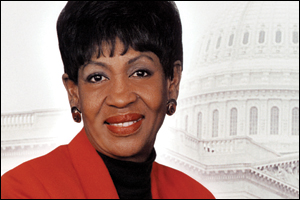
Q&A: Congresswoman Maxine Waters, Legislator and Activist
Just elected to her 10th term in Congress, California lawmaker Maxine Waters is one of the most powerful people of color in the history of American politics--and not to mention, one of the most powerful women. A staunch advocate for the poor as well as Black and Brown people, Rep. Waters has helped lead our nation's fight against AIDS for more than a decade. She convened the first congressional meeting on AIDS in Black America. She also spearheaded the Minority AIDS Initiative (PDF), a $156 million program launched in 1998 to address HIV/AIDS in minority communities that has grown to about $400 million today. But with the epidemic found in 2008 to be 40 percent larger than federal officials had previously estimated and primarily focused in Black communities, Waters is pushing President Obama to step up his commitment to eradicating the disease by earmarking more federal dollars for AIDS prevention, treatment and other services. We asked her to share her perspectives. President Obama's most recent HIV/AIDS budget proposed a 2 percent increase over prior spending. What does the administration need do to end HIV/AIDS? Recently you circulated a letter asking the House Appropriations Committee to increase AIDS funding by over 50 percent. How many of your colleagues signed on? A couple of years ago you sponsored legislation that would mandate HIV testing for federal-prison inmates. Where does that stand, and what do you think about Governor Schwarzenegger's move to cut care for HIV-positive state-prison inmates? Regarding Governor Schwarzenegger, I am outraged by his lack of leadership. He has had a poor tenure and he's led California to the brink. My heart cries out for all the people affected by the cuts he's proposing, including AIDS, home-supported health care, education--you name it. California is last in the nation in handling its budget responsibly. I am anxious for his term to be over. AIDS Drug Assistance Program (ADAP) budgets are being cut nationwide while ADAP waiting lists continue to grow. Do you worry that ADAP is targeted because it assists low-income people with HIV/AIDS? Given the current fiscal resource constraints, our dysfunctional political system and the state of HIV/AIDS, what must HIV-negative Black Americans do to help end the epidemic? With nearly 25,000 Black people newly infected each year and almost 40 percent of them under age 29 (PDF), do you worry that we will eventually be wiped out? Tomika Anderson is a freelance writer based in Brooklyn, New York. Her work has appeared in Essence, POZ, Real Health and Ebony magazines, among others.
Money is always key, and we appreciate any increase in spending, but we'd like to have more. [I, along with other members of Congress,] would like him to talk about AIDS more in speeches. He must insist that his AIDS czar have a greater presence. And we would like President Obama to make AIDS one of his top priorities.
Fifty-seven members signed my bill. I am happy with the support we've received.
We passed that legislation on the House side; we're now awaiting the Senate's approval. They're backed up with bills. [But now that health care reform has passed,] we're anxious to get the Senate to move on to this and other legislation.
As we struggle in this economic crisis with budget cuts, we must set priorities and be good advocates for the important issues. ADAP is at the top of many of our agendas. We can continue being supportive--speaking up about funding, writing letters and rallying around those in need. [As legislators] we're constantly flooded with requests to support many issues and programs, ADAP included. We will do the best we can.
First we must educate ourselves about what HIV is and is not. We must all talk with young people about how it is contracted and how they can protect themselves. We must encourage all of our institutions--schools, churches, sororities, fraternities and labor unions, places that are high-level and people-intensive--to [provide workshops and host discussions] aimed at ending the epidemic. We have not done enough of that; we think someone else is doing it. We must make this education a part of our daily lives.
I'm more optimistic than that. This is difficult work, but it's not impossible. I've been increasingly pleased about the growing support from the Black religious community. [In the 1990s] we were demonized by ignorant pastors who blamed AIDS on the gay community and had no intention of dealing with it. We now have many ministers promoting safe sex, holding discussions or distributing information on AIDS in the church. Some even have AIDS ministries. It's very important that we have a national ministerial community trying to come up with solutions for ending this epidemic.

Put a Ring on It: Upgrading to FC2 Female Condoms
With Black women experiencing sky-high rates of HIV and other sexually transmitted diseases, public health officials and women's groups are employing new tools to empower them to protect themselves. The latest gadget? FC2, the second-generation female condom. The New York City Department of Health and Mental Hygiene started distributing the condom in November; Chicago-area women are attending educational sessions to learn how to use it; and Washington, D.C., is handing out free FC2s in beauty salons and convenience stores. "Without female condoms, women are completely dependent on the willingness of a male partner to use the condom," says Jessica Terlikowski, public-policy manager for the AIDS Foundation of Chicago. Terlikowski is spearheading that city's female-condom outreach campaign, dubbed Put a Ring on It, after the catchy Beyoncé tune "Single Ladies" and the rings that are on each end of the female condom. But FC2 isn't just for "all the single ladies." Female-condom fans include married and other partnered women, who are also at risk for HIV and other STDs. A Satisfied Customer "I find the female condom much more comfortable than a male condom," says Cecilia Boyd, a Chicago female-condom aficionado, who uses FC2s for protection against STDs as well as for birth control. "This one is very easy to use correctly," she says (go here to watch an educational video demonstrating how). Her partner is also on board: "He completely likes it. The male condom is too tight on his shaft." Before the FC2 came along, Boyd had used the FC1 instead of male condoms because of a "slight latex allergy." She finds the FC2, which is made of synthetic latex, a big improvement over the older version, made of polyurethane plastic. "It's not as noisy as the first one," she says. "I would tell women not to feel put off by it because it looks so big," she adds. "I love it, and if I can get other women to use it, that's my goal." Noisy during sex, somewhat uncomfortable and bulky, FC1s didn't pass muster with women. They were also expensive: around $3.60 each, versus male condoms at about a dollar. Women who use FC2s are feeling the serious upgrade: They're quieter, more comfortable and much cheaper, averaging 86 cents each. You can also use FC2s with oil-based lubricants, unlike latex condoms and FC1s. The FC2 resembles an oversized male condom. The difference is that the FC2 (like the FC1) sports two rings--a removable inner ring that's inserted into the vagina and an outer ring that stays attached, covering the vaginal lips. The outer ring helps protect against STDs spread by skin-to-skin contact, such as herpes and the human papillomavirus (HPV). The inner can be removed, if the user prefers, for anal sex. Like male condoms, female condoms are for onetime use only. And ladies, take note: The female condom's outer ring provides clitoral stimulation. Combating the AIDS Epidemic Among Women Authorities in New York, Chicago and Washington, D.C., aren't concerned with helping women achieve better orgasms. But they are interested in fighting the HIV epidemic--particularly among Black women, who are disproportionately infected. Nationwide, AIDS is the number one killer of Black women ages 25 to 34. Washington, D.C., where the FC2 is getting the biggest push, has the nation's highest HIV rate among Black women--3 percent--as well as the nation's highest overall rate: 5 percent. "Women haven't really gotten the message that they're at risk," said Shannon L. Hader, M.D., M.P.H., director of HAHSTA, the D.C. health department's HIV/AIDS administration, in an interview on CNN. "So we are very, very concerned with making sure that women in the District realize that HIV, in fact, is a woman's disease too." To see where FC2s are being distributed in the following cities, click on their names: Chicago, New York City, Washington, D.C. Only within the District are they also available in every CVS pharmacy. Elsewhere, the only way to get FC2s is through nonprofits and health centers that have ordered them in bulk. But if grassroots demand develops, they will become more widely available. (FC1 female condoms can still be found in some drugstores; don't mistake them for FC2s.) So tell your local drugstore's pharmacy manager, "I know about the new FC2 female condom and would like you to sell them here." Or contact the manufacturer, Female Health Company. Diana Scholl, a New York-based writer and AIDS activist, blogs about AIDS policy and activism for the Housing Works AIDS Issues Update and contributes to New York magazine.
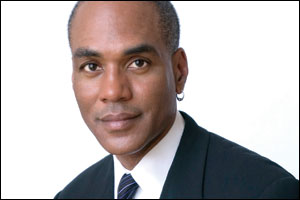
Opinion Editorial by CEO and Founder Phill Wilson
The Black Side
I just finished watching The Blind Side, which one reviewer described as, "The remarkable true story of Michael Oher, a homeless African-American youngster from a broken home, taken in by the Tuohys, a well-to-do white family who help him fulfill his potential." I'm sure Leigh Anne and Sean Tuohy are remarkable people, and when you are drowning, it really doesn't matter who throws the life preserver. Still, I could live the rest of my life without seeing another movie in which the Great White Savior rescues Black people. You might think this is how every Black person feels--but you would be wrong. I'll always remember a young man in Baltimore who said to me, "Phill, you just don't get it. Nobody cares about us, especially us." That comment stuck with me because it expressed an all-too-common defeatism, a paralyzing sense among Black folks that we cannot or will not help one another. Of course, the best rejoinder to that defeatism was given by the late Calvin Rolark, founder of the United Black Fund, Inc., who quipped, "Nobody can save us from us but us." I can't stop thinking about that young man in Baltimore, Rolark and The Blind Side whenever I think about AIDS in America, which is now a Black disease. I know some Black people believe that AIDS is man-made, the product of some great conspiracy to take us out. I don't believe that's true, but it doesn't matter. Even if HIV was created by a mad, White scientist in some government lab in Washington, D.C., he is not in our bedrooms at night. He doesn't prevent us from using condoms or asking our partners to get tested for HIV before we have sex with them. He's probably not in the shooting galleries in Harlem, Baltimore and southeast D.C., nor the crack houses in Los Angeles and Oakland, encouraging addicts to share needles. HIV preys heavily on the poor and the ignorant, but that White man is not buying our children $200 Nikes or Wii gaming consoles instead of books or tutors. He is not using the television to babysit our kids instead of reading to them or taking them to museums or art galleries. And even if there is a conspiracy to take us out, since when do we have to partake of it? African Americans make up nearly half of new HIV/AIDS cases, nearly half of all the estimated 1.2 million Americans now living with AIDS and nearly half of our nation's annual AIDS death toll. If there was ever a crisis worthy of community-wide response, this is it. Every Black institution, every Black church, every Black civil rights organization, every Black elected official, every Black-owned or Black-focused business, every Black celebrity, every Black professional athlete, every historically Black college or university--every one of us--should be engaged in efforts to end it. And this is a battle we can win. AIDS is completely preventable, easily diagnosed and eminently treatable. Of course the first step to winning any fight is facing reality. Yet whenever I say, "AIDS is a Black disease," I get a flurry of angry emails from Black people who feel that I'm further stigmatizing our community. That's code for, "White people will think worse of us, fueling additional discrimination against Black people." Or, "If it becomes widely known that AIDS in America primarily attacks Black people, then White people won't care and the money will go away." Well, when have people who wanted to discriminate against Black people ever needed facts--or any reason whatsoever--to do so? And sadly, the money has already pretty much gone away. But more important, we should care less about what other people think about or do for us, and more about what we think about ourselves and do to save our own lives. Don't get me wrong--a lot of structural determinants contribute to the disproportionate impact that HIV and other social ills have on Black communities. You don't have to look hard to see discrimination and social injustice in the world. But the horrible yet glorious truth is that no Sandra Bullock is going to save us from AIDS. If HIV/AIDS is going to end in our community, we are going to have to be the ones to end it. That might be scary, but it is an extremely powerful thought. Because if we can do that, just imagine what else we can accomplish. There are a number of true and profoundly wise moments in The Blind Side. One of them occurs when Sandra Bullock's character, Leigh Anne Tuohy, tells her friends that her new son, Michael, contributes as much to the lives of her other family members as they do to his. Another takes place during a conversation between Leigh Anne and Michael, when she reminds him that this is his life and he should do what he wants. Amen. Phill Wilson is president and CEO of the Black AIDS Institute.