News 2010
Greater Than AIDS: Deciding Moments
Last week the Georgia department of public health launched Taking Control, a new HIV/AIDS social-marketing campaign targeting gay and bisexual men, or men who have sex with men (MSM). As far as I know, this is the first time a state health department in the South has produced a campaign like this, and it could not have come at a better time.
Coincidentally, the Georgia campaign was launched the day after a new Centers for Disease Control (CDC) Morbidity and Mortality Weekly Report (MMWR) was released showing gay and bisexual men are at increased risk for HIV infection. The MMWR reported that of the men tested in a national study, HIV prevalence was 16 percent among whites, 18 percent among Hispanics/Latinos, and a whopping 28 percent among Blacks. The study goes on to point out that of those men who tested positive, 26 percent of whites were unaware of their HIV status, but 59 percent of HIV-positive Blacks did not know they were infected.
It is indeed time to take control, and the Greater Than AIDS movement is proud to partner with the Georgia public-health department on this groundbreaking initiative. Additionally, this week the Black AIDS Institute and the Kaiser Family Foundation, along with departments of public health in many other states and cities plus a broad coalition of major media and corporate partners, AIDS service organizations and other community groups, are launching Deciding Moments, the latest phase of the Greater Than AIDS campaign's efforts to mobilize Black Americans to respond to HIV/AIDS. Taking control is a central theme of that campaign as well.
Nearly half of the 1.1 million Americans living with HIV/AIDS, nearly half of new infections, and nearly half of the annual AIDS-related deaths in this country occur among Blacks. Every day, in both large and small ways, whether we realize it or not, we experience deciding moments that maintain the status quo, move us backwards or propel us forward toward our goal of ending the HIV/AIDS epidemic in our communities.
We decide whether or not to get informed. Knowledge is a powerful weapon in the fight against HIV/AIDS. We decide whether or not get tested. Knowing your own HIV status and your partner’s status can save your life. We decide whether or not to use condoms. Protecting yourself from HIV infection is both a right and a responsibility. We decide to seek treatment or not. We decide to adhere to our regimens or not. We decide disclose our HIV status to others or not. We decide to stand with our loved ones living with HIV/AIDS or not.
But, most importantly, we decide if we are going to get involved or not. We decide to support the institutions in our community that are on the front lines in the fight against AIDS or not, by volunteering or donating money so that they can keep their doors open.
I get asked multiple times a day, “Why is the AIDS epidemic so bad in the Black community?” The answer is complex and there are many reasons, but chief among them is a lack of ownership of the disease. Other communities saw what was happening and took action. Conversely, far too many of us continue to turn a blind eye or wait for someone else to solve this problem.
The Deciding Moments campaign introduces you to some remarkable people who decided to take control. Marvelyn Brown decided to take responsibility for not using a condom during the consensual sexual encounter that resulted in her HIV infection. She now works to help young people to decide to protect themselves from HIV. Bobby Henry and Teresa Brown decided to love and support their HIV-positive children. They now speak to parents about talking to their children about HIV and supporting their children should they become HIV positive. Martinez Brown decided that his HIV status would not stop him from pursuing his dreams. He is now a living example for young people of how to live openly with HIV. And Andre and Albert, a gay couple in San Francisco, decided to stand up against stigma. They now work to mobilize gay and bisexual men in efforts to confront HIV/AIDS.
Deciding Moments also challenges us to take action. There are no innocent bystanders in the fight against AIDS. What you decide to do or not to do makes a difference. Every deciding moment matters.
I have been living with HIV for 30-plus years. Every moment of my life is a deciding moment. I decide to care about the welfare of my community in the face of HIV/AIDS. I decide to fight apathy and complacency because of it. I decide to love in spite of it. And every day, I decide to live my life because I am greater than AIDS. Those are my deciding moments for me. What is your deciding moment? Go to www.greaterthan.org/decidingmoment to share it.
Yours in the Struggle
Phill Wilson
Condomless Nation, Female Edition: Three Black Women Explain Why They Snubbed Love Gloves

With one in 50 Black Americans infected with HIV--and experts estimating that one in 16 Black men and one in 30 Black women will become infected during their lifetimes--you'd think that folks would use condoms all the time. Yet rising HIV and STD rates among Black Americans suggest that people are still not using condoms consistently.
We found three single women willing to divulge a recent situation in which they snubbed the rubbers. (Names have been changed to protect the identities of the not so innocent, and in a companion article we interviewed several condom-averse men.) Then we asked psychologist and sex therapist Gail Wyatt, Ph.D., associate director of the UCLA AIDS Institute, to comment on each situation, offering what we hope will be health- and lifesaving advice.
Read more: Condomless Nation, Female Edition: Three Black Women Explain Why They Snubbed Love Gloves
Condomless Nation, Male Edition: Three Black Men Explain Why They Snubbed Love Gloves
With one in 50 Black Americans infected with HIV--and experts estimating that one in 16 Black men and one in 30 Black women will become infected during their lifetimes--you'd think that folks would use condoms all the time. Yet rising HIV and other STD rates among Black Americans suggest that people are still not using condoms consistently.
We found three single men willing to divulge a recent situation in which they snubbed the rubbers. (Names have been changed to protect the identities of the not so innocent, and in a companion article we talked to several condom-averse women.) Then we asked psychologist and sex therapist Gail Wyatt, Ph.D., associate director of the UCLA AIDS Institute, to comment on each situation, offering what we hope will be health- and lifesaving advice.
Read more: Condomless Nation, Male Edition: Three Black Men Explain Why They Snubbed Love Gloves
In This Issue: The Heterosexual Condom Conundrum
When nearly 50 percent of new HIV cases occur among Black Americans and an estimated 600,000 Black Americans already live with HIV today, improving condom usage is critical to our efforts to end the HIV/AIDS epidemic in our communities. Short of abstinence, condoms are currently the most effective HIV-prevention tool available to curb heterosexual transmission.
In this issue we explore why Black heterosexual couples fail to use condoms at a high enough rate to stem the tide of HIV (or reduce the STD epidemic) in our community. Writer LaShieka Purvis Hunter interviewed three men and three women, asking each to talk about why they recently neglected to use one.
The Black AIDS Institute and Black Hollywood Celebrities Host THE OTHER CITY Hollywood Premiere-This Friday, September 24, 6:30pm at Laemmle's Music Hall Theater in Beverly Hills
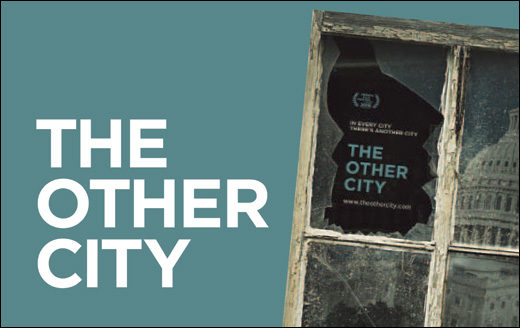
In an effort to fight AIDS stigma and raise awareness of the HIV and AIDS epidemic in Black communities, several black celebrities have joined the Black AIDS Institute to host the Hollywood premiere of "The Other City," the groundbreaking documentary that shines a light on the HIV/AIDs epidemic in Washington, DC. Celebrity host committee members include Michael Beach, Rocky Carroll, Bill Duke, Danny Glover, Cathy Hughes, David Macklin, Sheryl Lee Ralph, Brenda Russell, Tasha Smith, Vanessa Williams, producer Sheila Johnson and director Susan Koch..
Read more: The Black AIDS Institute and Black Hollywood Celebrities Host THE OTHER CITY Hollywood...