News 2008

Thoughts on Making History and Making the Future
By Charlie Baran
This has been quite a couple of weeks. The outcome of this year's presidential election adds weight to the feeling that these are among the most exciting times to have ever lived. And I hope we can all take a deep breath and soak it in. A Black President. The "impossibility" of this has for so long been held up as a testament to the racial division in America and the continued locking out (and locking down) of Black folks in this country. That this has come to pass is no small achievement for our country and our world.
But Wednesday didn't feel too much different from Monday, in real terms. I couldn't help but dwell on the fact that the realities faced everyday by Black people in this country, or people in this country at large, would not be free of those divisions we've known for so long simply as a result of this national decision. There is something to be said for the immense impact the electing of this President is sure to have on the aspirations of people in this country. I have no doubt that a young person's feeling of "I can do anything...I can be President," may manifest again and again in their life as, "I can take care of my family," "I can run this business," "I can stand up in the face of terrible odds." I look forward to what this means for the spirits of young people like me who are coming into the ownership of our lives and our times. Heightened spirits lead to heightened aspirations, which may evolve as a deeper determination to take on and resolve the trials of our lives and the world we live them in. I think we would be a thoughtless and crude society to not stop and acknowledge this moment. And I think my colleagues would be mistaken to undercut the real excitement in the air. But I think the most naive thing progressive folks could do, would be to think for a second that success in our mission, or in the overall mission of human justice and equality, will take one ounce less of our energy, our spirit, and our conviction now. In fact, I posit that it will take even more of those intangibles than we have previously been able to muster. The Black AIDS Institute sees the issue of ending the AIDS epidemic in Black America as fundamentally a question of mobilizing Black communities to change their reality. The Institute is guided by the strong belief that until Black people collectively take ownership over the epidemic and dispense with the notion that it is not their problem, Black folks will continue to become infected with HIV and die from AIDS at outrageous rates. And that belief is couched within an acknowledgement that the resource engine of American public health is not working for Black people in the way it needs to be. We can expect—or at least hope—that the new administration will facilitate a slightly more favorable context for our work (i.e., increased funding, a national AIDS strategy, elevated profile of the issues). But it would be a mistake to believe that the new President will automatically follow our lead and devote all the resources needed to end the AIDS epidemic in Black America. Phill Wilson has been know to say things to the effect of, "The government is not coming to save Black people. It never has. So it is on our community to mobilize and take up this fight ourselves." Well, if I may: President-Elect Obama is probably not coming to save Black people. So it is on the community to mobilize and continue to take up this fight. There will no doubt be many folks, Black and white, believing he will. Or that his presidency will reduce the burden of social change which has always been borne by the community. Or that things are different now and the big problems will eventually work themselves out. We will need to not only fight the battles we've been fighting, but will need to resist this sort of apathy of optimism. I grew up in a small neighborhood bordered by a trailer park, a railroad, an old quarry, and a cemetery. The neighborhood was probably 90% white, and 60% lived at or near the poverty line. After more than 200 years of white presidents, a lot of these folks were still not getting what they might reasonably expect from their government. It was just not part of the deal that they all got a significant "slice of the American pie" (i.e., steady, good-paying jobs, nice homes to live in, solid health insurance, and a strong voice in the decisions of their community leaders). But my former neighbors are generally some "hard core patriotic, love my country, George-Bush-is-lookin’-out-for-me, white folks. Many believe their government always has their best interests at heart, no matter what that government actually does. And they are virtually immobilized by that belief. Because they have been taught that they are priority number one, they are less prepared to raise their voices and demand economic and social justice. Because their faith remains that Uncle Sam is really on their side, it is not obvious to them that they need to look out for themselves, and for the community they live in. As a result this community is not getting the services or attention it so desperately needs. I share this observation to illustrate my biggest fear about this election. I fear that this election will leave people, Black people in particular, feeling like their needs are being looked after; like there is nothing more they can do or should hope for. I fear that Black communities will be further immobilized by our society’s token nod to progress. And frankly, I don’t think that immobilization is simply about how Black people respond, but how the larger society responds to Black people. However, this fear is nothing short of renewed motivation for my colleagues and me. I think we should celebrate this amazing election. It was not just an amazing achievement for Senator Obama, it was an amazing achievement for Americans of all political stripes. But, I hope we don’t forget the real reasons why we are celebrating. I have hope that we will resist this apathy of optimism; a hope that we will not be afraid to call out the inevitable shortcomings of this administration. I hope we are ever mindful that, as Phill Wilson says, "Nobody is coming to save Black people." Nobody is coming to save any of us. Perhaps it will be all the clearer now that we can't blame George Bush and just wait until something better comes along. This is the best we've got, and it's on us to make our world even better.
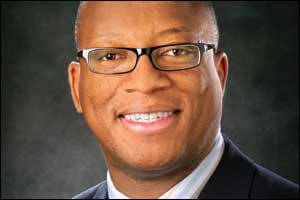
It's Time to Meaningfully Support Prevention by and for Black Communities
The U.S. Centers for Disease Control and Prevention (CDC) released new data today confirming what AIDS watchdogs have been saying for years: Black gay and bisexual men and Black women are being devastated by HIV/AIDS. That ugly reality is now indisputable. But what’s just as clear is that resources currently dedicated to changing that reality are woefully inadequate and not targeted at the heart of the problem.
A mobilization to end AIDS in Black communities has exploded in recent years. People from every corner of our community are getting involved—gay and straight, male and female, churches and civil rights groups, business people and celebrities, college students and community organizers. It is now crucial that policymakers at both the federal and local level finally join the fight. "We're told the CDC's new data is the result of breakthrough technology," said Black AIDS Institute CEO Phill Wilson. "The question now is, where is the breakthrough urgency? We know the problem. So what are we going to do about it? Where are the federal resources to support Black people in saving our community?" The New Data: 45 percent of those newly infected were African American and more than half of them were gay and bisexual men. Today's study drills down on the broad numbers released in August and finds: "The CDC's inability to reach four out of five gay and bisexual men with proven prevention efforts should surprise no one, given the paltry resources Congress budgets for that work and the absence of a national AIDS strategy," said Wilson. "If you fail to invest in solving the problem and you don't have a comprehensive strategy, in what universe can you expect to succeed." According to the CDC, its HIV prevention budget lost 17 percent of its purchasing power between 2001 and 2006. That means the current budget would need to be at least $1.3 billion to make up the loss and meet the new needs, according to a 2007 study conducted by a Bloomberg School of Public Health researcher. Sadly, the agency’s fiscal year 2007 HIV prevention budget was about half that figure. Nor is CDC spending its prevention money wisely. Only two of the 18 prevention campaigns the agency has developed and trained community partners in carrying out were developed by and for Black gay and bisexual men. "Black people account for well over half of the U.S. epidemic. Yet, we continue to be an afterthought when it comes to HIV prevention. Unless we are explicitly included, we are implicitly excluded. You cannot reach our community with programs developed by other communities, for other communities," said Wilson. A Community Ready to Act: Dozens of traditional Black organizations representing all parts of our community have signed on to the Black AIDS Mobilization. Each organization has committed to make ending HIV/AIDS a regular part of its broader. Similarly, CDC has secured pledges from over 200 Black community leaders to join the fight agains
Today’s study follows the CDC's August announcement that the domestic AIDS epidemic is 40 percent larger than we have previously believed. Using new technology that pinpoints how long a person has been infected, CDC researchers determined in that earlier study that roughly 56,300 people were newly infected in 2006.
America's Prevention Failure:
CDC acknowledged in releasing today's study that the information, while more detailed than ever before, confirms what we have long known. It also confirms that our investment in stopping the epidemic in Black America is sadly inadequate. Shockingly, a separate CDC analysis found that 80 percent of gay and bisexual men in 15 cities had not been reached by the agency’s HIV prevention campaigns.
Black America, meanwhile, is springing into action. For years, observers have rightly criticized Black leaders at all levels for ignoring the building AIDS crisis. But that day is behind us.
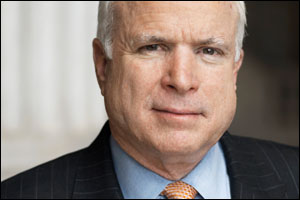
Domestic AIDS Epidemic Ignored at Republican National Convention
The Republican National Convention concluded last night with no mention of the domestic AIDS epidemic in the United States and only passing reference to the epidemic overseas. Neither Presidential nominee Sen. John McCain nor Vice Presidential nominee Gov. Sarah Palin mentioned AIDS in their remarks to Convention delegates.
The Republican Convention was held one month after the Centers for Disease Control and Prevention (CDC) released new estimates indicating that the HIV infection rate in the United States is 40% higher than previously thought. Every year, more than 56,000 Americans become infected with HIV, a rate that has not fallen in eight years and is higher than it was for most of the 1990s, according to CDC. "The complete failure of the Republican leadership to even acknowledge AIDS is deeply troubling," said Phill Wilson, Founder and CEO of the Black AIDS Institute. "At a time when the AIDS epidemic is worse in our nation's capital than in many parts of Sub Saharan Africa, how can AIDS not be a featured as a priority by the Republican Presidential nominee?" First Lady Laura Bush did make reference to AIDS in her address on Tuesday night when she noted the number of Africans receiving AIDS treatment through the President's Emergency Plan for AIDS Relief (PEPFAR), a program spearheaded by President George Bush. No speakers addressed the AIDS epidemic in the United States and the Republican platform offered no plan to address the issue. "John McCain must commit to developing a National AIDS Strategy for the U.S. designed to reduce the HIV infection rate and increase access to AIDS treatment," said David Munar, President of the National Association of People Living with HIV (NAPWA). "AIDS remains a serious threat in this country and every new infection adds significant financial burden to an already over-burdened health care system. If we want to save health care costs, we must use effective prevention tools and ensure early detection by making HIV testing a routine health care procedure," he added. "Striving for progress against HIV/AIDS in the U.S. is a non-partisan issue all Americans can and should get behind," said Rebecca Haag, Executive Director, AIDS Action Council. "The next President has an important opportunity to build on the lessons of our international response to AIDS and achieve better outcomes in the epidemic at home. AIDS remains one of the most serious public health challenges facing our nation. As we begin to debate broader healthcare reform, including stronger prevention efforts, we should look at how programs like PEPFAR can provide a model for how to effectively address HIV/AIDS in our own country. With better planning, implementation and accountability, the U.S. can, and indeed must, make better progress," said Haag. The absence of discussion about the domestic AIDS epidemic at the Convention was in contrast to the Democratic Convention held the previous week. At that Convention, former President Bill Clinton called for "a renewal of the battle against HIV and AIDS here at home." Several members of Congress voiced support for development of a National AIDS Strategy. When they spoke to Democratic delegates on the first day of the Convention, both Michelle Obama and actor and activist Danny Glover said that a National AIDS Strategy is needed. The Democratic Party Platform includes a call for a National AIDS Strategy, and Senator Obama has pledged to develop a National AIDS Strategy if elected. More than 1,000 individuals and over 300 organizations, including public health departments, faith based communities, civil rights groups, health care centers and AIDS organizations throughout the country have endorsed a Call to Action for a National AIDS Strategy.

The McCain/Palin Vision for Sex Education is both Dangerous and Discredited
Political commentators are lining up to chime in on news that Republican vice presidential candidate Sarah Palin's teenage daughter is pregnant. But an important reality is quickly getting lost in the din of political punditry: Too many young women like 17-year-old Bristol Palin are forced to make choices about their sex lives without access to honest, accurate, comprehensive information. And both Gov. Palin and Senator McCain support policies that will further limit access to that information.
In reacting to news reports of her daughter's pregnancy, Gov. Palin described a set of emotions with which most parents can identify. "Our beautiful daughter Bristol came to us with news that as parents we knew would make her grow up faster than we had ever planned," Palin said in a statement. "We’re proud of Bristol's decision to have her baby and even prouder to become grandparents. As Bristol faces the responsibilities of adulthood, she knows she has our unconditional love and support." The Palin family should be applauded for standing behind their daughter as she becomes a new mother—and beyond that, everybody on all sides of the political debate should stay out of their lives. But the McCain/Palin position on youth sexual health is both appropriate and crucial to discuss. In her 2006 gubernatorial run, Gov. Palin answered a conservative advocacy group's questionnaire by saying she would not support comprehensive sex education or access to contraceptives in schools, and that she would support abstinence-only sex education. Such policies have already proven disastrous for the sexual health of our youth. Funding for abstinence-only sex education skyrocketed during the Bush administration, despite no evidence that it works. Study after study has since proven abstinence-only education an utter failure. Most recently, a congressionally requested review of federally funded abstinence programs found that the more than $1.5 billion we've spent in the last decade was wasted. Students in abstinence-only sex-ed programs delayed sex no longer and had no fewer partners than anyone else. They were however forced to make sexual choices without information about how to reduce the risk of disease and pregnancy, not to mention how to manage the panoply of emotions that accompany sex. A recent CDC study estimates that one in four (26 percent) young women between the ages of 14 and 19 in the United States – or 3.2 million teenage girls – is infected with at least one of the most common sexually transmitted diseases. The study also found that Black teenage girls were most severely affected. Nearly half of the young Black women surveyed (48 percent) were infected with an STD. In commenting on the study, Kevin Fenton, M.D., director of CDC's National Center for HIV/AIDS, Viral Hepatitis, STD and TB Prevention, said. "Today’s data demonstrate the significant health risk STDs pose to millions of young women in this country every year." High STD infection rates among young women, particularly young Black women, are clear signs that we must demand that young people have access to comprehensive sex and HIV/AIDS education. But the now massive mound of evidence discrediting abstinence-only education has done nothing to slow the Bush administration’s ideological quest to rob everyone, young and old, of the tools needed to make informed, thoughtful sexual choices. The Department of Health and Human Services is now considering a rule change that would define many forms of contraception as abortion, and thereby allow federal grant recipients to deny clients access to them. The vast majority of Americans disagree with these dangerous, discredited ideas, particularly when it comes to educating our youth. A 2004 Kaiser Family Foundation survey found just 15 percent of Americans want sex education restricted to discussions of abstinence. Nearly three quarters say its "appropriate" for teens to have access to contraceptives from doctors and clinics, with or without parental approval. McCain and Palin nonetheless show every sign of continuing the Bush administration’s efforts to shove ideologically driven sex education policies into Americans' lives. Whatever choices young Ms. Palin, her boyfriend, and their families make are their own business. Sadly, these are choices that young girls, often without the support of their families, have to make every day. We hope and pray that they have access to the information and support they need to make wise ones. But the policy choices Senator McCain and Gov. Palin make are everybody’s business. We must demand that our next President ensure access to comprehensive, accurate, science-based information and to the tools

Phill's Blog: Tuesday, Aug. 28
PRESIDENT CLINTON SPEAKS AT THE DEMOCRATIC NATIONAL CONVENTION
Former President Bill Clinton repeated at last night's Democratic National Convention a message he first delivered to the AIDS community earlier this month: It's time for America to recommit itself to the struggle against HIV/AIDS at home. Clinton's forceful, urgent statement at a convention otherwise void of any substantive discussion about HIV/AIDS—showed just the sort of national political leadership we need today, and must now be followed up with action from his party’s new leaders. On August 3, the U.S. Centers for Disease Control and Prevention shocked the world by announcing that the domestic epidemic is 40 percent larger than we have believed for more than a decade—and still growing. The study confirmed that Black Americans are bearing the brunt of this expanding problem, accounting for 45 percent of new infections. The CDC study's release coincided with Washington’s decision to dramatically expand America’s commitment to fund AIDS treatment in poor nations—a long overdue and deeply important act of leadership. But as a Black AIDS Institute report, Left Behind, points out, that commitment stands in stark contrast to our domestic effort. Domestic AIDS funding has remained flat or been cut every year since 2001, even as the epidemic has grown by more than 55,000 new infections each year. That reality prompted CDC's prevention director, Kevin Fenton, to warn in announcing the agency’s August 3 study that our resource commitment has lagged far behind the need. As the New York Times editorial board put it, "Surely we should be doing as much to prevent the spread of the AIDS virus in our own communities as we are trying to do abroad." Barack Obama's AIDS platform commits the candidate to do just that if elected. Most notably, Obama has vowed to draft and begin implementing a coordinated national AIDS strategy within the first 100 days of his administration. The U.S. wisely requires any nation receiving foreign assistance for its HIV/AIDS effort to create the same sort of plan. Shockingly, however, we have never had one of our own. Over the last eight years, America has sat by and watched its AIDS epidemic spiral out of control. Former President Clinton has made a call for us all to end that passivity. Obama has committed himself and his party to act. And now all Americans who want to see this epidemic end must do their part, too. If Obama is elected, we must hold him accountable to his campaign promises on AIDS. But more than that, we must help create the political landscape that will allow him to follow through. We must be engaged in the political and policy making process from the most local level through to our national representatives in Congress. We must tell any and every policy maker who claims to represent us and our communities that HIV/AIDS is an urgent priority. Anything less at this crucial moment in our long, troubling history with this disease will be disastrous. The epidemic in Black America is perched at a precipice. We will either find the political will to push it back from the edge, or we will tumble along with it into darkness.
In describing why he is delivering his full support to Democratic presidential nominee Barack Obama, Clinton declared, "He will continue and enhance our nation's global leadership in an area in which I am deeply involved, the fight against AIDS, TB and malaria, including—and this is very important—a renewal of the battle against HIV/AIDS here at home." At the International AIDS Conference in Mexico City three weeks ago, Clinton made similar remarks, pledging to direct more of his foundation’s resources to the domestic fight. Both statements come as the U.S. epidemic faces a crucial turning point.