News 2008
2008 International AIDS Conference
Circumcision is Cutting-Edge HIV Prevention Tool
By Kenneth Miller
MEXICO CITY -- Multiple studies conducted by prominent authorities in the medical field conclude that male circumcision is an effective preventive tool against HIV infections, it was announced at the International AIDS Conference in Mexico City. Speaking to a packed audience at Centro Banamex, Fredrick Sawe, deputy director of Kenya Medical Research Institute/Walter Reed Project HIV Program in Kericho, shared research on circumcision that mirrored similar findings shared by three other experts. According to the study, males between the ages of 15-49 who became circumcised were 51 to 76 percent less likely to be infected with HIV. Sawe’s research was conducted in six districts, covering 11 locations and 172 villages; it indicated that areas with a high circumcision uptake represented opportunities for HIV prevention and sex education. In nearly all of the studies, male reduction rates reached at least 50 percent in heterosexuals. Because the studies were conducted in nations that did not include African American males or discuss how it applies to women, it is not known what impact, if any circumcision would have against HIV in the United States. Circumcision is the surgical removal of the skin that covers the tip of the penis, usually performed on males shortly after birth. It is part of Jewish and Muslim religious rites. Though common in the U.S., the procedure is no longer recommended by physicians as a medical necessity. Some experts said they worry that touting circumcisions as protection against HIV might be misinterpreted by some men as freeing them from the need to practice safe sex. If that happens, HIV infections might go up, not down. While experts warned that circumcision is not the “silver bullet” in prevention treatment for HIV, it offered an optimistic view in the HIV puzzle. Richard White of the London School of Hygiene and Tropical Medicine provided the theory that circumcision could also halve the susceptibility to such sexually transmitted diseases as chancroid. “Male circumcision is important in explaining the heterogeneous spread of HIV in Africa,” White noted. The cost was about $50 per patient in South Africa, Kenya and Uganda, according to White. The multiple studies also indicated that there was very little difference in penile erection, sexual performance or sexual pleasure in males who were circumcised and those who were not. A surprise finding was that many men in South Africa did not know whether they had been circumcised. Nicolai Lohse of UNAIDS, suggested that male circumcision be recognized as an important strategy for prevention of heterosexually acquired HIV infection in men. She said one HIV infection could be averted for every five to 15 male circumcisions. Additionally, the World Health Organization (WHO) and UNAIDS recommend that male circumcisions be included as part of any HIV prevention strategy.
2008 International AIDS Conference
The AIDS Struggle Has a Friend in Rep. Barbara Lee
By Denise Rolark Barnes
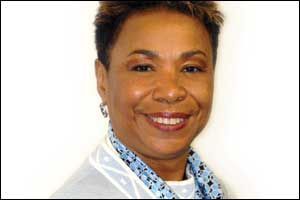
Visit Black AIDS Institute´s Youtube page. MEXICO CITY -- The fight to end the global AIDS pandemic has found a staunch supporter in Rep. Barbara Lee (D-CA), co-author of PEPFAR, legislation that provides billions of dollars to prevent new HIV infections throughout the developing world. But her commitment to end the crisis in America is keenly targeted toward the African American community where she wants to see the problem fixed. “This is about life and death for millions of people, so you have to be committed,” Lee said, following her remarks at a news conference Tuesday at the XVII International AIDS Conference. “When you see so many people dying each and every day, and you know you can make some small difference in their life, you have to do something.” PEPFAR provides more than $3 billion a year to 15 countries hardest-hit by HIV: Botswana, Cote d’Ivoire, Ethiopia, Guyana, Haiti, Kenya, Mozambique, Namibia, Nigeria, Rwanda, South Africa, Tanzania, Uganda, Vietnam and Zambia. While the President's Emergency Plan for AIDS Relief is impacted by its own set of limitations in the countries that are receiving aid, Lee has announced her concern that the U.S. continues to neglect its own citizens, including African Americans, who are disproportionately represented among newly infected cases of HIV, according to a study recently released by the Black AIDS Institute. “The report ‘Left Behind’ provides startling evidence that, while we excel at fighting AIDS overseas, we have not sufficiently addressed the growing African American epidemic within our own borders,” Lee said. In addition to the role of government, Lee believes it will take the will of the people – Black people – to force government officials and politicians do more to address the HIV/AIDS crises in the U.S. “We need a major lobbying effort that includes every African American community in the country to go sit in their member of Congress’ office to say we need $1.3 billion to help end HIV in this country. Once the political pressure is put on this Congress and this White House, then we’ll see some action,” she stated. “A lot of grassroots people are motivated already and deal with the fact of neglect of our government by struggling daily in their lives trying to take care of their families. But people need to connect their daily lives to what decisions their political leaders are making and let them know they are watching. People need to get involved in a national political effort to get our politicians to do the right thing.” Lee, who also serves as the West Coast chair for the Obama Campaign, said she wants to see “our next president put billions of dollars in HIV/AIDS and I want to see the next president continue with the commitment to fix the problems of PEPFAR.” Lee does not stop there. She said she wants to see infection rates drop and more people with access to anti-viral drugs. She wants young teenagers to have access to comprehensive sex education and she wants to get rid of the abstinence-only program funded by the Bush Administration. For African Americans, Lee wants “rates to go down to zero, and I want this disease stamped-off the face of the earth.” On Wednesday, Phill Wilson, CEO of the Black AIDS Institute will present Lee with a special award honoring her for her leadership for bridging the divide between the global epidemic and the domestic epidemic. Wilson said, “There have been very few members of Congress who have been able to advocate for the very real need to take a leadership role on the global front, particularly in sub-Saharan Africa, while being painfully aware of the devastating effect AIDS is having on the African American community domestically.”
2008 International AIDS Conference
One-Size-Fits all Prevention Wrong Fit for HIV/AIDS Epidemic
By Linda Villarosa
Visit Black AIDS Institute´s Youtube page. MEXICO CITY -- At past international AIDS conferences, a session on prevention wouldn’t have drawn enough attention to fill a large meeting room. In previous years, treatment dominated the conversation. But this year the theme of prevention has bubbled to the surface among the tangle of panels and workshops, debates and discussion among the 22,000 attendees. Tuesday’s morning plenary on the topic was filled to capacity and several other sessions hummed with interest and energy. Later, at the Lancet Series on HIV Prevention session, hundreds of people packed into the session room and many others stood outside, unable to get in. And it’s not just prevention as usual. Throughout the conference, scientists and activists have called for new ways to staunch the spread of HIV throughout the world. Last year, 2.7 million people were newly infected, most in sub-Saharan Africa. “Prevention has not only been marginalized, but in some places it’s been suppressed for political, religious or social purposes, said Richard Horton, editor of The Lancet, the British medical magazine that devoted its most recent issue to HIV prevention. “We have to redefine prevention, to create a new dialogue of what we mean by prevention.” Combination prevention is the hot new buzzword. This means simply, combining various prevention strategies to decrease the spread of HIV. Too often the prevention framework is one size fits all. Hand out condoms and call it a day. Or, in the United States, fund only prevention programs that teach abstinence to the exclusion of comprehensive sexual health education. Or the latest magic bullet: circumcision, which has been shown to reduce by 60 percent the spread of HIV from women to men during heterosexual intercourse, mostly in Africa. But what about the other 40 percent? And what about male to female transmission and male to male—by far the more common forms of transmission in the United States? Circumcision, condom distribution or abstinence education in isolation is not and has never been the answer. Strategies for the following categories also must be developed: • Comprehensive sexual health education, including abstinence, negotiated safety, partner reduction and proper condom usage. • Risk reduction for HIV drug users, including needle exchange programs and other harm reduction strategies. • HIV testing and counseling to reduce the number of people who don't know they've been infected. • Access to preventive health care for everyone. • Human rights and social justice for all, including equal rights for women and lesbian, gays, bisexuals, transgendered people and those living with HIV/AIDS. • Treatment and care for people living with HIV and AIDS. “There will never be a single magic bullet to prevent HIV transmission,” says Nancy Padian, executive director of the Women’s Global Health Imperative in San Francisco. “A combination prevention packages is what’s most effective.” African Americans have a complicated tangle of factors that make them more susceptible to HIV and demand, thoughtful, textured and often costly prevention efforts. “Prevention can’t be about telling people not to have sex,” says Ebony Johnson, a Washington, D.C. activist who mobilizes women to advocate for better HIV treatment and care. “If you tell people not to have sex they’re not going to listen. How can you tell a married woman not to have sex with her man? That doesn’t make any sense, that isn’t a strategy.” Other HIV prevention methods have also proven ineffective or incomplete. How does a woman ask a man she’s been with for two years to suddenly wear a condom even if she suspects he’s been unfaithful? Or, what if her husband’s recently returned from prison? Asking him to wear a condom says, “I think you had sex with a man while you were inside, or worse, got raped.” Says Dr. Helene Gayle, a long-time HIV expert and president and CEO of CARE USA. said, “Black America needs a broader and more intensive mix of prevention initiatives, including initiatives that are designed by Black Americans in the Black community.”
2008 International AIDS Conference
CDC’s New Life-Saving Technology
By Jerry Thomas
MEXICO CITY -- Because of a new ground-breaking HIV testing method, officials from the Centers for Disease Control say they believe they will finally get a gauge on how widespread the HIV virus is within the U.S., including the African-American community. Dr. Kevin Fenton who oversees the CDC’s prevention efforts for HIV/AIDS, said new data from the Serologic Testing Algorithm for Recent HIV Seroconversion (STARHS) will be available in the fall to provide the “clearest picture of the US epidemic.” STARHS is able to determine how many people become infected with HIV during the year, and it can gauge the spread of the disease among African-American heterosexuals, women and children. The test, officials said, is also able to determine if the HIV infection occurred within the last five months. In the past, testers have been able to determine when the disease was diagnosed, but not when a person was initially infected. One medical expert likened the new technology to adding a good speedometer to a car. Scientists had a good general idea of where the epidemic was going; this provides a better understanding of how fast it's moving right now. For African-Americans, who represent nearly half of the 56,300 newly reported HIV cases; the STARHS test could be instrumental in saving lives by prompting African-Americans to seek treatment before the virus turns deadly. “This is a fantastic tool we now have at our disposal,” said Fenton, who spoke during a telephone conference interview with Black journalists. “While we know by other data, the impact the disease is having on Black gay men, this information about heterosexuals who are severely impacted was never known. For Blacks, the rate was seven times that of whites, and three times that of Hispanics. Twenty-five thousand newly diagnosed AIDS infections are occurring within the Black community every year.” He added, “The CDC is very committed to subgroup analysis. We want to know what is happening with Black women, Black men (heterosexuals). Now that we are confident, in autumn 2008, we will be moving towards publishing (a report). Part of our ongoing commitment is to get the data out.” STARHS has claimed the spotlight during the international conference, because of the new CDC report that revealed the spread of HIV in the U.S was 40 percent more widespread than previously known. Since AIDS surfaced in 1981, health and government officials have struggled to estimate how many people are infected each year with HIV. It can take up to a decade for someone infected with HIV to show symptoms or become ill. Previous CDC estimates said as many as 1.2 million Americans are living with AIDS. That estimate was based on the assumption of 40,000 new infections a year. According to the study, the number of new infections each year never dropped below 50,000. That occurred in the early 1990s, and the epidemic’s growth remained at that level until the late 1990s. At that time the number of new infections spiked to between 55,000 and 58,500, where it has stayed since. In 2006, according to the study, there were 56,300 new infections, 45 percent of which were among African Americans. Fenton said the CDC began using the STAHRS system in 2005 when it became available. The new figures were known to CDC by last fall, but the results were not released until the conference because CDC officials wanted the HIV incidence surveillance system to undergo scientific review to insure its reliability. The BED test, which measures the level of anti-HIV IgG relative to total IgG, is then applied to leftover serum from a positive HIV test. If the BED test detects a proportion of HIV-specific IgG below a certain threshold, the result indicates that the individual was infected with HIV in the previous five months. Such infections are considered new. The conventional test tells us if the person is infected with HIV, the BED test tells how recently. The new estimate relies on blood tests from 22 states where health officials have been using the STARHS’ HIV testing method. “We then extrapolated the results to the entire United States by applying the observed ratio of HIV incidence to AIDS diagnoses in the 22 states to the areas without HIV incidence surveillance,” said Dr. Irene Hill, chief of the HIV Incidence and Case Surveillance Branch in the Division of HIV/AIDS Prevention at the CDC. “This work represents collaboration at its best and the result is the clearest picture to date of new HIV infections in the United States.”
2008 International AIDS Conference
Bill Clinton: Time to Do More at Home
By George Curry
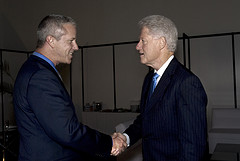
Watch the video, listen to the podcast or read the transcript. Visit Black AIDS Institute´s Youtube page. MEXICO CITY -- Former President Bill Clinton, who has focused much of his private foundation activities on AIDS in Africa and the Caribbean, acknowledged Monday that much work still needs to be done in the United States and indicated his foundation will now shift some of its resources to the domestic front, especially targeted for African-Americans. "For Americans, this should be a wake-up call," Clinton told an enthusiastic audience. "Even as we fight the epidemic globally, we must focus at home. And I intend to do so with my foundation." Fresh from a tour of Ethiopia, Liberia, Rwanda and Senegal, Clinton made his comments at the 17th biennial International AIDS Conference in Mexico City. He spoke days after the Centers for Disease Control and Prevention acknowledged that it has been underestimating the number of people infected with HIV, the virus that causes AIDS, by 40 percent. Citing new advanced technology that allows better counting, the CDC said approximately 56,300 new HIV infections occur each year, not the previously announced 40,000. In announcing the updated figure, Dr. Kevin Fenton, director of CDC’s National Center for HIV/AIDS, STD, and TB Prevention, said: “This new picture reveals that the HIV epidemic is –and has been – worse than previously known and underscores the challenges in confronting this disease.” The United States has been widely praised for leading the global effort against AIDS. But it has been strongly criticized for not devoting enough attention to the growing problem at home. Clinton cited a new report by the Black AIDS Institute that called for more funding at home. The report, titled “Left Behind,” noted that in 2005, U.S. spending on AIDS globally increased by 21 percent while domestic spending on AIDS remained unchanged. In 2006, global spending increased by 22 percent and domestic spending decreased by.4 percent. In 2007, international spending grew by 46 percent while domestic spending increased by only 2.5 percent. This year, global spending is projected to increase by 34 percent while domestic spending increases only by 1.2 percent. “Black communities throughout the United States continue to bear a disproportionate share of the AIDS epidemic,” the report says. “More than 500,000 Black Americans are living with HIV, and more than 20,000 or more become infected each year. Blacks living with HIV have an age-adjusted death rate more than twice as high as HIV-infected whites.” Phill Wilson, executive director of the Black AIDS Institute, said Clinton’s pledge of help was long overdue. "I have been extremely disappointed with the Clinton Foundation, especially with it being headquartered in Harlem of all places, that it has been silent on this issue," Wilson said. “It is appropriate that President Clinton is committed to taking this on." During his two terms in office, Clinton tripled the AIDS budget to $237 million for relief programs, according to the Henry J. Kaiser Family Foundation President Bush increased AIDS to $6 billion in 2008. Still, Clinton indirectly criticized the Bush administration while praising Mexico for allowing universal access to anti-retroviral therapies. He said, "Hopefully, our neighbors to the north will follow." "AIDS is a very big dragon," Clinton, who flew overnight from Africa to participate in the conference, said. "This dragon must be slain by millions and millions of foot soldiers."