News 2008

Phill's Blog: Tuesday, Aug. 26,
THE WORLD AS IT IS, THE WORLD AS IT SHOULD BE
This week all eyes are on Denver as the Democratic National Convention makes history by becoming the first major party to nominate a Black American to be their candidate for the President of the United States. Among those eyes will be people infected with and affected by HIV/AIDS. I am here in Denver to look at this convention thru those eyes. I will try to report to you what I see every day.
My first event of the week was a luncheon sponsored by the Global AIDS alliance with Danny Glover, David Munar, Marjorie Hill, Sandra Thurman, and Barbara Lee. Danny Glover opened the event by saying, "The theme of this week and this election season is change. But in order to really bring about change, we have to understand where we are. We have to understand what it is we want to change from and what it is we want to change to." He went on to call for a "Domestic PEPFAR or National AIDS Strategy, expanded funding for the Minority AIDS Initiative and an annual domestic investment of $1.2 billion in HIV prevention. He ended his talk by saying, "If this season is about change, let that change include a world without AIDS. And let it begin today!" Overlapping the Global AIDS Alliance luncheon was a panel discussion hosted by the Trinity United Methodist Church. Sheryl Lee Ralph was one of the speakers. She urged participants to "do something different". The highlight of this first day came late into the night from the floor of the convention. First there was a tribute to Senator Edward Kennedy from Massachusetts who is recovering from brain cancer. All day there was a buzz around town speculator if Teddy would make a surprise appearance. The hall went crazy when he appeared on the stage. While he didn’t talk about HIV/AIDS, he made the case for change. He inspired us to keep fighting and his very presence, reminded us that the "change we can believe in" will have to include, health and healthcare reform. The evening ended with Michelle Obama telling the world why she things her husband should be the next president of the United States. She talked about how they met, and how their family and backgrounds are much like many of ours. But the most important thing she talked about came about half way thru the speech when she remembered Senator Obama talking about "the world as it is and the world as it should be." "All too often," she said (referring to her husband), "we accept the distance between the two, and settle for the world as it is — even when it doesn’t reflect our values and aspirations. But he reminded us that we know what our world should look like. We know what fairness and justice and opportunity look like." That’s what this election is all about. We know what the world should look like for people with HIV/AIDS or at risk for infection. We know what fairness and justice and opportunity look like for Black people who are disproportionately impacted by HIV/AIDS. And, like Barack and Michelle, we that the world as it is just won’t do, and we have an obligation to fight for a world without AIDS because "that's as it should be".
Phill Wilson is the CEO of the Black AIDS Institute and regular contributor to AOL/Black Voices. He can be reached at
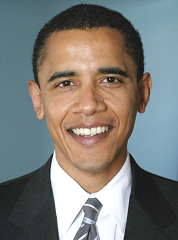
Democrats Must Make AIDS in Black America a Priority
The Democratic Party today begins a week in which it will rewrite American political history by formally nominating Barack Obama as its presidential candidate. That will be a tremendous political accomplishment, for Obama and for America. But to many observers, this year's Democratic National Convention represents something larger: proof that America is finally on the road toward a more perfect union where all of its people really matter.
Real progress toward that dream may in fact lie ahead in an Obama presidency. Obama and the Democrats must however do more than talk about change to make it so; they must meaningfully address the dramatic, lingering inequalities that still define American life. And among the most pressing challenges they must confront is the raging Black AIDS epidemic.
The U.S. Centers for Disease Control and Prevention announced earlier this month that the domestic HIV/AIDS epidemic is at least 40 percent larger than we have believed it to be for more than a decade and is growing by more than 55,000 new infections a year. At least 45 percent of those newly infected in 2006 were Black Americans, the CDC said, despite the fact that we are just 13 percent of the population. Yet, as the Black AIDS Institute explained in our most recent report, Left Behind, the U.S. government has done little to address these ugly realities. If Black America were its own country, it would have a higher HIV prevalence than all but four countries outside of sub-Saharan Africa. It would have a larger HIV-positive population than seven of the 15 countries the U.S. has deemed a priority for HIV- related foreign assistance.
Barack Obama has vowed in his AIDS platform and in other public statements to take decisive action to bring the domestic epidemic under control. Most notably, he has pledged to draft and begin implementing a national, coordinated AIDS strategy within the first 100 days of his administration. The U.S. insists that any country receiving our assistance in its HIV program first draft just such a plan, but we have notably never had one of our own.
The Black AIDS Institute applauds Obama's AIDS platform. And we urge all voters who care about this epidemic to hold him and the Democratic Party accountable for following through on it if he is elected. At the same time, the Democrats have controlled Congress since 2006 and have shown little leadership in making HIV a domestic policy priority. The federal budget for AIDS care, treatment and prevention has continued to lag far behind the fast-growing need. And desperately needed reforms to the AIDS care safety net remain on the political back burner. Despite these facts, the Democrats are aggressively seeking black voters' support this fall, not just for Obama but also in congressional races around the country. Before offering that support, we should demand that Democratic congressional leaders first explain what they are going to do to stop this epidemic raging in our community. Obama has made his AIDS plans clear, and the Black AIDS Institute hopes he will use the national stage he holds this week to help all Americans, in red states as well as blue states, understand why fighting HIV is a priority. But we also will listen carefully for Democratic congressional leadership to explain how it plans to deal with this epidemic in the coming years.
The Democrats will indisputably make history at their convention this week. The question remains whether it will mark a fundamental change for America. How the party handles the deep racial disparities of AIDS will say a great deal about how much a historical moment the convention represents, and for whom. To learn more about the AIDS records and platforms of both Obama and Republican presidential candidate John McCain, check out the Black AIDS Institute's December 2007 report on all presidential candidates, We Demand Accountability.
2008 International AIDS Conference
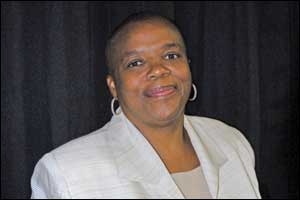
When it Comes to Churches, Pernessa Seele is the Balm
By Denise Rolark Barnes and LaGloria Wheatfall
Visit Black AIDS Institute´s Youtube page and the Blackaids blog. MEXICO CITY -- Perneesa C. Seele, founder and CEO of Balm in Gilead, which takes its name from Jeremiah 8:22. The Old Testament verse reads: “Is there no balm in Gilead; is there no physician there? Why then is not the health of the daughter of my people recovered?” Seele has become the modern-day answer to that question, helping improve the health status of people in the African Disapora, especially around the issue of HIV/AIDS. “Church has a major role to play regarding the sexual behaviors of all of us,” said Seele, who relocated the organization to Richmond, Va. after 30 years in New York City. “The faith community has a major role to play in the prevention and care of sexual beings and that’s ostensibly who we are. ” Sometimes it’s a matter of leaders getting over their lack of knowledge and initial reservations. “There are many different strategies that we use,” she explained. “During the Week of Prayer, which has been very successful in the African American community, pastors pray about the healing of HIV/AIDS. …We all have the same problem and we all have to come together to address that problem.” The Balm in Gilead works to improve the health status of people of the African Diaspora by building the capacity of faith communities to address life-threatening diseases, especially HIV/AIDS. Seele appeared at the XVII International AIDS Conference in Mexico City where she joined Black AIDS activists called together by the Black AIDS Institute to demand a national action plan to end the epidemic in America´s Black community. She reported that three African American congregations – including the African Methodist Episcopal Zion (AMEZ), the African Methodist Episcopal (AME) and the Christian Methodist Episcopal (CME) – have launched extensive HIV testing and education campaigns in each of their districts across the country. The AMEZ’s are also providing help for people with HIV. The Balm in Gilead is helping each denomination by providing training and technical assistance to the organizations. “If you get them [faith leaders] effective education, they will find their own space and way to address the problem of AIDS, comprehensively. Over time, they will come to grips with their own stigma; they will repent for the damage they have done to people. I have seen it time and time again. It requires persistence, it requires patience; it requires the understanding that that a faith leader is responsible for a whole lot of folks and a whole lot of history stands on his shoulders.” That history notwithstanding, much work lies ahead. “As we move forward in this fight against AIDS, let us be mindful that it is the silence, denial and stigma of AIDS that continues to cripple our community's response to AIDS education, HIV testing and treatment,” she stated. “The involvement of all churches in this battle against AIDS is imperative if we are to conquer this epidemic here at home and throughout the global village.”
2008 International AIDS Conference
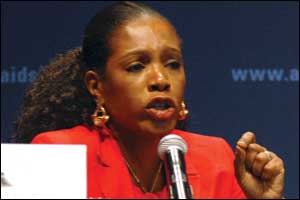
Sheryl Lee Ralph Creates Web Site to Encourage HIV Testing
By Ivan Thomas
Visit Black AIDS Institute´s Youtube page and the Blackaids blog. MEXICO CITY -- Jamaican born, internationally recognized HIV/AIDS activist Sheryl Lee Ralph, has used her success as a highly talented singer and actress to make a difference in fighting the world’s deadliest disease. Even before appearing in the smash hit Broadway musical “Dream Girls” in 1982, Ralph has been committed to advocating for safe sex and for HIV/AIDS education, prevention and testing. During that year, Ralph recalls the experience that propelled her into activism. “I saw all of my friends just dropping dead. Gay Black men and white men just dropping dead like flies. It was awful. People were embarrassed and they did not want to talk about it,” she said.” And then, I saw how terrible people treated other people who had [AIDS]. That’s when I decided to get involved.” Birthed around the same year as her classic musical, the 27-year-old epidemic has spread to consume people all around the globe. According to a report from the CDC, at the end of 2007, the worldwide population of people with HIV was 33 million. A new report this week indicated that in America there are 56,000 new cases of HIV infections every year, most of them in African Americans. With this fact, Ralph has become more angry, committed and passionate than ever, serving as a powerful voice for the voiceless victims of this epidemic. Her work has taken her to several countries abroad, such as Botswana, Cape Town, South Africa, and many others. Her most recent contributions were in Mexico City at the XVII International AIDS Conference, where she talked about the toll this epidemic is having on Black America. “Black people need to get over the stigma, and let’s get over the shame,” she said, referring to the many African Americans who out of fear of how they will be perceived by others, don’t get tested, don’t share their statuses with their partners, and therefore endanger themselves and others. “You must do everything possible to protect yourself,” said Ralph. “Men, stop having sex with women knowing you don’t have a condom. Women, stop having sex with men you know are HIV positive. Stop having sex without condoms. You are playing Russian roulette with your life.” To many, the challenge in confronting the HIV/AIDS epidemic in the Black community is that people are unable to identify successful methods of getting the word out and educating people in poor urban communities. While there are many ways people are trying to eliminate HIV/AIDS, obviously very few present true solutions. According to Ralph, the arts are an important way to get people of color to listen. That is why Ralph makes sure to incorporate that into her work. As a matter of fact, her famous stage play, entitled “Sometimes I Cry” does just that. With references to people of Black and Latino backgrounds, she places aspects of both cultures into her performance by speaking in English and at times in Spanish. But of course the main message is to know your status, which is why she leaves no doubt about which presidential candidate is best suited to confront the issue of HIV/AIDS in the United States. “See I’m a person of change,” she said. “I am a member of the YES WE CAN Campaign, and I know that my candidate, Barack Obama has gotten tested publicly for HIV. That is a very important message to send to the public. One of the first things I stress to people is to get tested. Along with her husband, Pennsylvania Sen. Vincent Hughes (D) Ralph has launched a Web site called Testtogether.org. The site is a campaign aimed at getting couples to accompany one another to get tested for HIV. Ralph says that loved ones should be active in ensuring the health of one another. The CDC says nearly a quarter of people with HIV are untested. An early diagnosis allows a person to get medical treatment sooner, thereby increasing their lifespan. However, the CDC says that by the time many people get tested for HIV, the disease is progressing to the AIDS stage. The testing movement is just one of the many projects that Ralph has in place, making it impossible to dispute how passionate she is about conquering HIV/AIDS. On Sept. 27 in Washington, D.C., Ralph will be at the Lincoln Memorial wearing red with any and everyone who wants to fight the battle. “If you care about your health, show up,” she said. “If we don’t show up for ourselves, how can we expect anyone else to show up for us?”
2008 International AIDS Conference
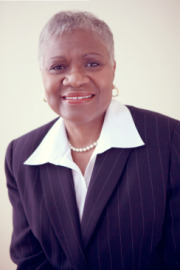
C. Virginia Fields Uses Political Strategy to Combat HIV/AIDS Infections
By Jerry Thomas PR
Visit Black AIDS Institute´s Youtube page and the Blackaids blog. Growing up in Birmingham, Ala., C. Virginia Fields marched with Dr. Martin Luther King Jr., standing up with him to fire hoses and police dogs. Later, as a social worker in New York City, she worked with prisoners and foster children. A desire to bring about change led to a career in politics that included eight years as Manhattan Borough president and a run for the city’s highest office. Fields’ current position as president and CEO of the National Black Leadership Commission on AIDS seems to combine all of the passions that fueled her earlier pursuits. She was “outraged” when she learned at the International AIDS Conference in Mexico City that the number of African Americans infected with HIV is 40 percent higher than federal officials had originally believed. “I cannot believe that we’re three decades into this epidemic and we’re still seeing numbers like we’re seeing,” Fields said. “I cannot say I’m shocked. I’m outraged but I’m not shocked.” The Centers for Disease Control and Prevention (CDC) reported that, using more precise methodology, it had measured approximately 56,300 new HIV infections in the U.S. in 2006 rather than the 40,000 previously estimated. Nearly half of those were in African Americans, whose rate of infection was seven times higher than whites. The agency’s announcement came on the heels of a report released by the Black AIDS Institute in July that found that Black Americans, if they were a separate country, would have higher rates of HIV/AIDS than many of the third world countries the government targets for help. Of course, as president of the NBLCA, Fields was already well aware of HIV/AIDS impacts the Black community. In fact, it was numbers that drew her to her current post. After term limits forced her to leave her post as borough president, the NBLCA board showed her numbers that convinced her fighting to reduce HIV/AIDS infections would be her next job. The numbers were planted in a soil of compassion. “I have seen a number of friends and colleagues die of AIDS,” Fields said. “One of my first supervisors in the 1980s died of AIDS. He was probably one of the first persons I knew personally who died of AIDS. So many others I have known have died of AIDS.” Fields, who said she went into politics “to use the government to make a difference,” rattles off the efforts her group is making to end HIV/AIDS like it’s a campaign stump speech. They have affiliates in 12 cities, with three more expected by the end of the year. They work with local leaders, clergy and others, giving them technical assistance, information, coordination and other forms of help in their efforts to fight the disease. The group, founded in 1987, also conducts policy, research and advocacy on HIV/AIDS and serves as chief consultant on HIV/AIDS and public health-related issues to numerous national organizations. Fields said she is particularly enthusiastic about the results of a conclave NBCLA facilitated last October. Co-chaired by Rev. Calvin Butts, pastor of the Abyssinian Baptist Church in New York, and Bishop T.D. Jakes, pastor of the Potter’s House in Dallas, the conclave came up with a national strategy to fight AIDS. The United States requires countries that receive help under the President's Emergency Plan for AIDS Relief (PEPFAR) to have such a strategy yet the United States itself does not have one, Fields said. She said AIDS resources come under 10 agencies. “How are they coordinated? Who’s communicating? Those are things a national AIDS strategy would address,” she said. “It will be a road map about how we respond to the epidemic in the United States.” Fields said the strategy has “broad-based support” but has not yet been translated into legislation. Rep. Charles Rangel of New York has agreed to spearhead the legislation, she said. Fields said she came away from the AIDS conference encouraged. “What has been most interesting and informative is being here with people from all over the world…Africans, people from the Caribbean, from here in Mexico,” she said. “I’m hearing their stories and the common concerns that we all have and the need to do more and the desire to do more. I’m encouraged that we’re all going to leave here differently than we came – much more committed.”