News 2005-Older
STATEMENT: The National HIV Prevention Conference
Better Questions, Better Answers
Almost a quarter century into the epidemic, we’ve still got far more questions than answers about HIV’s spread. Our brightest research minds have struggled to understand the virus’s unrelenting movement. They are often tasked with measuring the un-measurable—the murky emotions that underlie what we’ve come to call “risk.” But we continue groping for information, hoping to gain some small advantage against the virus back in our own neighborhoods. The U.S. Centers for Disease Control and Prevention told us this week that it has launched a plan to at least give us more robust information about who is getting infected today, and through what modes of transmission. For more than a decade we’ve accepted the loose estimate of 40,000 new infections annually and resigned ourselves to a myopic view of those infections. By this time next year, according to Dr. Ronald Valdiserri, deputy director for the division of HIV, STD and TB Prevention, the CDC will be able to give us more concrete numbers. That would be a welcome development. We already hold, however, what may be the most valuable piece of information about HIV prevention: To succeed, we have to take responsibility for ourselves. Who are “we”? Everybody, at every point of the prevention triangle: policymakers, communities and individuals. Policymakers must understand that they are beholden to the communities they serve. Not all prevention is quantifiable, and it is irresponsible for government funders to exploit that difficult reality in order to starve nascent or innovative initiatives. And when community-based programs, in turn, exploit the epidemic’s murkiness in order to avoid being held accountable for the resources we spend, we’re being just as irresponsible. But accountability is most important on an individual level. We are each responsible for keeping ourselves healthy, for keeping our communities engaged and for keeping our leaders vigilant. We may not know much about this epidemic, but we know this: If we all demand accountability of ourselves, we can make a change.
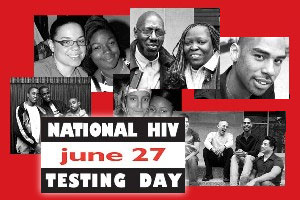
STATEMENT: National HIV Testing Day
The HIV Test I Didn't Want Saved My Life
By Phill Wilson
Today, the Centers for Disease Control and Prevention and the National Association of People with AIDS are sponsoring National HIV Testing Day, in a year that marks the 20th anniversary of the development of the HIV antibody test in 1985. With the passing years of the epidemic, many are numbed to its effects. A day to promote testing is not the news it was even 10 years ago. But on this 20th anniversary, it is worthwhile to look back. When they think of it at all, most people only think of one AIDS epidemic. But, as a Black man who is also gay, I have lived through two, and I’ve learned hard lessons from both of them. My first epidemic began in 1980 when hundreds of young gay men, myself included, became infected with a virus that was unknown at the time and that would eventually grow to cause untold pain, suffering and death for millions. I remember leaving the clinic after receiving the results of my HIV test in 1985. Like most AIDS activists at the time, I had been reluctant to take this new test. I was an HIV counselor at the time, and I had witnessed first hand how people with AIDS were mistreated and discriminated against. There was no evidence that people who tested positive would fare any better. When people asked me about taking the test, I would always ask, “What are you going to do with the information?” After all there were no treatments at the time, no cocktails, no Lazarus stories and no presidential advisory committees. Indeed, the only reason why I took the test back then was to be able to empathize with the experiences of my clients. During the 1980s, because the bulk of those identified were young, gay men, the epidemic was characterized in the public mind as a gay plague. By the mid-eighties, it was clear that the virus had begun spreading like wildfire through the African American and Latino communities. With treatments available and protections against discrimination enacted, there are today many reasons to test. The most important reason is simply this: Knowing your HIV status can save your life. And HIV testing has contributed to overcoming the stigma we worried about 20 years ago. The gay characterization of the first epidemic had enormous impacts. Many people who thought they did not know a gay person found out they did when a friend or a family member suddenly fell ill or died. Subsequently, the growing awareness of gays in the mainstream increased acceptance. But the other impact of this characterization had a more dubious affect. Those who were not gay did not think it important to be tested. The virus, however, unlike its human counterparts, doesn’t care who it infects. As a result of many things, including the virus’s ability to attack the poor and marginalized, the gay epidemic gave way to a new one among a population that did not perceive itself at risk. Today, African Americans are more than “at-risk.” In 2003, African Americans represented 13% of the population; however, they were 40% of the total AIDS cases and more than half of all newly diagnosed HIV/AIDS cases. African American teens were 65% of all cases among teens in 2002 and African American women accounted for 67% of new AIDS cases among women in 2003. Last week, the Centers for Disease Control and Prevention (CDC) released data estimating that 46%--nearly half—of all Black gay and bisexual men (MSM) are already positive and two thirds of them don’t know they have HIV. To put this into perspective, the HIV rate among Black men who have sex with other men is worse than the HIV rates in the hardest hit parts of sub-Saharan Africa. This epidemic needs to change. The path for change is testing and access to quality medical care. I was infected in 1980 and diagnosed with AIDS in 1990. I am alive today, 25 years later, because I know my status and intervened with life-saving drugs. People who know their status can save their own life – and the lives of others. The Centers for Disease Control and Prevention estimate that the majority of new HIV infections in this country are transmitted by people who don’t know their HIV status. Studies show that people who learn they are HIV-positive usually take steps to protect their partners. In short, testing is the path to both better treatment and better prevention. Because in the 1980s the gay community realized that it needed to take ownership of AIDS, the trajectory of the epidemic was changed for that community. Black Americans could benefit from this lesson. Denial is killing us. Not knowing will not make AIDS go away. No one, particularly those of us in Black communities, can afford complacency when it comes to HIV testing. Complacency is the friend of AIDS. Unlike 1985, AIDS is no longer the automatic death sentence it once was. Now, there is something you can do. I personify what can happen when people with AIDS have the love and support of family and friends and access to appropriate medical care. But you can’t get treated if you don’t get tested. Phill Wilson is the executive director of the Black AIDS Institute.
STATEMENT: 30th Anniversary Convention of the National Association of Black Journalists
President Clinton Urges Black Media Makers to Report the Epidemic
Former President Bill Clinton addressed the 30th anniversary meeting of the National Association of Black Journalists yesterday, urging thousands of African American media professionals to report on the healthcare challenges we face here and abroad. Speaking about the domestic AIDS epidemic, and its disproportionate impact on African Americans, President Clinton urged the nation to renew its commitment to stopping HIV's spread. "We thought the problem went away and we got out of prevention," he warned. "We need to make a new effort in America to make sure the people who are at risk for AIDS know they are." Washington lawmakers now working on next year's federal HIV/AIDS budget should heed his warning. The U.S. Centers for Disease Control and Prevention announced this summer that more people are living with HIV/AIDS today than ever before -- more than one million. Half of those people are African Americans, though we are only 13 percent of the population. Yet, the White House’s fiscal year 2006 budget proposal cuts funding for the CDC's Division of HIV/AIDS Prevention by $4 million. It cuts the CDC's overall budget by almost 10 percent. Meanwhile, funding for scientifically-discredited abstinence-only sex education programs in our nation's schools has doubled since 2001. It should surprise no one that the epidemic is growing rather than shrinking. Clinton described his international AIDS work in detail to the NABJ gathering. By negotiating with pharmaceutical manufacturers and Western donor nations, the Clinton Foundation has made remarkable progress on lowering the cost of anti-HIV medications in several poor countries around the world. Declaring that this work has proven what's possible, he called rich nations to task. "These people are fighting for their lives and fighting for the lives of their children," he said. "It is unconscionable if we don’t do more." President Clinton is exactly right. But he could have said the same about low-income people living with HIV right here at home. The AIDS care safety net that we built throughout the 1990s is in near tatters today. As science does its job, finding new treatments to prolong lives, policymakers are failing to do their part. We give up on prevention and allow an estimated 40,000 new infections a year to persist. And then, when the care programs have a larger burden to carry than ever, we stop supporting them too. Since 2001, funding for the Ryan White CARE Act -- the primary vehicle for federal funding of HIV/AIDS treatment and care programs -- has remained largely flat, even as thousands of new people a year enter the system. One key portion of the CARE Act has actually been cut. As a result, cities around the country report creating waiting lists for services and altogether ending vital programs like drug addiction treatment and support groups. President Bush has now proposed a new requirement that all but a small sliver of the CARE Act money be spent on direct medical expenses. But as care providers all over the world testify, what good are meds if you have no transportation to go to the doctor, no food to take them with or a drug addiction that overshadows all other health considerations? Moreover, the White House's proposal is a strange fit with its efforts -- now supported by Congress -- to cut Medicaid spending by $10 billion over the next five years, even as we would offer another $106 billion in tax cuts over the same period. To make these drastic cuts possible, the nation’s governors have proposed a "reform" that would allow Medicaid to begin charging co-pays to people already living at and below the poverty level. The budget Congress is currently working on would also leave the AIDS Drug Assistance Programs - - which fund meds for uninsured, low-income people - - continuing to flounder. At last count, in March, 18 states had created waiting lists, capped enrollment or limited what treatments were available. Fifteen states offered fewer than 10 of the 16 medications the U.S Public Health Service has listed as highly recommended for AIDS treatment. That's right. People living with HIV right here in the richest nation on earth do not have access to treatments that we know will keep them alive. They, like their developing world counterparts, are fighting for their lives and the lives of their children. Our failure to help them is just as unconscionable.
OP-ED: The Chicago Sun-Times
AIDS is a conspiracy, and blacks are in on it
By Phill Wilson
I've been in denial. I've finally come to the conclusion that AIDS really is a conspiracy to kill black people. I finally realized the truth in June, when the U.S. Centers for Disease Control and Prevention reported that African Americans represent about half of all people living with HIV in the United States. We're only 12 percent of the population. If that were not enough, 37 percent of the total U.S. AIDS deaths are black, 69 percent of new female HIV infections are among black women, and, most horrifying, a new five-city study found 46 percent of black gay and bisexual men were already infected with HIV. Nearly half! With numbers like that, there's got to be a conspiracy going on. The question, however, is whose conspiracy is it? After CDC's announcement of all this alarming new data, a few activists, including myself, tried to shake black people into realizing that we've entered a new era -- one in which the AIDS epidemic simply cannot be ignored. A few mainstream dailies covered the story. And then ... nothing. To my knowledge, no black media followed up to jump-start discussions. No civil rights organizations marched or called on policy makers to take action. No black celebrities sponsored relief concerts. No black gay organization called on policy makers to take action. What other than a conspiracy of silence could explain this collective shrug at such shocking information? Put this into perspective. AIDS rates of this magnitude are close to -- if not already past -- the "tipping point" where the virus becomes almost impossible to stop. As for black gay and bisexual men, nearly 50 percent is downright genocidal. Look at the hardest hit parts of sub-Saharan Africa: Swaziland, with the highest HIV rate on the planet, has an adult HIV prevalence of nearly 40 percent, followed by Botswana with 37 percent, and South Africa with 25 percent. All these countries face decades of stalled economic development, families gutted of entire generations, and deep, irreversible tears in the social fabric. And yet, none suffer from infection rates on par with those that the CDC cited among America's black and gay bisexual men. Sure, the high rates among gay and bisexual men won't carry the same society-wide ramifications as the rates among all adults in hard-hit African countries. But rationalizations of that sort are exactly what have kept us paralyzed in denial. We always find a way to wall off reality by thinking of AIDS as happening to someone else -- gays, drug users, Africans. But will we dither until rates among middle class drug-free heterosexuals catch up with Africa? Yes, there are many reasons why our community hasn't yet responded to the new CDC data. But maybe a young man I was speaking with recently boiled it down to the bitter essence when he said, "Nobody cares about us -- including us." Every time a black minister uses his pulpit to spew homophobic bile and we sit in the pews and don't object, we join the conspiracy. Every time we let an elected official fail to push for federal funding of needle exchange programs that give drug users clean needles and a chance to get into drug treatment, we join the conspiracy. Every time we -- male or female, gay or straight -- have unprotected sex, we join the conspiracy. So you don't believe HIV causes AIDS. So what? You should still protect yourself. AIDS prevention measures also prevent transmission of other diseases, such as syphilis, gonorrhea, and hepatitis B and C. What if AIDS really was started by a bunch of crazy white scientists in a laboratory? What if one -- or even all -- of the AIDS conspiracies really is true? Then what? We still have to survive, that's what. Here's how: Starting now, civil rights groups should offer HIV testing at their conventions and at every single major event they hold -- and they should set, and meet, annual testing goals. Historically black colleges and universities should develop and administer AIDS 101 curricula to be included in freshman orientation, and they should sponsor AIDS peer education programs. Black churches should adopt black AIDS organizations and collect "love offerings" once a month to donate to those organizations. Black newspapers and magazines should make a commitment to include HIV/AIDS information in every issue. Black radio stations should commit to run at least one AIDS public-service announcement every day. And most important, we should all get tested, learn about the latest life prolonging HIV treatments, and get involved with one of the groups trying to stop this epidemic raging among us. Unless and until we are doing everything in our power to stop the devastation HIV/AIDS is causing in our communities, we need not look any further than the nearest mirror to find out why black people are getting infected with HIV and dying from AIDS at greater numbers than anyone else. We can stop the conspiracy -- because the conspirators are us.
STATEMENT: World AIDS Day
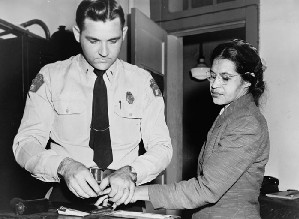
Following Rosa Parks Lead in the Fight Against AIDS
Fifty years ago, an ordinary Black woman boarded an ordinary city bus in a small, ordinary southern town and an extraordinary thing happened. By holding fast to her seat, Rosa Parks gave voice to the frustration and pain -- and to the dreams, hopes and promise -- of a people. In so doing, she ignited a movement that changed the world. As we celebrate the 50th anniversary of Rosa Parks’ declaration that enough is enough, we also note that today, on the 18th commemoration of World AIDS Day, Black women still face a world in need of change. Black women have always born the brunt of the female AIDS epidemic in America. But as journalist Hilary Beard explores in the Institute's latest report on the Black AIDS epidemic -- Getting Real: Black Women Taking Charge in the Fight Against AIDS -- data recently released by the Centers for Disease Control and Prevention has made it more evident than ever that AIDS primarily a Black epidemic among women in America. According to the CDC, Black women represent 68% of the new HIV diagnosis among women in the United States. African American women are 18 times more likely to contract HIV than white women, and AIDS remains among the leading causes of death for Black women. It is the leading cause of death for Black women aged 25-34. Yet nearly 25 years into the epidemic, there has yet to be a mass mobilization of Black women to respond. Fifty years ago today, a Black woman and the community she lived in were brave enough to stand up and refuse to participate in their own oppression, to declare, Not today, this stops now. For Black women in America today, the bus is AIDS. We are not just being asked to give up our seats, we’re being told to give up our lives. The Black AIDS Institute and the National Coalition of 100 Black Women are calling on all Black women in America to, like Rosa Parks, refuse to consent. Not today, this stops now.