We'll Always Have Cuba, Part 3
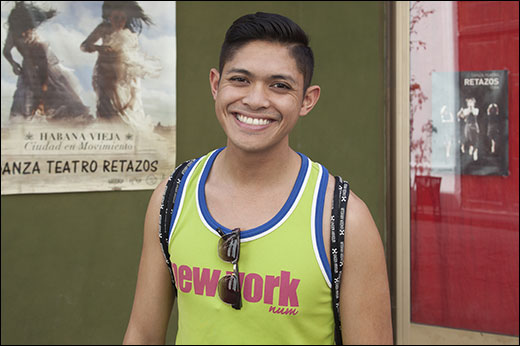
Justin Tandingan, Director of the Asian American & Pacific Islander Initiative at Teach For America
The third installment of a round-table discussion with four members of the Black AIDS Institute's Cuban delegation. Go here to read Part 1 and here to read Part 2.
Less than six months after the beginning of the normalization between Cuba and the U.S., a delegation of fifteen gay men (mostly) of color spent fifteen days in Cuba collecting and sharing information on innovations in HIV/AIDS treatment and prevention, sexual and gender identity, and the differences in responses to the AIDS crisis between a for-profit system and a government-controlled healthcare system. I spoke with four of the delegation participants after they returned to the U.S:
• Phill Wilson, founder of Black AIDS Institute
• Steve Wakefield, Director, External Relations, HIV Vaccine Trials Network
• Justin Tandingan, Director of the Asian American & Pacific Islander Initiative at Teach For America
• Christopher Hucks-Ortiz, Evaluation Specialist at John Wesley Community Health Institute in Los Angeles and current Chair of the HIV Prevention Trials Network (HPTN) Black Caucus
Did you get any sense of where the trans movement is there?
Tandingan: We were at CENESEX [see cover story] and they have many resources for trans folks, like legal and mental health services. The fact those are available and sanctioned by the state, that was interesting. The trans movement led the way as far as LGBT rights and activism. That was different than what we see in the U.S. as far as what is accessible and what is not. It showed me a model of what is possible and how to make those shifts from a government perspective.
Wilson: Not only are there services available at CENESEX, but there are trans women in position of authority there. It's a center that's inclusive of trans people at the highest levels. In our conversation with Mariela Castro, when asked about her reasons for taking leadership in this arena, her reasons were tied to the fact that basic to the manifesto of the revolution was the freedom of everybody, and that had to be inclusive of LGBT people as well.
What were the people you spoke with eager to learn about regarding HIV/AIDS?
Wakefield: I did not experience much interest in what we in the U.S. were doing around this arena. They know they produce more doctors per capita than anywhere in the world. They know they have an excellent system for training people around this work. I don't recall at any point anyone suggesting what we were doing could be useful for them.
Wilson: As I have traveled around the world, particularly developing countries, there is a hunger for tips and strategies and guidance on how we do things in America, and that they had lots to learn from us. That is not the attitude in Cuba; at least in this space [HIV/AIDS] they have a lot to learn from us.
Tandingan: There was a language barrier to get at some of the specifics about what might be applicable to Cuba. In our delegation, in conversations, it was difficult to get to an understanding of what was going on without a translator with us. That level of conversation is nuanced in many ways and that is lost in translation.
Was there any concern about increased sex tourism from the U.S. and how that might impact the HIV/AIDS crisis?
Hucks-Ortiz: There was a gentleman on the delegation and he asked if they saw a correlation of sex tourism and the spread of HIV in the population. I did not get the sense that, if there was, that it was information we could have accessed easily. There are people who go there for sex tourism. We know it happens. But I didn't see it like in other countries in the Caribbean.
What surprised you the most about Cuba?
Wilson: How warm and welcoming the Cuban people were. We did not run into any animus whatsoever. The second surprise is how robust the gay scene is in Havana and even in other places. It may not have a robust LGBT infrastructure as we know it, but even the presence of a gay scene that existed even in the more rural communities was a surprise.
Hucks-Ortiz: I don't think I had any negative interactions. Everyone was concerned: "Are you enjoying our country? Are you having a good time?"
Tandingan: There is genuineness about the way Cubans build relationships. You need one another to survive there. You're on an island. There's an ability to know people for long periods of time. People want to be in each other's business but also support each other. They wanted to share what they had with us and I appreciated it. As a Filipino-American and it was a unique experience to feel just as welcome as others on the trip. It helped that I spoke a little more Spanish. The problem is, it's hard to communicate on-line and when you are it's very slow. I wonder how that will change the community when everyone gets connected.
Hucks-Ortiz: This was a really powerful experience for me. I'm willing to bet other men on the trip had similar experiences. I learned about Cuban people but about experiencing myself in a different way. It's intangible but important. You know that saying, "We'll always have Paris"? I say, "We'll always have Cuba," no matter what else happens. This moment was special.
Larry Buhl interviewed the staff at MSMGF about their work for the March 2016 issue of A&U magazine. For a more comprehensive glimpse of both old and new Cuba, please pick up a copy of the March issue of A&U or visit their website.