News 2017
HIV Diagnoses Have Decreased In The African American Community; Prevention And Care Necessary To Continue The Decline
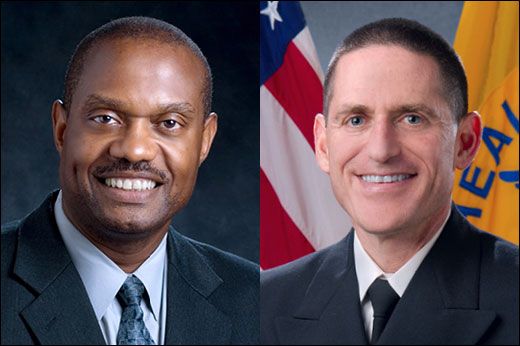
Eugene McCray, M.D., Director, Division of HIV/AIDS Prevention, National Center for HIV/AIDS, Viral Hepatitis, STD, and TB Prevention, CDC; and Jonathan Mermin, M.D., MPH, Director, National Center for HIV/AIDS, Viral Hepatitis, STD, and TB Prevention, Centers for Disease Control and Prevention.
National Black HIV/AIDS Awareness Day (NBHAAD), held every year on February 7, has for 17 years been a time to encourage HIV prevention, testing, and access to care and treatment in the African American community. This year, it is a testament to public health and a strong community that the numbers of HIV and AIDS diagnoses among African Americans have decreased along with other racial and ethnic groups over the past decades. While African Americans are still the racial/ethnic group most affected by HIV, the gains made by this community have been great, and they include a 14% drop in HIV diagnoses from 2010 to 2014 that were fueled by a steep decline among African American women and a leveling off of diagnoses among African American gay and bisexual men. Research has shown that African Americans do not engage in behaviors that could transmit HIV more than other groups, so the impact of HIV likely affected the African American community because of other factors, such as lack of access to health care, poverty, high rates of male incarceration, stigma, and homophobia.
In This Issue
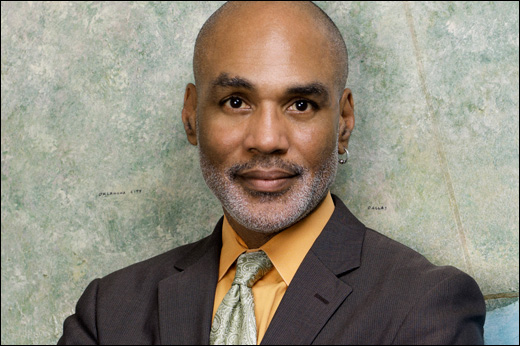
Happy Valentine's Day! There's no better time than this day focused on love to make sure you know your HIV status. Go here to find out where you can get tested near you.
AAHU Fellow Aaron Davis: Break It Down so People Can Understand

AAHU Fellow Aaron Davis
One in a series about recent graduates of the African American HIV University (AAHU).
As a premed major in college, Aaron Davis, AAHU's 2016 valedictorian, admits to having an advantage over the other Fellows in the science and treatment training, although he insists that it was not an unfair one.
Read more: AAHU Fellow Aaron Davis: Break It Down so People Can Understand
Spreading The Word About HIV Prevention For African-American Women
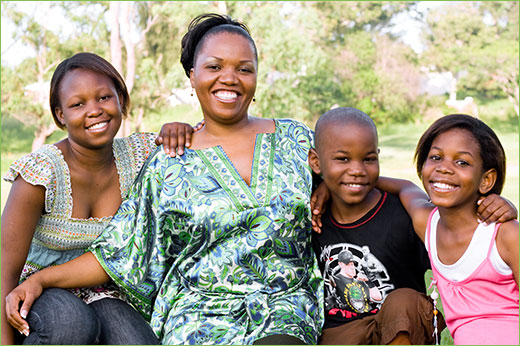
PrEP knows no gender
African-American women are more likely to be infected with HIV than other women, and many don't know it. So public health officials and advocates are trying to get the word out about PrEP, pre-exposure prophylaxis. It's a daily medication that helps prevent HIV infection.
Read more: Spreading The Word About HIV Prevention For African-American Women
If Obamacare Is Being Repealed, Do The Uninsured Still Face Penalties?

ACA repeal nightmare
In some recent emails, readers asked about what to expect as Republicans move to overhaul the health law. Should people bother paying the penalty for not having health insurance when they file their taxes this year? Will they be able to sign up on the exchange for 2018 after their COBRA benefits end? Here are some answers.
Read more: If Obamacare Is Being Repealed, Do The Uninsured Still Face Penalties?