News 2011
Immediate treatment for all of us? PrEP for everyone else?

Immediate treatment for all of us PLWHA?
Another National HIV Testing Day, June 27, is just around the corner! Another is a bittersweet word. We're still here, but so is the HIV epidemic, after thirty years. But at least advances in treatment are changing the terms of HIV policy debate.
Read more: Immediate treatment for all of us? PrEP for everyone else?
Women Overcoming the Shame and Stigma of HIV
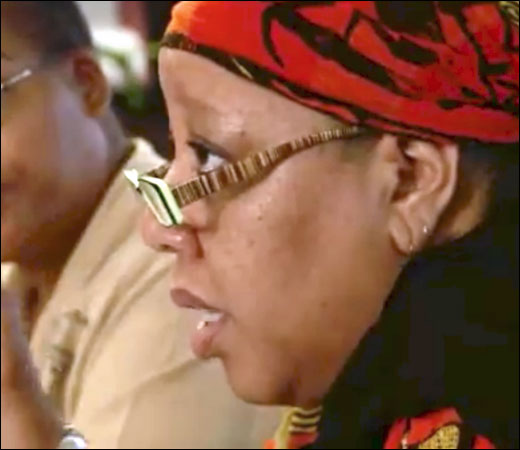
For years Del'Rosa Winston-Harris kept her HIV diagnosis a secret. When seeking HIV/AIDS resources, she says, "I went to places that were way outside of where I lived so no one could identify me." When a friend ran into her at the hospital and asked why she was there, "I said, 'I'm here to get my cancer checkup,' " the 49-year-old recalls. "My biggest concern was that I couldn't tell anybody."
ADAP Watch: When No News Isn't Good News
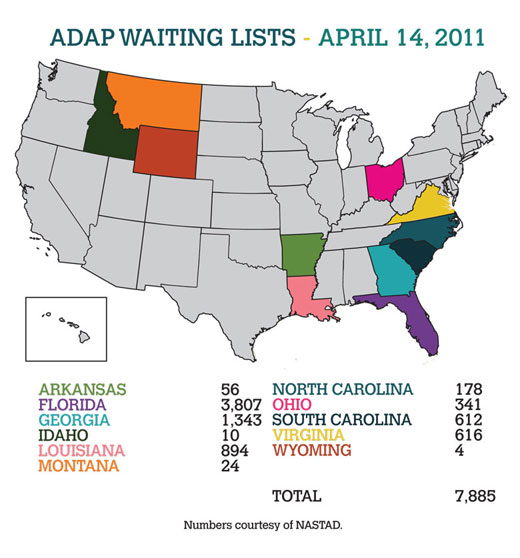
We hoped that the beginning of a new ADAP fiscal year would bring the waiting list numbers down.
A Bridge for ADAPs to 2014: A National Conversation

On April 7, 2011, on behalf of the Office of HIV/AIDS Policy, I attended “A Bridge for ADAPs to 2014: A National Conversation,” an event hosted by Dr. E. Blaine Parrish, Associate Dean of the George Washington University School of Public Health and Health Services in Washington, DC. The purpose of this meeting was to bring together a broad range of stakeholders to discuss the anticipated impact of the Patient Protection and Affordable Care Act (ACA), on the AIDS Drug Assistance Program (ADAP) and to identify options that will allow ADAPs to meet growing demands for services, in advance of the full implementation of ACA in 2014.
Read more: A Bridge for ADAPs to 2014: A National Conversation
SAMHSA, Behavioral Health and the National HIV/AIDS Strategy
(Part II)

As the HIV/AIDS policy lead at the Substance Abuse and Mental Health Services Administration (SAMHSA), I am pleased to return to the blog to discuss more of the activities that SAMHSA is engaged in to support the National HIV/AIDS Strategy (NHAS). In my last post, I discussed SAMHSA’s commitment to addressing the behavioral health problems that can put individuals at greater risk for HIV infection, co-occur with HIV infection, and hinder access to treatment and maintenance in care for mental and substance use disorders as well as for primary medical services. I also discussed SAMHSA’s efforts to examine the funding criteria that allow States to use five percent of the Substance Abuse Prevention and Treatment Block Grant funds for HIV/AIDS services, and our support of the 12 Cities Project. Today, I would like to provide an overview of how some of our current behavioral health activities are aligned with each of the three goals of the NHAS. Behavioral health refers to emotional health in general and the choices/actions that affect wellness. Behavioral health problems include substance abuse or misuse, alcohol and drug addiction, serious psychological distress, suicide, and mental and substance use disorders.
Read more: SAMHSA, Behavioral Health and the National HIV/AIDS Strategy (Part II)