Using the Arts to Carry The Fight to End HIV/AIDS to Younger Generations
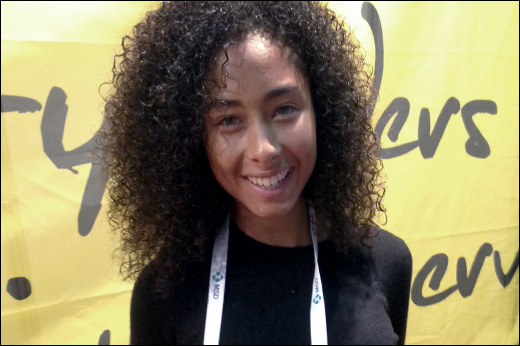
The 20th International AIDS Conference brings people together from all around the world to join hands in expanding the fight against HIV/AIDS and creating an opportunity for both young and old to share stories and learn from one another. At age 18, this is the second International AIDS Conference I've attended—when I was 14, I participated in AIDS 2010 in Vienna, Austria. In spite of that, I found Day One to be a complete eye opener. What the media most often shows is the science behind the disease. It focuses less on arts and culture, which tend to show how the disease impacts real people. This disconnect is especially significant for my generation, which relates little to the most devastating years of the U.S. epidemic in the 1980s. I have no friends who died from the virus; in fact, I know few people my age who have contracted the disease. What I do know is that, unlike in the Eighties, people can now live with the illness. There are medications, and eventually, there will be cures.
Yet even though the AIDS Conference focuses on science, it also incorporates arts and culture, which helps younger people like me relate better to the movement to end the epidemic. The speeches, theatrical pieces, debates, sing-alongs, dances, documentaries and dramatic displays take learning about the disease to a whole new interactive level.
The moment I stepped through the doors of the brightly lit Global Village, I experienced genuine excitement, both within myself and from those around me. Within a minute I was nearly trampled by a group of middle-aged drag queens in dangerously high red heels, their smiles shimmering with gold lipstick, who stopped momentarily to bat their long fake eyelashes at the crowd and flashing cameras surrounding them, before strutting onward. Dresses made completely of condoms lined one wall of the Village. I quickly moved into the Condomized! booth, where I learned to stick tie-dyed paper to colored condoms in order to make contraceptive pins.
After I left the Condomized! booth, I was ushered into a small corner filled with red umbrellas. Three women stood before a small crowd. In a thick Cantonese accent, the first woman said in English, "I am a sex worker". The next woman, in just as thick an accent said, "My name sex worker". Then the two laughed and the crowd smiled at them. Back home, when sex workers come up in conversation, they are called by their stigmatized name—prostitute, used as pejorative. Here, these women were seen as just women, as they smiled and cracked jokes to create awareness and fight for equal rights by showing that they are no different from any other worker. The rest of my day included an extensive breakdown of how the female condom works, a trip to the "ask a whore a question booth," a lubricant tasting and the Global Village Opening Ceremony, which involved youth speakers, an "ain't no mountain high enough" sing-along, and an indigenous Australian dance performance. By the end of the day my bags were so full of every possible kind of condom that my muscles actually bulged from the strain.
Now, this conference means much more to me than the scientific fight to end HIV/AIDS—it provides a place where struggling communities can voice their concerns, where we can learn to embrace issues we often overlook and where the people most affected by the epidemic can express their power. I couldn't be happier to again be among such strong willed and empowered people, who refuse to be held down by the judgment of much of the world, but instead, as the conference slogan states, focus on "stepping up the pace" in creating a harmonious planet that offers equality to everyone.
I can enthusiastically say, even while weighed down by colorful condoms, that I support this effort—as I report from a conference that looks at the needs of the people, turns an epidemic into a theatrical party and generates energy to carry on the fight, especially within my generation.
Kali Villarosa is a volunteer reporter with Black AIDS Daily, covering youth issues.She also attended the 2008 AIDS conference in Vienna. A recent high school graduate from Beacon High School in Manhattan, she is headed to Skidmore College in upstate New York this fall. She plans to pursue a career in international relations.