USCA Kicks Off Thursday Plenary, Saying #BlackLivesMatter
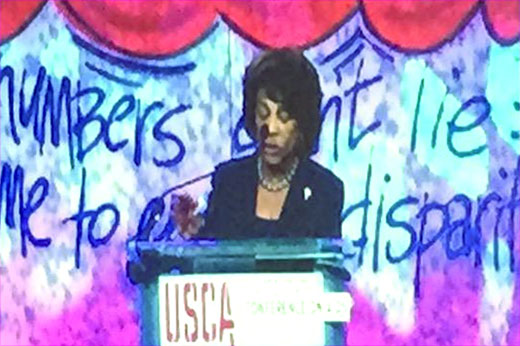
Cong. Maxine Waters speaks at the opening session of USCA 2015
The first day of the 2015 United States Conference on AIDS (USCA) opened in Washington, D.C., on Thursday with a breakfast plenary session centered around the notion that Black Lives Matter. The conference theme, "The numbers don't lie: It's time to end disparities!" also speaks to the importance of the lives of African Americans and other people of color.
Representative Robin Kelly (D-Ill.), who has assumed the helm of the Congressional Black Caucus Health Braintrust from former Congresswoman Dr. Donna Christian-Christiansen, (D-USVI), spoke to a packed ballroom. She told attendees that this year's Health Braintrust's theme, "The March Toward Health Equity," selected in honor of the 50th anniversary of the march from Selma to Montgomery, mirrors the USCA conference theme: "The numbers don't lie: It's time to end disparities!"
U.S. Representative Maxine Waters (D–Calif.) stated that the young people who galvanized the Black Lives Matter movement are poignant and brilliant in defining in those three words Black America's resistance to disrespect and oppression. She also warned attendees that funding for the Minority AIDS Initiative is in grave danger.
"Whether it's the misinformed or misdirected who don't believe in the support we should get, we should always stand strong, never allow them to intimidate us and always be prepared for the fight, no matter how they try to undermine us," Cong. Waters said. "We are strong, determined and believe in the possibility that all people deserve decent quality of life. We must level the playing field and end disparities."
Next, conference host-committee member Valerie Rochester, director of programs and training for the Black Women's Health Imperative, warned, "In every aspect of healthcare, Black women are becoming invisible and are being left out of programs."
Rochester continued, saying that the media doesn't tell the story of the lived lives of Black women. "There are nine million healthy, strong, resilient Black women in this country," she said, noting that we need a Black Women Matter movement. "We are more than just the sickest, poorest, least employed or hardest to reach."
Transgender activist Valerie Spencer pointed out that in spite the attention recently given transgender issues, 18 Black trans women have been murdered this year. "Unlike Caitlyn Jenner, they have no hair and makeup team," she said.
Spencer challenged health care providers to "increase their capacity to provide services to trans people in a well way" and to maintain their professional integrity when trans people walk into clinics. "There's a huge difference between professional inquiry and personal curiosity," she said.
Spencer also noted: "Trans women are not just invested in wigs and lip gloss. We have much more that we want to do and be." She challenged organizations to provide opportunities for their development to take place and for trans people to educate and prepare themselves for the opportunities that must be opened for them.
DeRay Mckesson of the We the Protesters arm of the Black Lives Matter movement spoke of how digital tools can help the fight against HIV/AIDS by allowing people to amplify different voices and organize differently.
He also noted that in his own use of healthcare as a Black gay man, he's never seen a Black male health-care provider and he's only seen one Black woman, yet their presence is vital because, in health, trust matters.
Young HIV advocate Martez Smith closed the session by talking about how important it is both to be mindful of the cards you're dealt in life but also about how you play them.
"I decided that if I was positive, it would be with a positive attitude," he said, vowing to change lives for the better.
Hilary Beard is editor-in-chief of the Black AIDS Weekly and a freelance writer based in Philadelphia.