Time to Focus the HIV Battle in Hard-Hit Streets
In U.S. cities, it's not just what you do but also your address that can determine whether you will get HIV and whether you will survive. A new paper in the American Journal of Public Health illustrates this geographic disparity—which tracks closely with race and poverty—and calls for an increase in geographically targeted prevention and treatment efforts.
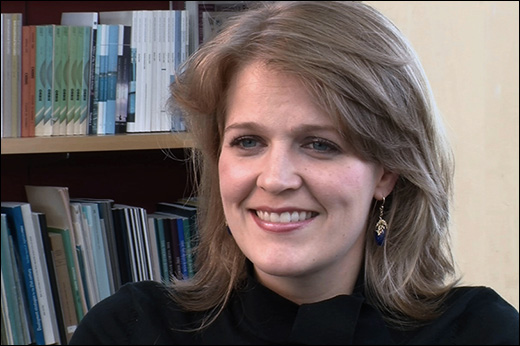
"People of color are disproportionately impacted, and their risk of infection is a function not just of behavior but of where they live and the testing and treatment resources in their communities," says lead author Amy Nunn, Sc.D., an assistant professor at Brown's Warren Alpert Medical School. "Limited health services mean more people who don't know their HIV status and who are not on treatment. People who don't have access to treatment are much more likely to infect others. Simply having more people in your sexual network with uncontrolled HIV infection raises the probability that you will come into contact with the virus. This is not just about behavior; this is about access to critical health services."
It's no secret that the United States has economic disparities in access to health care, but the paper lays bare in maps the consequences for the HIV epidemic. The maps show that the nation's epidemic has become especially concentrated in urban neighborhoods of color, where HIV incidence can be comparable to that of some countries of sub-Saharan Africa.
The high-incidence neighborhoods of color in New York City and Philadelphia, the maps show, have higher death rates than similarly high-incidence neighborhoods that are wealthier and whiter. The most likely difference between the communities, Nunn says, is in their access to testing, treatment and care services.
According to Nunn and the article co-authors—including Phill Wilson, president and CEO of The Black AIDS Institute—federal and state public health efforts should recognize that geography contributes to HIV risk and therefore focus far greater efforts to target the most heavily affected neighborhoods around the country.
"With the new surveillance tools available to us, we know where the epidemic is, down to the census track or zip code," says Wilson. "If we are serious about ending the AIDS epidemic in this country, we need to use those tools to invest in vulnerable communities. Unfortunately, instead of building infrastructure and expanding capacity in poor urban communities, we are dismantling the fragile infrastructure that exists."
Early Efforts
Aware of the need, several of the paper's co-authors—who also include Blayne Cutler, M.D., Ph.D., assistant commissioner of New York City's Department of Health and Mental Hygiene; Stacey Trooskin, M.D., Ph.D., assistant professor at Drexel University College of Medicine in Philadelphia; Annajane Yolken of the Miriam Hospital in Providence, R.I.; Susan Little, M.D., professor of medicine at the University of California, San Diego; and Kenneth H. Mayer, M.D., professor of medicine and community health at Brown University's Division of Biology and Medicine, and medical research director at Fenway Health in Boston—have helped put together neighborhood testing and treatment campaigns in recent years. The projects provide templates, they say, for engaging local communities through grassroots action and partnerships with local institutions and media, which not only spread the word but also reduce stigma. The authors also argue for a research-and-policy agenda that focuses HIV intervention strategies on neighborhoods rather than solely on PLWHA.
Between 2008 and 2011, the Bronx Knows campaign, an especially large effort led by the New York City Department of Health and Mental Hygiene, brought together 75 institutions and partners throughout the borough. Led in part by Dr. Cutler, the campaign conducted more than 600,000 tests and confirmed 4,800 cases of HIV, including 1,700 that weren't previously known. As a result, the percentage of adults living in the Bronx who reported having been tested rose from 72 percent to 80 percent, and the proportion of HIV-positive residents linked to appropriate health care rose from 82 percent to 84 percent.
Since 2012 Dr. Nunn and colleagues, including Dr. Trooskin, have led a privately funded project, Do One Thing, focused on Philadelphia's 19143 zip code, one of the nation's most heavily affected by HIV/AIDS. Do One Thing has partnered with local media and leaders, including clergy, and has sent volunteers door-to-door to promote HIV and hepatitis C (HCV) testing and treatment.
Thus far, teams have tested more than 6,000 residents, revealing an HIV rate of 0.7 percent. The testers have found that 5 percent of those tested for HCV have acquired that virus. When people test positive for either HIV or HCV, testers immediately link them to health services and treatment.
Targeting Testing and Treatment
Other efforts of varying nature and scale are under way in San Diego and Oakland in California, Washington, D.C., and Miami, but such campaigns are insufficient to turn the tide in every neighborhood around the country where high infection and mortality rates exist.
The authors believe that more of the money granted to states and cities, for instance, could be targeted to neighborhoods with the highest infection rates and where testing and treatment have been most lacking.
"Many resources don't go to the communities who need them most," Dr. Nunn says. "But we know exactly where people live who are becoming infected. We have so many tools that we know are effective at fighting the epidemic. Not to provide them to the most heavily impacted communities is a social injustice. We should be rolling out testing and treatment services and positive social marketing messages en masse in these communities."
David Orenstein writes about public health, medicine, biology and brain science at Brown University.