Remembering Race as We "Step Up the Pace" Internationally
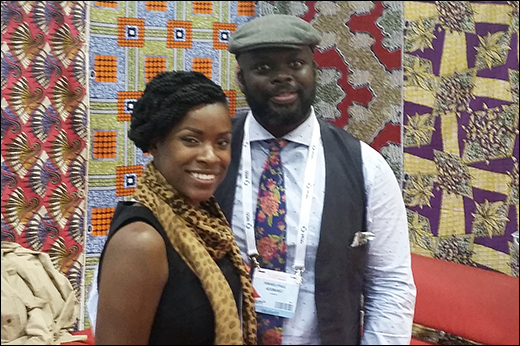
Rebekah Israel and Kwaku Adomako
AIDS 2014 is my first International AIDS Conference, so I didn't know what to expect. I knew I would gain insight from scientific updates delivered by esteemed researchers from around the world, and I knew I would engage with countless colleagues and share best practices for the work that we do. What I didn't expect was such a transformative experience in just two days, mostly due to the African Diaspora Zone developed by the African Black Diaspora Global Network (ABDGN), created to address the lack of access and programming for Black people at the International AIDS Conference.
AIDS is a Black disease, not only in the United States but globally. By that I mean that while HIV affects people all around the world, people of the African Diaspora are disproportionately impacted by the epidemic. Yet in the early history of the International AIDS Conference, Black voices were not being represented, and it was not until 2006 at the International AIDS Conference in Toronto that ABDGN was formed.
According to Kwaku Adomako, project manager at ABDGN, "When you go to these conferences, you don't see a lot of sessions that focus on our issues." Because of the efforts of the ABDGN and other advocates, today the African Diaspora has a regional session at every International AIDS Conference, as well as daily panel sessions in the African Diaspora Networking Zone.
Yesterday, I presented a session in the Zone entitled "Overcoming Challenges in the Delivery of Services". In it I talked about the Black AIDS Institute's model for increasing HIV science and treatment literacy among the HIV workforce in the US—information that was well-received by the attendees. Panelists from other parts of the Diaspora discussed the challenges they face in engaging African migrants in HIV education, testing and care. Black Americans do not have to deal with some of the issues that African migrants face, which include racism, of course, but also language barriers, acculturation and discrimination. These factors intersect to leave them doubly or triply stigmatized and discriminated against, impeding their access to HIV testing and treatment.
Hearing these presentations made me realize that in the United States, we don't have enough targeted programs for African immigrants. In fact, there are only a few states that distinguish between the epidemiology of Black Americans and of Black African immigrants. This clarification is necessary to understand the extent to which HIV affects various communities.
AIDS2014 and the ABDGN have already given me a more robust international perspective regarding HIV/AIDS and communities of the African Black Diaspora, and I have begun to think about how we who work in HIV can integrate these vast perspectives in the work we do. As conference attendees encourage the world to step up the pace, we cannot forget the importance of racial disparities in HIV/AIDS and the need to target efforts in Black and African communities worldwide, if we really want to change the course of the epidemic.
Rebekah Israel is the Training and Evaluation Coordinator at the Black AIDS Institute.