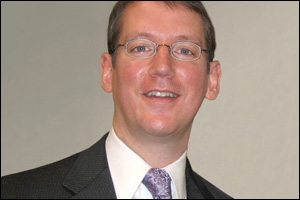
Q&A: White House AIDS Czar Jeffrey Crowley
Q&A: White House AIDS Czar Jeffrey Crowley
This fall, Jeffrey Crowley, director of the Obama Administration's Office of National AIDS Policy (ONAP), traveled with his team to a dozen cities across the country, seeking opinions about how to reduce HIV infections and improve the quality of healthcare and support services available to people living with HIV/AIDS.
In addition to these White House-sponsored discussions (see list of locations where these meetings took place), "unofficial" grassroots town-hall meetings were held from Dallas to New Orleans to Detroit. Input was also solicited on the ONAP website. As the official community discussions draw to a close, we spoke with Crowley about what his office has learned about HIV/AIDS in Black America through these discussions and the next steps needed to create the National HIV/AIDS Strategy that President Obama has promised.
Q: What did you discover about AIDS in Black America from these meetings that you just didn't know before?
A: We learned that [the community known as] "Black America" is diverse. For example, we heard from African Americans who are very engaged in HIV work and were willing to publicly disclose their status when they were HIV positive. In other places, we observed that elected officials were less engaged in responding to HIV/AIDS and many people were unwilling to speak about HIV/AIDS in public, all of which fuel stigma.
Q. Did anything in particular strike you during the Jackson, Mississippi, testimony?
A. Many people mentioned experiences with health professionals who didn't seem to understand the facts about HIV and how it's spread. Doctors and nurses would still refuse to treat people with HIV or even stand at a distance to avoid physical contact. However, this was not unique to the South.
This raises questions about enforcing existing antidiscrimination laws, and it demonstrates the level of misinformation and ignorance that still exists in the U.S., even among some health care professionals. It suggests that we need to take a fresh look at basic HIV education for physicians and other health-care providers.
Q. What happens after the Town Halls are over?
A. A report summarizing major themes across the community discussions, both at the official and unofficial town-hall meetings, and the online Call to Action will be released on the Office of National AIDS Policy website in early 2010.
The working group that will be assisting us in crafting the National HIV/AIDS Strategy will consider recommendations received from the public along with recommendations and insights shared by the Presidential Advisory Council on HIV/AIDS, a committee of high-level experts in HIV/AIDS and other related areas. The public will be given an opportunity to review and comment on the strategy before it is finalized.
Q. Based on what you've seen so far, describe one concrete step that needs to be implemented to address AIDS among Black Americans?
A. According to Centers for Disease Control and Prevention, African-Americans are the only racial or ethnic community where a greater proportion of HIV-positive individuals are unaware of their HIV status rather than aware. While testing is not the only thing we need to do, we need to increase the number of African-Americans who get screened for HIV regularly and link people who test HIV-positive to receive appropriate treatment.
It's not too late to submit your comments about a National HIV/AIDS Strategy. The final community discussions will be held in New York on December 4 and in Puerto Rico on December 14. Or you can e-mail your recommendations to
Diana Scholl is a New York-based writer and AIDS activist, who blogs about AIDS policy and activism for the Housing Works AIDS Issues Update and contributes to New York Magazine.