Q&A: Joe Brewster, MD, and Michele Stephenson, Co-directors of American Promise
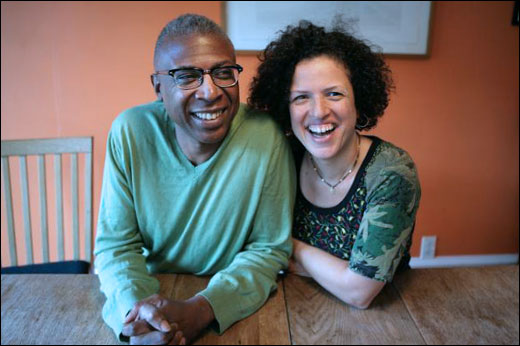
In 1999, husband-and-wife filmmakers Joe Brewster, M.D., and Michele Stephenson began filming their son, Idris, and his best friend, Seun Summers, as the boys began kindergarten at the Dalton School, an elite private school in Manhattan. Fourteen years later their film, American Promise, chronicles the boys' educational journeys at Dalton and Benjamin Banneker, the Brooklyn high school where Seun completed his secondary education. We spoke with the filmmakers to discuss this groundbreaking project that challenges the negative stereotypes about Black males.
You are extremely courageous in exposing both Idris's difficulties and the trials that you faced as parents. What made you decide to be this open?
J: We believe that building connections and creating community requires a willingness to be vulnerable. We thought that if we could expose the public to Black boys in a way that their potential isn't obscured by stereotypes, distortions, and negative media portrayals, that people would actually be able to see their humanity and perhaps would fear them less, care about them more, and join us in advocating for their wellbeing.
What made you decide to send your son to Dalton?
M: We picked that school because we were trying to shield our son from the educational achievement gap for Black boys. But contrary to our thoughts, we ended up right in the thick of it and trying to figure it out along the way, and kept the camera rolling.
What then?
M: We had had to figure out how best to support the boys as they encountered obstacles—things like certain perceptions that teachers had of them, lower expectations, and assumptions about our sons in the classroom, us as parents, and what our families were about. There were situations where--even with the best intentions, such as when it came to tutoring--things took on a racialized tone that affected how the boys felt about themselves. We had to stay alert to their social and emotional wellbeing, because that impacted how well they did academically. So we had to ask ourselves not only whether the rigorous academics were sinking in—that is, is he really developing his skills?—but also, is it occurring at the expense of how he feels about himself?
J: You have to make a decision based on your child's needs. All the knowledge in the world isn't gonna do any good if you don't feel good about yourself. When Seun left Dalton and went to Banneker, he became stronger.
What kinds of challenges do you think that Black parents face in helping their sons understand who they are?
M: We want to be able to tell our sons that they have the potential of being a President Obama while protecting them from the tragedies of a Trayvon Martin. We tried to help our sons come of age in a way that would allow them to navigate that continuum.
J: We were anxious about our son, and for good reason. We've seen some of our son's friends not come home. He has been stopped by the police on multiple occasions for no reason and has come home fearful and wanting us to make sense of that.
How are the boys today?
J: In the film we see both boys struggle, but they have gone off to college and are doing very well; we are very proud of them. But we realize that we're trying to raise swans in a duck world. So as parents we may have to have a little more patience to allow them to find themselves – they may not be 18 when they do it; they may be 25.
Where can our readers see American Promise?
M: The film is opening in a limited number of markets this fall and will air on PBS's POV on February 3rd, 2014. After that, our community engagement campaign kicks into high gear and we will take American Promise on the road, hosting screenings nationwide and partnering with organizations whose mission includes supporting Black males' academic, social and emotional growth.
We have also written a book, Promises Kept: Raising Black Boys to Succeed in School and in Life, which comes out in January and will help parents, educators and other stakeholders support Black males in closing the academic achievement gap. We have created a free guide to help parents start Promise Clubs, support groups to help them empower their children to succeed, as well as additional tools that we will launch in the coming months.
So we are asking people to follow us on Facebook, Twitter, and YouTube and to join the conversation in their community. Also, please support our effort to raise $100,000 for Big Brothers Big Sisters' Mentoring Brothers In Action initiative to enlist 100 new mentors (of any background) for Black males, who have the hardest time finding mentors of any children. To make a contribution of any amount, text BIG1 to 80100.
American Promise opens in Washington, DC, and Philadelphia this weekend. Click here to see the where it will appear in the coming weeks.
Hilary Beard is co-author with Joe Brewster and Michele Stephenson of "Promises Kept: Raising Black Boys to Succeed in School and in Life" and editor in chief of the Black AIDS Weekly.