Q&A: Jeffrey Crowley, Exiting Director, Office of National AIDS Policy (ONAP)
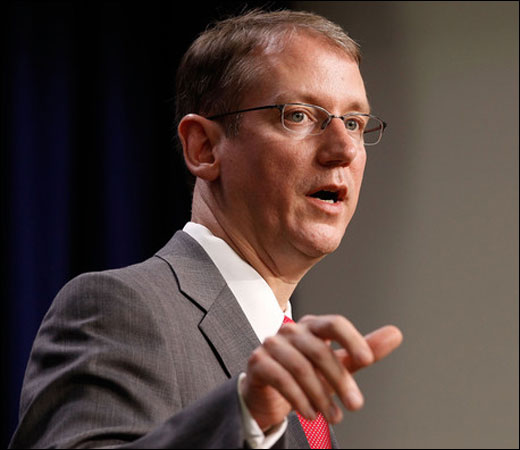
Scheduled to leave ONAP at the end of the year, Jeffrey Crowley says that working for President Obama has been an "amazing experience." Crowley became the White House's so-called AIDS czar in February 2009, leaving his position as a researcher and senior scholar at Georgetown University's Health Policy Institute. Here, Crowley speaks about his time in the White House and the state of the HIV/AIDS epidemic in Black communities.
What do you consider your biggest accomplishment as ONAP director?
On the campaign trail, the president spoke about creating a National HIV/AIDS Strategy for the United States. After he took office, the White House Office of National AIDS Policy began the important work to achieve that goal. In July 2010 the president fulfilled his commitment by releasing the first comprehensive road map for fighting HIV in our country.
The strategy provides a small number of critical action steps with clear and measurable targets to be achieved by 2015. It has been an important guide in examining how we create a coordinated national response to the HIV epidemic, how we increase access to care and how we reduce new infections. A central element of the strategy is that we need to focus attention and resources on the populations and communities at greatest risk, including African Americans.
On World AIDS Day the president announced new commitments to HIV/AIDS prevention and care. How influential was your office in making that happen?
As President Obama's primary policy advisers on domestic HIV issues, ONAP played a significant role in developing and planning last week's announcement. Our office regularly works with the Office of Management and Budget, the Department of Health and Human Services and other stakeholders to consider the range of issues and decision points that are developed into recommendations for the president's consideration.
What do you think is the biggest obstacle to getting to zero new infections in the U.S., including among Black Americans?
The latest Centers for Disease Control and Prevention data, released in July 2011, show that HIV rates have remained stable among Black Americans overall and among Black women. In fact, new infections are stable or falling for all demographics except gay and bisexual men. Among gay men, infections are increasing largely because of increases among young Black gay men. From 2006 through 2009, new infections by young Black gay men, aged 13 to 29, increased by 48 percent.
As we take steps to ensure that the resources follow the epidemic, and as we focus on high-impact prevention, we need to keep doing what we are doing to reduce new infections among key populations. This includes Black women, who are 15 times more likely to get HIV than White women. It also includes keeping a focus on injection drug users, where we have made major progress, but where Black Americans are also more likely to become infected than people of other races. And we need to redouble our efforts with gay and bisexual men as the largest risk group, the only group that is growing and a group that has been underfunded relative to their share of new infections.
Will you miss the White House? What are you going to do now?
Working for President Obama has been an amazing experience and a rare privilege. I am incredibly proud to be part of his administration, and I am impressed by how committed he is to ending the HIV pandemic in the United States and globally. My immediate plans are to take some time off and rest a little . . . and reflect on all of the wonderful moments and a number of accomplishments his administration has achieved while I have been part of his team. Then I plan to figure out next steps, but this will include supporting him and working to implement the National HIV/AIDS Strategy from a new vantage point.
Nick Chiles is a Pulitzer Prize-winning journalist and the co-author, with Kirk Franklin, of The New York Times best-seller The Blueprint.