Q&A: Greg Millett, Vice President and Director of Public Policy at amfAR
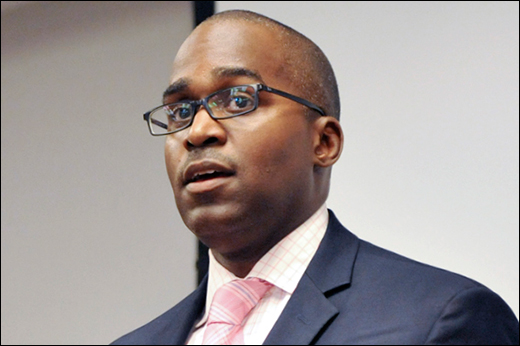
Greg Millett
Recently Greg Millett left the federal government to work for amfAR, the Foundation for AIDS Research. Here's what he has to say about the U.S. epidemic now that he's no longer constrained by government directives.
How is working for amfAR different from working for the federal government?
The goals are the same in terms of making sure that we have an AIDS-free generation and can move the ball both globally and domestically. But working for the government, there are a lot of things you can and cannot say. Working for a non-profit, there are a lot [fewer] restrictions. There is a lot more camaraderie among advocacy organizations, and it has been really nice to be a part of that. It's wonderful to be in a different role on the other side, but I'm moving toward the same goals as my government colleagues.
What can you say now that you couldn't before?
When you are in the government, you are not supposed to be political. You are just supposed to keep your head down and get work done. What I can say now is that there is more that we need to do to address the epidemic in the United States. We have not done enough to address the epidemic among gay and bisexual men—for many reasons, a lot of it dealing with institutional homophobia. Diagnoses are falling in every population in the last 10 years, including African Americans, heterosexuals, injection drug users and others. But diagnoses are growing among men who have sex with men, and particularly young MSM, where diagnoses have increased by 130 percent over that time period. We are failing this population.
But we are at a wonderful moment in U.S. history, where discrimination against the LGBT population is being frowned upon. Hopefully that will inform some of the efforts so that we can focus on the population where HIV is focused in the United States. That is something that we have not been able to say or do for some time.
What are some of the reasons for the challenges we face in ending the U.S. epidemic? How much of the problem is a lack of focus, and how much of it is a lack of strategy?
There are multiple reasons. The LGBT community was one of the first in the fight against HIV but has left to focus on marriage equality—which is extremely important—but we still have a whole generation of young men being initiated into adulthood by becoming HIV positive.
We are seeing some reductions in diagnoses among African Americans and even among Black women because of the great work that came out of the Minority AIDS Initiative. But Black leaders still don't talk about Black gay men—as if they are not a part of the community. This is problematic. When Black gay men are 20 times more likely to be HIV positive [than] African Americans overall, and 1 in 3 is HIV positive in 22 major urban centers, and our Black leaders didn't speak out, that's an issue. We need more leadership.
We can also blame community advocacy organizations, where strategy has been scattered and we simply didn't know what do. Today we know that there are specific things we can do to reduce HIV infection. The problem is that we have institutional history among advocacy and community groups who are focusing on populations where HIV is not concentrated and doing activities that we know do nothing to reduce HIV infection.
In the United States, you cannot have that conversation about fighting the epidemic without talking about gay and bisexual men. We haven't had that conversation enough, and hopefully that is going to change in the near future.
Ernest Owens is a multimedia journalist in Philadelphia and a contributing writer for The Huffington Post and USA Today. Follow him on Twitter.