Opening Doors and Fighting Stigma: John Curry
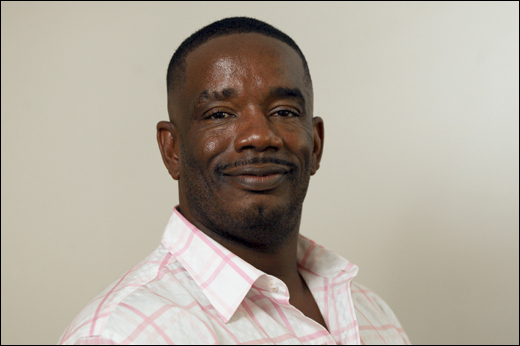
One in a series of profiles of the 2013 fellows in the Black AIDS Institute's African American HIV University's Science and Treatment College.I'm a 51-year-old adherence educator for Unconditional Love, Inc., a health service organization in Melbourne, Fla.
Years ago I had quite a few friends who just died suddenly. I could never get concrete answers to what happened. What saddens me today is they didn't know what they were going through. They literally died not knowing or understanding the disease that killed them. Sitting in the hospital talking to many of them, HIV was the last thing on my mind. Knowing the symptoms and progression of the disease as I know it now, at least a couple of them most likely died having never even been tested. It wasn't until I started out in HIV services seven years ago that I began to understand the how and why of the virus. I got a job as a driver for this company. I saw the stigma first hand from driving HIV-infected patients to their medical appointments. They may have an appointment with an endocrinologist or podiatrist but the doctors were not HIV sensitive or educated. The job subsequently sent me to various HIV trainings, and here I am today.
My primary work is with non-adherent HIV/AIDS clients, mainly substance abusers who are not taking their medications properly.[I also do HIV testing counselor IS THERE AN EXTRA, MISSING OR WRONG WORD HERE?] for the state of Florida during community events, as well as onsite testing; serve as the prevention representative for Brevard, Orange, Osceola and Seminole counties, where we write the grants to submit to the Federal government; and serve on the Gay Men's Committee for Brevard County, writing plans and initiatives surrounding gay men's issues.
I also chair the support group at Unconditional Love, where the HIV infected and affected populations come together monthly to talk about everything surrounding their care, their lives, any problems and definitely the big thing: stigma. Many people still don't know about ARVs or that HIV is not a death sentence but a chronic disease. You not going to die from HIV, you're going to die if you don't take your meds.
Since graduating from the Black AIDS Institute Community Mobilization College, I formed a coalition of community members--we have hairstylists, bus drivers, teachers, faith leaders, students, people living with the virus--and we hold prevention activities for the Black churches in Brevard County. Our mission is simply to make a difference.
The Black church is the "mother institution" in our community. We know that many problems are resolved within the church so going in to have a dialogue and provide education can make a difference. I'm really proud that our coalition has made progress; the churches are beginning to open the doors in this part of Florida.
I conduct surveys following my presentations. Some of the answers are unbelievable. Many people still don't have a basic understanding of HIV. I hear things like, "I don't mess with gay people"; "I go to church, that can't happen to me"; " I've been married for a long time". That type of thinking is still happening. But once many people get the information, they want to know; they want to get tested. People come to understand that "HIV can look like me".
The BAI Science and Treatment College training, with those wonderful researchers and doctors working on the cure and treatments was incredible! I am so fortunate to gain that knowledge. Now when I swab someone's mouth or prick someone's finger, I have a better understanding of what I'm looking at. I didn't fully understand until I went through this training.
My project is really moving forward, and I'm excited about having the tools from the training to make a difference here in Melbourne. It's going to be great. I'm in it to win it. I'm in it for the long haul.
AAHU's Science & Treatment Fellows will be blogging about their experiences. To read John's blog, go here.
As told to Glenn Ellis, a health writer and radio commentator who lectures nationally and internationally on ethics and equity in health care.