Not All Donors, Nations Implementing WHO Recommendations for Tuberculosis and HIV Co-Infection
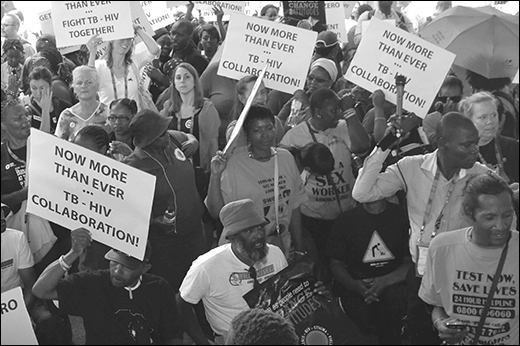
Fighting TB and HIV together
According to the World Health Organization (WHO): "Since the beginning of the epidemic, almost 75 million people have been infected with the HIV virus and about 36 million people have died of HIV." Current estimates indicate that more than 36 million people are living with HIV.
As delegates at the 20th International AIDS Conference carry out the conference theme of stepping up their pace, their work is complicated by the enormously huge and frightening challenges posed by HIV and tuberculosis (TB) co-infection. This co-infection has reached epidemic proportions.
According to the ACTION Global Health Advocacy Partnership, TB "is currently the leading cause of HIV-related deaths," causing "320,000 deaths among HIV-positive people in 2012." Sounding an urgent clarion call for immediate action, the Partnership reports: "Without proper treatment, an estimated 90 percent of people living with HIV will die within months of contracting TB."
In its just-released research report, the Partnership complains that "WHO recommendations on TB-HIV collaborative activities have not been embraced equally across donors and implementing countries, and that those interventions are under-resourced and under-prioritized, especially by HIV programs."
The Partnership reports that the U.S. President's Emergency Plan For AIDS Relief (PEPFAR) has implemented most of the WHO recommendations. However, the Partnership suggests that PEPFAR allocate additional financial resources to ensure greater access to TB and HIV services.
The Partnership also applauds the efforts of South Africa, noting that it is "demonstrating leadership in its approach to tackle the TB-HIV co-epidemic .... South Africa took ambitious steps to integrate TB and HIV into a single National Strategic Plan that included all 12 TB-HIV collaborative activities."
Among these steps is using GeneXpert. This is a new TB diagnostic tool that reportedly is more effective in detecting TB in HIV patients and provides test results within two hours.
At a session entitled "Cutting Edge Issues in TB and HIV," Helen Cox, Ph.D., a senior research fellow in the division of medical microbiology at the University of Cape Town, discussed the persistent TB epidemic and drug-resistant TB strains. Of the 8 million cases reported worldwide, she noted that only 20 percent of the people received treatment and an estimated 940,000 people died.
Cox reported that South Africa is implementing decentralized programs that are quickly identifying co-infected people and significantly reducing the time from diagnosis to treatment—currently at a median of seven days—thus, saving lives. However, she stressed that earlier presentation of co-infected people to health care facilities will help reduce mortality rates.
Klaus Reither, of the Swiss Tropical and Public Health Institute in Basel, Switzerland, contends there were 8.6 million new active TB cases in 2012, with 1.3 million deaths. He currently is working on the development of a new vaccine, conducting his experiments in South Africa and Tanzania. During the conference, he reported using a random sample. However, this sample was extremely small—only 40 people received the vaccine.
According to the Partnership, "One essential first step in integrating TB and HIV services is to ensure that all people living with HIV/AIDS are screened for TB and then referred for diagnosis and treatment." Proper diagnosis is critical.
This recommendation is echoed by pediatrician Soumya Swaminathan, M.D., at the Indian Council for Medical Research. She reports that TB is common in Asian HIV-infected children, especially if their immunology is suppressed. Dr. Swaminathan suggests health care providers receive additional training in chest x-ray readings to ensure accurate diagnosis and timely treatment.
Anne T. Sulton, Ph.D., J.D., is the senior international correspondent for the Jackson Advocate.