More States Expected To Expand Medicaid In 2015
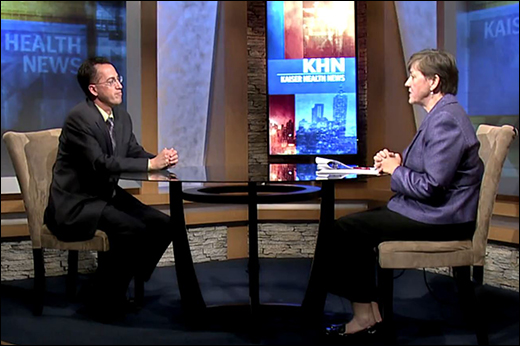
Phil Galewitz and Mary Agnes Carey, Senior Correspondents with Kaiser Health News
Texas and Florida, with their large uninsured populations, are not expected to offer coverage to many low-income patients. KHN's Phil Galewitz and Mary Agnes Carey discuss:
MARY AGNES CAREY: Welcome to Enrollment Encore: What you need to know as open enrollment in the health law's marketplaces begins again. I'm Mary Agnes Carey.
KHN Senior Correspondent Phil Galewitz joins me now to talk about Medicaid and the health law.
So far 27 states plus the District of Columbia have expanded their Medicaid programs under the health care law. Of course, as we know that expansion is optional for states. What are you expecting for next year? How many states might expand their Medicaid programs and how many more people might be covered?
PHIL GALEWITZ: Given the talks that have been going on and what we're hearing from different states, we probably expect a handful more states, probably three or four more states, to come on next year. Some that are likely might be Utah, might be Indiana, might be South Dakota.
Some of the big states where we have a large majority of people who would get help from Medicaid expansion, namely Florida, namely Texas, are not expected to expand. So we probably could get a few hundred thousand that might gain if those other states join.
MARY AGNES CAREY: You've been talking to a lot of Medicaid directors all over the country. What are some of the big issues they're concerned about for 2015?
PHIL GALEWITZ: When the open enrollment begins, we're expecting another surge of people find out that they may qualify for Medicaid. So Medicaid directors are worried about some people coming out of healthcare.gov, which is the federal exchange, and then how that is connected to the state Medicaid programs. There was an issue in the first year of open enrollment where the hand-off from the federal government to the states did not go smoothly. They think they got a lot of the fixes done, but they're not really sure that's all worked out yet. So that's one big thing.
And then just handling the surge of enrollment, when people qualify for Medicaid. Getting them in and getting them started.