Meet the Leaders of BTAN: Your Local Contacts
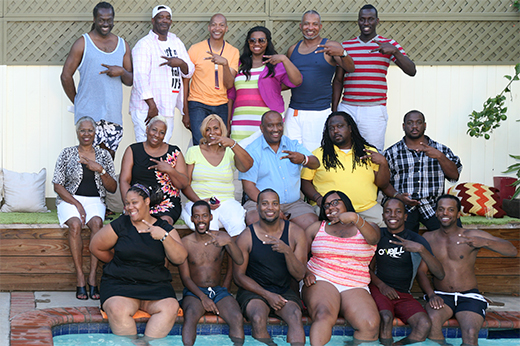
The Black Treatment Advocates Network (BTAN) is a unique collaboration that links Black Americans living with HIV to the care and treatment they need to reach viral suppression. The network works to end the epidemic in Black communities by strengthening leaders locally and nationally, connecting them with their peers, raising science and treatment literacy, and training advocates to help change local and national policy and research priorities. To reach the BTAN leader in your area, reach out to the people below.
ARKANSAS
Ashley Young
In Arkansas, Black males are four times more likely to be diagnosed with HIV than White males, and Black females are more than eight times more likely to be diagnosed than White females. Educated in the Little Rock public schools, Young remembers well the lack of sex education that she and her classmates received. Now employed by Better Community Development, Inc., she works primarily with high school students in and around Little Rock, educating teens about their health. Contact:
ATLANTA
Ken Lazarus
The "Hot" in the nickname "Hotlanta" refers to many of Atlanta's attributes: the heat, the music scene and the weather. But the Centers for Disease Control and Prevention (CDC) considers the city one of the nation's "hot spots" where HIV thrives. A Black MSM in Atlanta who becomes sexually active at age 18 has a 60 percent chance of becoming HIV positive by age 30. As the chief ministry officer of Lazarus Lives, Inc., Lazarus is committed to engaging and empowering Atlanta PLWHA. Contact:
BALTIMORE
Jamal Hailey
While older generations of Baltimoreans with HIV tend to trace their infection to substance abuse, among younger residents infection often occurs as a result of sexual behavior or being born with HIV. In B'more, 50 percent of HIV infections occur in young people under age 24. As director of programs for STAR TRACK (Special Teens at Risk, Together Reaching Access, Care and Knowledge), a program for at-risk teens, Hailey educates young people about HIV and develops interventions. Contact:
CHICAGO
Alan Johnson
Teens and young adults account for more than a quarter of the 47,500 new infections in Chicago and are often hardest to reach and most at risk. As a linkage-to-care coordinator for the CDC-funded pilot project AIDS Foundation of Chicago, Johnson helps PLWHA connect to and stay in care. Contact:
Antoine Maxwell
Living with HIV since he was 2 days old—the result of a blood transfusion his mother had when she was pregnant with him—Maxwell seemed destined to become an HIV/AIDS advocate and educator, work he began during his teens. He never thought he would live to see age 18, but now 30, Maxwell has enrolled in college. He also attended African American HIV University's Science and Treatment College, where he deepened his skills as an educator. Contact:
FORT LAUDERDALE/MIAMI
John Curry
South Florida remains the epicenter of HIV/AIDS, not only in the state but also nationally: One out of 45 blacks in Miami-Dade County are living with HIV or AIDS, which underscores Curry's knowledge that his work with PLWHA who aren't adhering to their regimen of HIV medication is serious business. Chairing the HIV support group at Unconditional Love, Inc., and working with a coalition of community members he's formed, Curry has a simple mission: to make a difference. Contact:
JACKSON, MISS.
Cedric Sturdevant
Sturdevant's lack of knowledge about safer-sex practices years ago contributed to his own infection. That same ignorance proved fatal for his partner, who died from AIDS complications. Jackson has the fourth-highest HIV rate among major U.S. metro areas. As in many other African American communities, stigma and a lack of education continue to drive infection rates in the city. Sturdevant works in Jackson and throughout Mississippi, replicating for community groups aspects of his BTAN education. Contact:
KINGSTON, JAMAICA
Damone Thomas
Approximately 1.5 percent of Jamaica's adult population lives with HIV/AIDS, and AIDS is the second-leading cause of death for children ages 1 through 4. Thomas' hometown of Kingston is among the most seriously affected. His work with the faith-based Healing With Hope brings outreach, treatment and support to PLWHA, making a difference by addressing the feelings of despair, anger and alienation that stigma creates. Contact:
LOS ANGELES
Danielle Campbell
In Los Angeles, one in two Black MSM are believed to be HIV positive. Campbell is committed to using her master's degree in public health to contribute to research and advocacy that helps identify risk-reduction and prevention strategies among high-risk sexual groups in medically underserved populations. Contact:
MINNEAPOLIS
Bruce Rwabasonga Mandela, M.D.
A new case of HIV is reported in Minnesota every 30 hours. Dr. Mandela works in the pediatric HIV/AIDS program at the Children's Hospital in Minneapolis, making sure mothers have the education and support they need to bring a healthy baby into the world. Dr. Mandela came to the United States after leaving Uganda, where 400 people acquire HIV every day. Along with his medical degree, he brought his personal experience of almost acquiring the virus himself after being cut while helping an HIV-positive mother deliver her baby. Contact:
OAKLAND/SAN FRANCISCO BAY AREA
Milton Hadden, Jr.
Of all the HIV diagnoses made in Alameda County, Calif., half occur in Oakland. As the founder of Healthy Oakland, Inc., a non-profit focusing on educating and testing African Americans and linking them to care, Hadden wants to help eradicate the personal, social and religious stigma of living with HIV/AIDS. He knows that once people learn HIV science, they will then be more prepared and able to get and stay in treatment. Contact:
RICHMOND, VA.
Juan Pierce
In 2005 Pierce founded a support group for PLWHA. Today he leads a group of health educators and community-outreach and -testing counselors, who provide HIV/AIDS services for Black and Latino communities in Richmond, where 80 percent of PLWHA are African American—one of the highest rates in the nation. He also partners with many community-based organizations to provide HIV-prevention programs in religious communities, jails and re-entry programs. Contact:
Lindsay Bryant
Mother, retiree, grandmother, an ordained deacon ... add to that co-chair at Nia, Inc., of Greater Richmond, an outgrowth of Bryant's congregation at St. Paul's Baptist Church. According to Bryant, Nia, Inc., is one of only three organizations in Virginia receiving an African American Faith Initiative grant from the CDC. Nia increases people's awareness of health issues in general, and by educating ministers about Richmond's epidemic, it educates both the church and the broader community about HIV/AIDS and services. Contact:
WASHINGTON, DC
Tanya Henderson
After working in HIV/AIDS in her native Tennessee, Henderson arrived in D.C.—where HIV/AIDS rates are so high that they rival Uganda's and those in some parts of Kenya—as a consultant to the DC Care Consortium. Henderson works on the front line with health-care providers and case managers serving the HIV/AIDS community. As director of faith initiatives and organizational advancement at Damien Ministries, Henderson also engages and mobilizes the faith community to address the local epidemic. Contact:
Herman Williams
In Washington, African American men and women represent 94 percent and 82 percent of new HIV diagnoses, respectively. Williams uses his knowledge and training as co-chair of BTAN Washington, DC, to communicate high-quality information about HIV education and prevention. As an outreach worker with the Community Education Group, he teaches HIV prevention and encourages behavioral change to help decrease the community's viral load. Contact:
Glenn Ellis is a Philadelphia-based health columnist and radio commentator who lectures nationally and internationally on ethics and equity in health care.