Meet Gail Butler, the new COO of the Black AIDS Institute
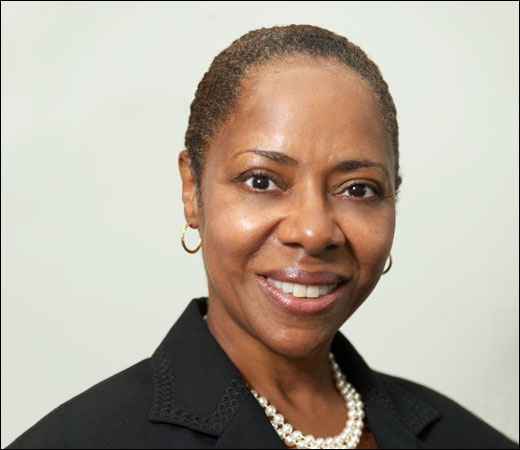
Don't call it a comeback, but the former California state executive director of Mothers Against Drunk Driving (MADD) has embarked upon an encore career as chief operating officer of the Black AIDS Institute. We asked this 58-year-old attorney and public health professional about her involvement in the fight against HIV/AIDS, the mission of the Institute and the goals she seeks to accomplish in her new position.
Do you remember when you first learned about AIDS?
I had just finished my master's of public health in the early '80s and was working as an associate director at Harlem Hospital Center in New York City. I learned of AIDS as a rumor--a disease affecting gay White males in Greenwich Village--but soon we were seeing cases among Black and Hispanic individuals at Harlem Hospital.
What's striking is how little knowledge the doctors possessed and how much paranoia there was about contracting AIDS. There was paranoia about accidental needle pricks, which were common. Following a needle prick, doctors would sometimes leave directly from patient rooms to have a blood test--there was that kind of fear. For someone like myself, it was unbelievable that AIDS was so pernicious that one could contract the virus that easily.
What caused you to become involved as an activist?
My deciding moment was actually a series of personal experiences. My cousin died from AIDS in the mid-'80s. Back then, unable to comprehend that the disease killed him so rapidly, I rationalized that there could've been an opportunistic infection--I thought, "Oh, it was actually pneumonia that killed him."
As a lawyer, I was hired in the early '90s by a female client who contracted AIDS through a blood transfusion. She died before I was able to put her business affairs in order. The issue with her employer and insurer became "how and why she contracted the disease." It made things difficult.
A distant cousin contracted AIDS in the early 2000s. His mother called and told me that he was in the ICU suffering from a kidney ailment, but he died before I was able to see him. As his only relative in New York City, I went to the morgue, claimed his body and arranged to have his remains flown to Los Angeles. At that time I was unable to identify an HIV/AIDS advocacy group to assist me in finding a mortician to embalm the remains of a person who had expired from AIDS. The entire process was overwhelming, financially and logistically.
What excites you about the Black AIDS Institute?
The fact that it has existed since a time when few organizations were bold enough, and unapologetic enough, to not talk about diversity. Diversity is a very good thing, but the Institute has honed in on a need that is unique to Black people. It's our problem, and I want to be a part of what the Institute has identified as our solution. The audacity of what's happening here, and the amount of work such a small staff has done in the last 13 years, makes me want to be a part of the ultimate realization of the organization's vision and mission.
The other thing that really excites me is the possibility of being alive and on the ground when there is an end to the AIDS epidemic. That type of opportunity doesn't occur many times in our lives; to play a small part in ending the AIDS epidemic would be more rewarding than anything I've ever done.
What do you intend to accomplish in your new role?
From an operations perspective, my vision for the Institute is to stay ahead of the curve by anticipating what's needed and what we should be doing next.
What about your background has best prepared you for this work?
I grew up in Compton, a city that was 95 percent Black, then went to a college [Whittier] that was 95 percent white. When I moved to New York, I found myself surrounded by ethnic populations for the first time, including people of varying black and white ethnicities. I noted that ethnic groups are very supportive of each other. They were less concerned about assimilation or about how it looks when they put their own ethnic group first. That experience gives me a clear understanding of why it is perfectly all right for the Institute to target the AIDS epidemic from a uniquely Black perspective.
Maya K. Francis is writer and publicist who specializes in commentary on pop culture, race, politics, and gender and sexuality. She blogs at Do the Write Thing.