Marie-Fatima Hyacinthe: Marrying Social Justice for Black People With Public Health
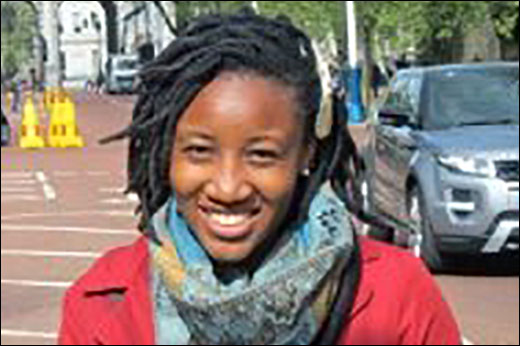
Fatima Hyacinthe, Mobilization Coordinator, Black AIDS Institute
Marie-Fatima Hyacinthe had her pick of Ivy League universities to attend. The 24-year-old Harvard grad recently moved from New York City to Los Angeles and is now a mobilization coordinator at the Black AIDS Institute.
Public interest has been a constant throughout my short professional life. Volunteering for my local council member, Jumaane Williams, in Brooklyn, N.Y., was my first interaction with public service. I became interested in HIV/AIDS advocacy work while studying abroad during my junior year at Harvard.
I was one of 30 students with the School for International Training, which took me to Washington, D.C., Brazil, Vietnam and South Africa to study comparative systems of public health. The semester was great in that you could take whatever you wanted out of it. I chose to write my senior thesis about HIV activism and the social-justice movements in the places we went to. It just stuck out to me how different countries deal with HIV and how that is often linked to how these countries deal with a lot of social-justice issues, like gender, sexuality and race. For example, in South Africa, people living with HIV/AIDS (PLWHA) and AIDS activists basically took everything they learned during the anti-apartheid movement and used those same kinds of movements to advocate for PLWHA.
And as a child of Haitian immigrant parents, I was aware of the discrimination and stigma faced by Haitians, and other groups, who were wrongly blamed for the HIV/AIDS crisis in the early days of the outbreak. I remember hearing stories of Haitians marching in Brooklyn to combat these false beliefs. So that, too, was definitely in the back of my mind.
Before moving to California, I worked in the Mayor's Office of Immigrant Affairs under New York City Mayor Bill de Blasio. With immigration work, you're dealing with people who are living on the margins of society. And similar to immigrants, people with a higher risk of contracting HIV, such as sex workers, trans women of color and people who use intravenous drugs, are also marginalized by existing laws.
At the Black AIDS Institute, I work with Black Treatment Advocates Network (BTAN) chapters around the country to keep these conversations going by creating some of the materials used by the chapters, and other Institute-precipitated trainings, including the Brown Bag Lunches. This year's Brown Bag Lunch topics are "Race, Class and Privilege," "Science and Treatment," "Criminalization" and "Holistic Health." I think these four topics are very crucial to the conversation about ending HIV/AIDS in the Black-diaspora communities.
Now that we recognize HIV as a byproduct of the carceral system, people are able to go back to their service and community organizations and name this connection. If we don't, the socioeconomic and criminalization factors affecting PLWHA will stay by the wayside. Events such as the 18th Annual National Black HIV/AIDS Awareness Day—which BTAN and other AIDS service and community organizations participate in—help bring attention to these matters, but we need these messages to continue to run throughout the year.
We also need a better representation of what the new incidents of HIV look like in the U.S., and I think that's a huge hurdle. For many people, the face of HIV in the U.S. is not a young Black woman. That's not what people assume, and that's not who the pre-exposure prophylaxis (PrEP) ads are geared toward.
The Black AIDS Institute has provided me with the perfect marriage of social justice centered on Black people and the public health work that I wanted to do. I'm really excited about this team we have at the Institute and the work we are doing to provide advice, resources, trainings and collaboration for organizations around the country that are committed to ending HIV. There's a lot of uncertainty in the air right now, given the political climate, and I'm hoping that we can continue to use our platform to make sure that new resources, when they do come, are allocated properly to Black communities.
As told to April Eugene, a Philadelphia-based writer.