Knowing Better, Doing Better, Part 1: Gerald Garth
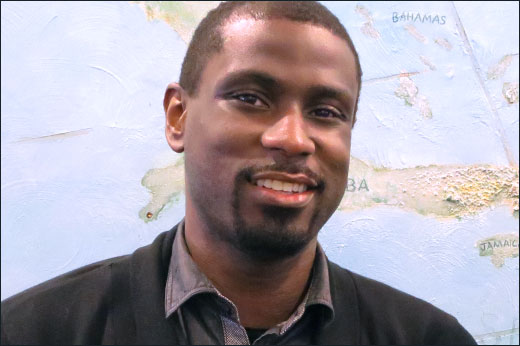
Gerald Garth, Programs Coordinator, Black AIDS Institute and an African American HIV University Science and Treatment College Fellow.
In February the Black AIDS Institute published the results of the first U.S. HIV Workforce Knowledge, Attitudes and Beliefs (KAB) Survey, the largest study ever conducted of nonmedical personnel working in HIV/AIDS in the United States. The results were alarming: The HIV/AIDS health-care providers at health departments and AIDS service and community-based organizations who were polled answered only 63 percent of questions correctly—essentially earning a grade of D for their knowledge of HIV science and treatment, while earning the equivalent of an F on treatment-related questions.
In part 1 of this series, Gerald Garth, the Institute's programs coordinator, who is also an African American HIV University Science and Treatment College Fellow, shares his views on why inadequately trained nonmedical staff can unknowingly put lives at risk.
From your perspective, why is it important that the nonmedical HIV/AIDS workforce be literate in AIDS science and treatment?
In order to effectively communicate anything health-related, there has to be a strong science and literacy component. To convey health information accurately to the community takes skill—you've got to be able to translate technical terminology in a way your clients understand. That's one reason I was so interested in applying to the African American HIV University (AAHU), because being able to know not only what to say but also how to say it is what effective communication is all about.
What types of nonmedical health-care providers interact with your clients?
Treatment counselors and folks that administer HIV tests.
What science and treatment knowledge do those professionals need to help their clients stay healthy, access health care in a timely fashion, go on treatment when needed and stay in care and treatment?
Providers should be able to speak about the latest treatment options and interventions. There are a number of treatment regimens, including single-tablet regimens, that clients should know about. Knowing that they have options and what those options are helps clients stay committed to their own health. Also, it's important to make sure that clients are informed about how PrEP can help keep their partners protected.
Have you or any of your clients had specific experiences with providers who were not science- or treatment-literate? And what was the impact of their ignorance upon people living with or at risk of HIV/AIDS?
I lead active HIV ministries at two churches in Los Angeles. In one of my ministries, an individual was on a drug regimen that was making him sick, and if the medicine doesn't agree with you, you're less likely to take it consistently. So I told him about some of the other drug options available.
I asked him about the conversations he had had with his provider, and he said, "They never told me about this. I never knew." So I taught him how to have conversations with his provider to find options that work best for him. The goal is to put those who have HIV in the most proactive position possible.
For more information about AAHU or to become an AAHU fellow, visit blackaids.org or call 213-353-3610, ext. 100. The deadline for applications is now June 1, 2015.
Tomika Anderson is a freelance writer whose work has appeared in Essence, POZ, Real Health and Ebony magazines, among others.