Knowing Better, Doing Better: Marreo McDonald
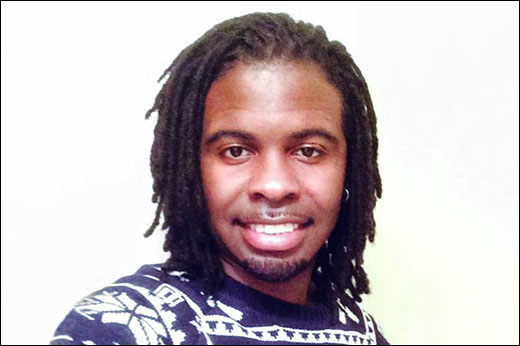
Marreo McDonald
In February the Black AIDS Institute published the results of the first U.S. HIV Workforce Knowledge, Attitudes and Beliefs Survey, the largest study ever conducted of nonmedical personnel working with PLWHA in the United States. The results were alarming: The HIV/AIDS health-care providers at health departments and AIDS service and community-based organizations who were polled answered only 63 percent of questions correctly—essentially earning a grade of D for their knowledge of HIV science and treatment, while earning the equivalent of an F on treatment-related questions.
In part 5 of this series, we interview African American HIV University (AAHU) Science and Treatment College Fellow Marreo McDonald, the grants management specialist at My Brother's Keeper Inc. in Ridgeland, Miss., and a Black Treatment Advocates Network member.
Why did you become an AAHU Fellow?
I became an AAHU Fellow to increase my knowledge of HIV and use the information to educate the Black community in Mississippi about HIV and prevention methods. I developed a passion for HIV science and treatment training because friends, associates and young people that I know from the community were testing positive and were uninformed about their options.
Who is your client base?
The underserved, uninsured and underrepresented populations of Mississippi, with an emphasis on the lesbian, gay, bisexual, transgender and intersex communities.
What types of nonmedical service providers do your clients interact with?
We have case managers at Open Arms Healthcare Center—which is under the My Brother's Keeper Inc. umbrella—who link our clients with services such as food, housing, behavioral health and navigating the health-care system.
What HIV science and treatment information do you think nonmedical providers to PLWHA need to know to help clients stay healthy and access treatment in a timely manner?
Nonmedical providers should know about the different medications involved in treatment so they can help clients have informed conversations with their provider and have a voice in their care. They should also be able to link the clients to a culturally competent and sensitive facility so they can feel comfortable going to their appointments. But I think the most important attribute for nonmedical providers is having compassion for the clients, because the clients would not be there if they did not need assistance.
What are some of the consequences of nonmedical providers not having adequate HIV science and treatment knowledge?
If they do not know the science and treatment of HIV, then they cannot assist the client appropriately because they will not understand resistance, mutation of the virus and the different effects of the medications.
What do nonmedical providers need to know to help clients go on treatment when needed and stay in care?
They need the science and treatment knowledge so they can explain the diagnoses to the client in a way that the client can understand. They need to provide an environment where the client is not afraid to be open and honest about what is going on in their care. They also need to be able to give the clients their updated progression by explaining their viral load and CD4 count.
In your opinion, do nonmedical providers have enough HIV science and treatment knowledge?
In the state of Mississippi, I don't think enough nonmedical providers have or want to gain additional knowledge of HIV. The few who do have appropriate knowledge are not sufficient to cover the entire state.
How are you educating nonmedical providers to PLWHA in your region about the science and treatment advances you've learned at AAHU?
I have done three HIV science and treatment trainings for health-care providers, nonmedical providers and community members in Jackson, Clarksdale and Gulfport. As a result, attendees have reported an increase of 53 percent in knowledge about HIV.
How will the nonmedical providers' lack of knowledge impact the goal of ending the epidemic?
It will only continue the epidemic in Mississippi. People will continue to be diagnosed but will not access care because the health-care providers will not know how to treat those who are positive. Further, the client may not get the attention they need because there will not be enough providers to cover the state.
For more information about the African American HIV University, visit blackaids.org or call 213-353-3610, ext. 100.
April Eugene is a Philadelphia-based writer.