Heroes In The Struggle
Jesse Milan Takes the AIDS Battle to the Professional Frontline
By Nikki Coffee
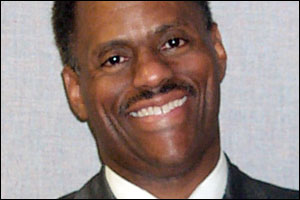
Jesse Milan was just a typical man, a corporate attorney, living his life, then suddenly, he found himself in the middle of the battle against HIV/AIDS, a very personal battle. During the 1980’s he cared for and eventually lost his partner to the disease. Then, he himself was diagnosed with HIV. Utilizing his legal connections, this crusader knew there was power in numbers. He joined the Episcopal Diocese of Pennsylvania’s Committee on AIDS, and the board of Action AIDS. Later he began providing HIV policy and legal analysis to the city government of Philadelphia’s legal department. His tireless lobbying gained him recognition and he started to get invitations for public presentations on AIDS and the Law. At 51, Milan describes himself as a man in a suit living with HIV. “Over the years, my commitment to civil rights has evolved to incorporate work in gay and lesbian rights, as well as anti-stigma and discrimination against persons with HIV/AIDS,” he said. Milan has spent most of his professional life in the AIDS struggle. At Constella Group he served as vice president of the Health Communications Division. Upon his hiring, Milan served as project director for the National Prevention Information Network (NPIN). During his tenure, he expanded the project to cover HIV/AID, STDs, and TB. In his current role of vice president for Constella Group’s Center for Global Health Convergence, Milan manages Constella’s Advisory Board, fosters public-private partnership opportunities in the domestic and international arena, and serves as corporate philanthropy officer. He served as co-chair of the CDC/HRSA Advisory Committee on HIV and STD Prevention and Treatment, at the appointment of the U.S. Secretary of Health and Human Services. He directed the City of Philadelphia’s Department of Public Health AIDS office. Currently he is chairman of the board of directors of the Black AIDS Institute, and has also served as Health Department co-chair of the Philadelphia HIV Community Planning Group, Chair of the Philadelphia Ryan White Title 1 Planning Council, and is president of three other nationally recognized HIV/AIDS organization. Milan has shared his 25 years of living with HIV experiences through lectures, broadcast interview and international tours. Milan leverages his secular resources, the legislature and the public to gain more secure footing in the crusade. “Until there is a national plan to secure education to all sectors of society, school systems, faith alliances and the workplace, HIV/AIDS will continue to remain. According to a report produced by the Department of Psychology University of California at Davis, as the HIV/AIDS epidemic continues, successful collaborations between affected communities and public health professionals will continue to depend on the latter's willingness to publicly oppose laws, policies, and individuals that are perceived as perpetuating stigma. “The stigma can not be cured by people with HIV. It can only be cured by those without the condition who are not afraid to talk with, walk with and deal with individuals affected. Only then will society overcome the wall of ignorance,” Milan explains. This disease yields to no race, gender, sexual orientation, or social status. If Milan had a magic wand, he said he would wave it and produce a vaccine and cure to exterminate HIV/AIDS once and for all. But until such a time, Milan says all men and women need to take it upon themselves to the prevention of the infection. Those who are infected must know that the spread can stop with them. “Do not feel alone, and know that there are people and organizations that are ready and willing to embrace and help,” he said.