In This Issue
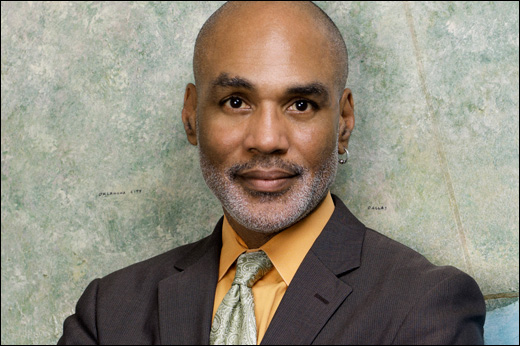
We've been talking a lot about young Black men and boys lately. Last week I asked you to support the film American Promise, which is playing both in New York and Los Angeles now and expanding to other markets around the country (see schedule below). I really think it is a must-see film for anyone who is interested in the lives and wellbeing of young Black men and boys.
Let me salute the courageous filmmakers, Joe Brewster and Michele Stephenson, for providing us with real insight into the challenges of raising and educating our boys. This is an honest, no-holds-barred look at the trials and tribulations and triumphs of truly loving our boys, raising our boys, and educating our boys to become men.
In addition to seeing American Promise, last week I had the remarkable opportunity of experiencing a different part of the Black male spectrum that doesn't get enough attention—accomplished Black Men doing remarkable things. On Tuesday night, the Ford Foundation hosted a reception for its 10th president. His name is Darren Walker, and he is an openly gay Black man. What a powerful and exciting choice for the second largest foundation in America to make. And how fortunate for the Ford Foundation to be led by this remarkable leader at this time in its history. Darren is a remarkable leader; he is charismatic, talented and passionate. But, most importantly, he personifies both the essence of the Ford Foundation's mission and the bounty that can be harvested when that mission is appropriately applied.
Darren comes from humble beginnings. He's a product of Head Start and was raised by a single mother. In the 1980s he graduated from the University of Texas at Austin and its law school, before relocating to New York and working first for an international law firm and then for an international bank. After leaving the bank, he spent an entire year volunteering for The Children's Storefront, an elementary school serving low-income families in Harlem. He then went on to become the COO of the Abyssinian Development Corporation, where he led efforts to build housing for low- and moderate-income people and oversaw the development of the first public school built in New York City by a community development organization. He also helped bring a supermarket to Harlem, which was then a food desert. Darren moved on to work as a vice president for the Rockefeller Foundation and then the Ford Foundation, where he led over $140 million in grants made around the world. With this promotion he now manages $500 million in annual giving and $11 billion in assets overall.
Recently, I have been guilty of focusing on how young Black men and boys are being neglected and or attacked. I'm not apologizing for that and we will continue to do that when it is appropriate. But I also think that it's important not to pathologize Black male lives. On the 11th floor of the Ford Foundation last Tuesday, the room was full of remarkable, accomplished, talented Black men -- men who are succeeding and have succeeded both because of and in spite of the barriers that we have encountered throughout our lives. That speaks to our resilience, courage, perseverance and it speaks to the promise that is the Black man. That too is a story we plan to tell.
In this issue we continue our series profiling the Fellows in the African American HIV University Science & Treatment College. We also examine the ACA's impact upon small community health centers in the Chicago area. A recent analysis of community HIV-testing programs found that testing outside of clinics and HIV testing centers raised HIV testing coverage dramatically. We also provide you with everything you need to know to participate in a webinar co-hosted by the Institute and the HIV Prevention Trials Network (HPTN) in which Wafaa El-Sadr, MD, MPH, talks about increasing the demand for HIV treatment. And we close out this issue with a Q&A from the co-directors of American Promise.
Yours in the struggle,
Phill