Diaspora
By Sharon Egiebor
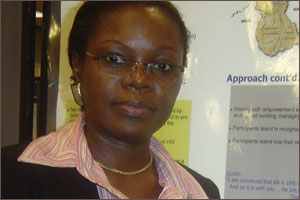
The Guyana government partnered with private manufactures, retailers and lending institutions to provide job training and crafts skills, business management and micro finance loans for women living with HIV/AIDS. The women then used the skills and loans to open their own businesses. “Jobs are scarce in Guyana,” said Dr. Karen Gordon-Boyle, Community and Clinical Care Officer for the USAID-Guyana HIV/AIDS Reduction and Prevention Program. “Many PLWHA, particularly women, are unable to access jobs or develop the specialized skills necessary to provide for themselves and their families. This contributes to the growing level of poverty plaguing the country.” Guyana, located in South America, has the second-highest prevalence rate in the region, only behind Haiti. AIDS is the number one cause of death in the 25-49 age group in 2004, according to the Presidential Commission Report for HIV 2005. Boyle made a poster presentation on “The New Attitude” demonstration project at the American Conference for HIV Treatment that was held in Dallas recently. The project operated from November to March with 30 women, who were HIV positive, unemployed and lacked self-esteem, Boyle said. Doctors referred the women, who also had to be stable and on their medications. The skills taught ranged from leather craft, basketry, fabric design, fabric painting, jewelry design, and jewelry making. “The small businesses could be anything. It didn’t have to be the same from the crafts they were learning,” she said. Some of the small businesses included print shops, animal husbandry, agriculture and hair dressing. The training classes were held Monday-Thursday. But Fridays was devoted to self-empowerment sessions, Boyd said. “On Fridays, the women learned everything about self, from managing significant relationships, parenting, etiquette, good manners, coping with stress, yoga and deep breathing exercises. We taught anything we thought would be relevant to them becoming better persons in terms of their self esteem and being able to cope with the stress of life.” In the end, 27 women remained in the program; two died from AIDS and a third became pregnant and left the program. Twenty-four of the women started businesses. Boyle said each woman was paid a stipend. A portion of the stipend was kept back by the project and then distributed to the women as part of the loan collateral. TThe loans ranged from about USD$375 to USD$1,75, and were made possible through a partnership with the Institute of Private Enterprise Development (IPED), the Guyana Telephone and Telegraph Company (GT&T) and the Guyana Lotto Company, according to the Guyana government. Each made a unique contribution. IPED has extensive micro financing experience, having been established 20 years ago with support from USAID. Guyana Lotto Company supplies funds for use as collateral by PLHA. GT&T provides general financial support. The micro-lending program was extended to 200 vulnerable people and those living with HIV/AIDS. By March, 100 initiated loan applications and 61 had started their own business. Overall, $5.5 million (GT) was placed in the hands of people living with HIV for new businesses. Boyle said the demonstration project is moving toward its second phase, which includes development of a website and a production line that will carry the logo. “They are l inked to the same businesses that they learned the skills from. So they can produce craft and supply those businesses,” Boyle said. “They are assured of a market at least locally. That’s the beauty of having the private sector on board because they had lots of products before and learned skills but they couldn’t get the product sold.”