Empowering Women to End HIV & Intimate Partner Violence
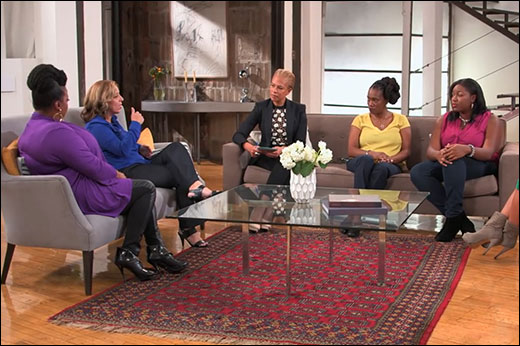
A group discussion on women living with HIV who have had experience with, and received services related to, intimate partner violence.
HIV activist Gina Brown never looked at herself as a victim of intimate partner violence.
"I just thought I was a chick who got beat up sometimes."
When she found out she was living with HIV, the violence got worse.
There is a strong connection between domestic abuse and HIV. According to the CDC, an estimated one in three women in the U.S. experiences domestic abuse – but researchers estimate that 1 in 2 women living with HIV experience intimate partner violence (IPV). That violence puts women at greater risk for acquiring HIV to begin with—and for women living with the virus, IPV can make it harder to stay connected to care and to adhere to treatment.
A White House report released last fall highlights federal and community efforts to address the intersection of HIV and violence against women and girls. The updated National HIV/AIDS Strategy also recognizes that IPV is a barrier to care and treatment for people living with HIV, and makes multiple recommendations to address the issue. In addition, many organizations across the country are working hard to help break the silence and stigma around these issues.
Greater Than AIDS – a leading national public information campaign led by the Kaiser Family Foundation – is using digital storytelling to bring attention to the connection between HIV and intimate partner violence and, help empower those who are living with, or at risk for, IPV to get the help and care they deserve.
Lynnea, who was born with HIV, also didn't realize how controlling her relationship had become until she shared what was going on with a counselor:
"That this had been going on for years and I didn't connect it... It was shocking."
Gina and Lynnea are among five women featured in Empowered: Women, HIV & Intimate Partner Violence, a new campaign produced by Greater Than AIDS in partnership with leading women's health organizations, including those working in the HIV and domestic violence fields. The campaign gives a voice to women who have had experiences of HIV and violence and educates those at risk (and their loved ones) on staying healthy and safe.
Anchored by a 20-minute video featuring Tonya Lewis Lee – lawyer, author, producer, and long-time advocate for women's health issues – the campaign takes an up-close look at the issue from the perspective of women living with HIV who have had experience with, and received services related to, intimate partner violence.
More than 375 community-based organizations across the nation are supporting the effort by organizing events to watch and discuss the video. These include: the Minority Health Consortium in Richmond, Virginia; Allen Temple Baptist Church in Oakland, California; My Brother's Keeper, Inc., in Jackson, Mississippi; SisterLove, Inc., in Atlanta, Georgia; and Planned Parenthood health centers. The Positive Women's Network-USA used the campaign to mobilize around its annual Day of Action to End Violence Against Women Living with HIV (October 23). A digital media campaign will extend the reach of the women's stories.
The campaign stresses that there is help and provides resources for those in need and at risk.
As Vickie says,
"There's a lot of caring people who can help you move past whatever you're going through. You don't have to be alone."
In addition to sharing about the trauma they experienced, the women of Empowered also inspire with what they have been able to achieve as a result of getting care and treatment. As Gina says, "It's about being healthy and getting what we need out of this."
Empowered: Women, HIV & Intimate Partner Violence is produced in partnership with the National Domestic Violence Hotline , loveisrespect, Planned Parenthood Federation of America, Positive Women's Network-USA, and The Well Project. The Elizabeth Taylor AIDS Foundation provided additional support to make community materials available free-of-charge to support outreach.
For more about the campaign, including resources for women experiencing, or at risk for, HIV and/or abuse, as well as to request a community toolkit, go to empowered.greaterthan.org.
View Greater Than AIDS' Empowered videos here.
From AIDS.gov