In the news
By Sharon Egiebor
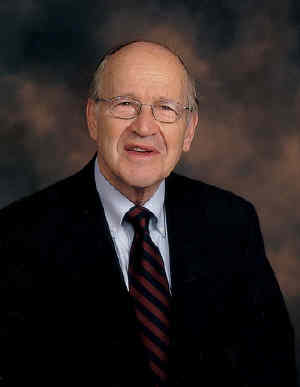
Dr. Samuel Katz, Wilburt Cornell Davison Professor and chairman emeritus of pediatrics at Duke University, was the co-founder of the measles vaccine in 1958 and has testified before Congress advocating mandatory immunizations as necessary for the public’s good. Sharon Egiebor, Blackaids.org project manager, interviewed Katz by telephone on the recent controversy over the HPV vaccine and its potential connection to an AIDS vaccine. As of yet, there is no AIDS vaccine and no cure for HIV/AIDS. Katz has been involved in studies of vaccinia, polio, rubella, influenza, pertussis, HIV, Haemophilus influenzae b conjugates and many others. He has chaired the Committee on Infectious Diseases of the American Academy of Pediatrics (the Redbook Committee), the Advisory Committee on Immunization Practices (ACIP) of the CDC, the Vaccine Priorities Study of the Institute of Medicine (IOM), and several WHO and CVI vaccine and HIV panels. He recently received the Pollin Prize for contributions to pediatric infectious disease research and vaccine development. BA: Will this controversy over the HPV vaccine affect a future HIV/AIDS vaccine? And if so, how? SK: I think that the public and as well as the health care community are so much aware of AIDS that you wouldn’t run into the same sort of thing that you run into with HPV. One of the problems with HPV is that Gov. Perry and others are pushing for mandates that an awful lot of the public do not know much about. Even if you believe in mandates, you don’t do that sort of thing until the people who are going to be involved in receiving the vaccine, the families of those people as well as nurses, physicians and public health people, know a great deal about it. It is not surprising that there are not a lot of people who know about the connection between papilloma virus and carcenoma of the cervix. You need a time period for education so people will understand why you are pushing the vaccine for my daughters. I think this is something was mistakenly done, a little bit prematurely by Merck (the manufacture of Gardasil) and their marketing people. BA: What do we know about the effectiveness of the vaccine? SK: This is vaccine is being recommended for children as young as 9 years of age. There is not any data on the safety of this vaccine in children that young. If and when it is implemented, it will probably be among 11-12 years old and maybe up to age 18 because the vaccine for children’s program will provide this vaccine free, if they qualify for that program. The total number of children who have been evaluated is really very, very small. The group between 9 and 15 years of age hasn’t been studied at all. You’re talking about giving a vaccine, which probably is safe and effective, but you’d like to have evidence of this. We don’t know if when they are 30 years of age, if they are going to need a booster or is this vaccine going to protect them for life. These are questions that will be answered with longitudinal studies and trials. But without all of this information, I think it is pretty premature to mandate this vaccine. I don’t think you should say ‘you can’t go to school unless you get it.’ BA: What is the difference between mandating HPV vaccine and say the measles or chicken pox? SK: Most of the vaccines we have mandates for their agents are usually bacterial. They are transmitted very rapidly. If you have one child with measles in a classroom in school, you could be certain that every other child that has not been vaccinated will get the virus. With HPV that is not the situation, the only way we know of transmission is sexual means. BA: Is the concern for this vaccine tied into the issue of sex, since the most common way to transmit HPV is through sexual contact? SK:I think the inquiries that have been made have not shown that to be very important. Initially, the people who were for abstinence … have been very muted or in the background. I don’t think it has been a major issue with this vaccine. It was with years ago with the Hepatitis B vaccine. That first was licensed, recommended and mandated and people said it was going to encourage intravenous drug use and people would have sexual relations and not worry. I don’t think that happened either. There were plenty of studies that show it didn’t happen. BA: Is this vaccine going to force parents to have the sex talk with their daughters before they are ready? SK: I think this is why the physicians who deal with adolescents are very, very anxious to have the conversation. Once you are of the age that this vaccine is being recommended for, it isn’t just your parents signing permission for it. The young lady herself signs the assent form. The individual youngster is supposed to agree or disagree that he or she is willing to take this. I realize that people can say that HIV is a sexually transmitted and this is the main root of transmission. I don’t think you’ll run into people saying we shouldn’t do an HIV vaccine because it will increase sexual promiscuity. If we had an HIV vaccine tomorrow that had been shown to work and to be safe, you would have people lining up like they did for the polio vaccine in 1955. BA: Are there other issues with the HPV vaccine? SK: We haven’t discussed the issue of cost. It cost $306 for three doses. If your insurance company will pay for it, that’s fine. If you come under a state program, a number of states will pay for it, but a number of states will not. There is also an issue of let’s get this thing rolling appropriately. I’m not a great believer in mandate for this vaccine anyway. If we’re going to discuss it, it is very premature. BA: Will we have an HIV/AIDS vaccine? SK:It depends on whether or not you see the glass as half empty or half full. I am one who thinks it is half full. Will there be one next year, in five or 10 years, maybe.