By Sharon Egiebor
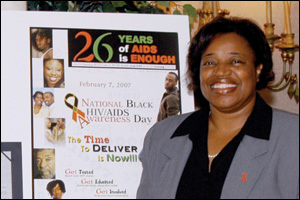
Dr. Debbie P. Hagins, the clinical director of outpatient services for the Chatham County Health Department IDC Clinic, a Ryan White-funded clinic in Savannah, GA, is an investigator in the recently announced GRACE study. GRACE (Gender, Race And Clinical Experience) will study the in-treatment experienced adult women with HIV to evaluate gender and race differences in response to a specific HIV medication, according to news releases. The study's sponsor, Tibotec Therapeutics Clinical Affairs, a division of Ortho Biotech Clinical Affairs, LLC, is seeking to raise awareness among African-American women of the trial and its importance to the treatment of HIV. GRACE, a multi-center, open-label Phase IIIb trial, will compare gender differences in the efficacy, safety and tolerability of PREZISTA (darunavir) tablets administered with ritonavir and other antiretroviral agents over a 48-week treatment period. The study also will explore racial differences in treatment outcomes. Eligibility is open to men and women of all races. Hagins, who spoke to a group in Dallas on Feb. 8 for National Black HIV/AIDS Awareness Day, says her life experiences play a great part in the way she conducts her medical practice. Hagins, who graduated from Mercer University School of Medicine in 1992, is an African American female pastor who lived in government housing projects as a child. She was invited to speak by AIDS Arms, Inc. and The Resource Center of Dallas. Gilead sponsored the meal. “HIV/AIDS in the black community is in a state of emergency. This emergency we are facing didn’t happen overnight. This emergency has lasted 20 years,” Hagins told the audience at The Top of The Cliff restaurant. Hagins said HIV/AIDS became an epidemic in the African American community because too many people still do not know how the disease is acquired, others live in denial about the disease’s potential risk and many are unwilling to move beyond the stigma. In the late 1990s, she said a relative’s husband died with AIDS. “His father was a pastor of a local church and everybody knew he was with men and women. Everybody knew,” she said. “But in 1999, at our family reunion, this woman said she was compelled to testify and tell how real God is.” The woman’s testimony affected many of the family members. “We often overlook the impact of HIV in our community, especially among women. It is right here at home. It is on every continent. Every hour, every day, one teenager is being afflicted because they are having unprotected sex,” she said. Hagins said her responsibility as a medical professional includes dispelling myths. She gave the following statistics:
• HIV/AIDS is the number one killer among 25-34 year old women. • It is the number 3 killer among 35-44-year-old women, falling right behind cancer and Cardiovascular disease. • An estimated 1 million Americans are living with aids and twenty-five percent of them do not know it. • African American women are 1/8 of the Americans living the country, however, as a race, African American women, are more than one-half of the new HIV cases. In Savannah, her agency serves eight counties with five HIV clinics that have a total of 900 clients. Most of the clients are African American and live below the poverty line. She said improving the attitudes and the knowledge base of Black Americans will make a difference. “In the age of information, we have learned as we talk to people whole lives we are trying to impact is that they do not understand how HIV is transmitted. They don’t know how to prevent it. HIV is passed on by mother’s breastfeeding and sex – vaginal, oral and anal. It is not in the air.” Hagins said she was participating in telephone bank that answered the public questions on the West Nile Virus, which is passed to humans by mosquitoes. One African American woman was concerned that the mosquitoes would pass HIV to humans. Hagins said she took time out to educate the caller. “We need to seize the moment and take every opportunity to get the plug in. Prevention is the other am. The spread of HIV is in our personal control. If you are negative, you can stay negative. If you are positive, you don’t have to pass it on,” Hagins said. She says she encourages male and female condom use. Hagins also discussed two of her personal health experiences. She became pregnant while in college but was in too much fear and denial to seek medical care. Her sorority sister encouraged her to get prenatal care and then went with her for the appointment. Several years ago, Hagins, who has three children – 27-year-old son and two daughters, 19 and 16 years old – was diagnosed with fibroid tumors. But instead of having them treated, she suffered for years until the situation was unbearable. Her doctors recommended a hysterectomy. “Before the hysterectomy, I was on pain medication. I was in a state of emergency, but it was one that I ignored. I let my condition go for so long. We know about the condition. I had waited for years. The tumor in my uterus was the size of a five-month fetus. The doctor asked how I was existing. People feel that way about HIV. “Denial keeps you from taking care of our issues. Sometimes, our enemy is our self,” said Hagins, who has practiced medicine for 18 years, treating underserved and indigent clients. “We have a personal responsibility to get the message out and to get people educated. We need to support organizations. We have to not discriminate, regardless of gender, economic funds and the color of your skin. Let’s remember what it feels like.”