Despite Governor's Backing, Ohio Still a Mixed Bag When It Comes to ACA Support
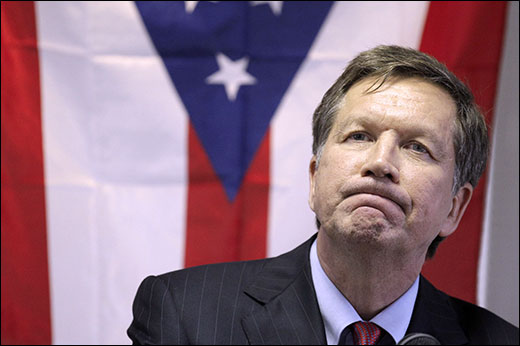

Although Ohio Gov. John Kasich has broken ranks with other Republican governors to support portions of the Affordable Care Act (ACA), the Buckeye State is far from being a champion for health-care reform. In Ohio, the biggest issue of contention has revolved around Medicaid expansion. Currently there are an estimated 1.5 million uninsured residents of the state. The Medicaid expansion would reduce that number, since it gives states the option of expanding access to Medicaid to cover Americans who make 133 percent of the poverty level, which is approximately $31,000 for a family of four.

A number of Republican-controlled states, such as Alabama and Louisiana, have opted out of the Medicaid expansion. But in February, Kasich announced that he supported expanded Medicaid in his state, although he reaffirmed that he was not a supporter of "Obamacare." He was the fifth Republican governor to support the Medicaid expansion, following in the footsteps of governors in Arizona, Nevada, New Mexico and North Dakota.

However, Kasich's views were not shared by many of his fellow Ohio Republicans. The Republican-led Legislature tried to block the Medicaid expansion, but in October Kasich went around the General Assembly by putting the vote before the Controlling Board, a committee that typically oversees small changes to the state budget. The board voted 5-2 to expand Medicaid. But six Ohio lawmakers and two anti-abortion groups said that the board exceeded its authority and filed a lawsuit to stop the expansion from taking place.

Despite all of the uncertainty, "I believe, one way or another, there will be some kind of Medicaid expansion," says Brian Rothenberg, executive director of ProgressOhio, a progressive organization that supports the ACA. If lawmakers don't get it done, there is talk about launching a signature drive to put the issue on the ballot and take it to Ohio voters.

The back and forth has taken its toll on the morale of many state residents. "You even have the Republican governor fighting with the Republican Legislature and getting attacked by the Tea Party, and I think there's some major frustration on the part of the public," Rothenberg adds.

Without the Medicaid expansion, more than 370,000 adults without dependent children will have no access to subsidized health-care coverage by 2017 and are likely to be uninsured, according to the Ohio Medicaid Expansion Study, conducted by the Health Policy Institute of Ohio, The Ohio State University, Regional Economic Models, Inc., and the Urban Institute. Not only that, but a study by the Health Policy Institute of Ohio and The Ohio State University's John Glenn School of Public Affairs found that the Medicaid expansion could save Ohio $200 million next year and nearly $4 billion by 2025.

No State-Run Exchange

Another key aspect of the ACA is the establishment of health insurance marketplaces. Residents of each state will gain access to a health insurance marketplace, an exchange where Americans can shop for health insurance. The states were given the option to run their own exchange or partner with the federal government to set up an exchange in time to start enrolling consumers in insurance plans by Oct. 1, 2013. If a state chose not to set up an exchange, the U.S. Department of Health and Human Services (HHS) set up that state's exchange.

Last November, Kasich announced that Ohio would not run its own exchange, leaving it to the federal government to do so. He cited a number of reasons for his decision, including these:

* The costs involved are too high.

* HHS provided insufficient information about the transition to the ACA.

* States do not have flexibility or control where the health insurance exchanges are concerned.

State officials have not been shy about criticizing the exchanges. In early August, Lt. Gov. Mary Taylor, who is also director of the Ohio Department of Insurance, announced that consumers who buy insurance in the exchange will pay on average 41 percent more than they did in 2013. "Ohio has traditionally had a more competitive health insurance market than other states, with a wider range of prices and choices--from simple, high-deductible coverage to comprehensive, full-service plans," Taylor said in a statement. "That level of diversity is essentially outlawed under Obamacare, so Ohio's rates and premiums are going up significantly, and going up more than in other states where prices were already high."

However, that claim has been met by skepticism, with some health-care reform advocates pointing out that Ohio officials aren't noting the subsidies that many Ohio residents will qualify for if they buy health insurance through the exchange. (Click here to use the Kaiser Foundation's health insurance subsidy calculator.)

Supporters of the ACA are optimistic that Ohio residents will enjoy all aspects of health-care reform in the near future. "I'm hopeful that political maturity prevails," Rothenberg says.

Tamara E. Holmes is a Washington, D.C.-based journalist who writes about health, wealth and personal growth.

Despite Governor's Backing, Ohio Still a Mixed Bag When It Comes to ACA Support

Although Ohio Gov. John Kasich has broken ranks with other Republican governors to support portions of the Affordable Care Act (ACA), the Buckeye State is far from being a champion for health-care reform.

In Ohio, the biggest issue of contention has revolved around Medicaid expansion. Currently there are an estimated 1.5 million uninsured residents (pdf) of the state. The Medicaid expansion would reduce that number, since it gives states the option of expanding access to Medicaid to cover Americans who make 133 percent of the poverty level, which is approximately $31,000 for a family of four.

A number of Republican-controlled states, such as Alabama and Louisiana, have opted out of the Medicaid expansion. But in February, Kasich announced that he supported expanded Medicaid in his state, although he reaffirmed that he was not a supporter of "Obamacare." He was the fifth Republican governor to support the Medicaid expansion, following in the footsteps of governors in Arizona, Nevada, New Mexico and North Dakota.

However, Kasich's views were not shared by many of his fellow Ohio Republicans. The Republican-led Legislature tried to block the Medicaid expansion, but in October Kasich went around the General Assembly by putting the vote before the Controlling Board, a committee that typically oversees small changes to the state budget. The board voted 5-2 to expand Medicaid.   But six Ohio lawmakers and two anti-abortion groups said that the board exceeded its authority and filed a lawsuit to stop the expansion from taking place.

Despite all of the uncertainty, "I believe, one way or another, there will be some kind of Medicaid expansion," says Brian Rothenberg, executive director of ProgressOhio, a progressive organization that supports the ACA. If lawmakers don't get it done, there is talk about launching a signature drive to put the issue on the ballot and take it to Ohio voters.

The back and forth has taken its toll on the morale of many state residents. "You even have the Republican governor fighting with the Republican Legislature and getting attacked by the Tea Party, and I think there's some major frustration on the part of the public," Rothenberg adds.

Without the Medicaid expansion, more than 370,000 adults (pdf) without dependent children will have no access to subsidized health-care coverage by 2017 and are likely to be uninsured, according to the Ohio Medicaid Expansion Study, conducted by the Health Policy Institute of Ohio, The Ohio State University, Regional Economic Models, Inc., and the Urban Institute. Not only that, but a study by the Health Policy Institute of Ohio and The Ohio State University's John Glenn School of Public Affairs found that the Medicaid expansion could save Ohio $200 million next year and nearly $4 billion by 2025

 No State-Run Exchange

Another key aspect of the ACA is the establishment of health insurance marketplaces. Residents of each state will gain access to a health insurance marketplace (pdf), an exchange where Americans can shop for health insurance. The states were given the option to run their own exchange or partner with the federal government to set up an exchange in time to start enrolling consumers in insurance plans by Oct. 1, 2013. If a state chose not to set up an exchange, the U.S. Department of Health and Human Services (HHS) set up that state's exchange.

Last November, Kasich announced that Ohio would not run its own exchange, leaving it to the federal government to do so. He cited a number of reasons for his decision, including these:

* The costs involved are too high.

* HHS provided insufficient information about the transition to the ACA.

* States do not have flexibility or control where the health insurance exchanges are concerned.

State officials have not been shy about criticizing the exchanges. In early August, Lt. Gov. Mary Taylor, who is also director of the Ohio Department of Insurance, announced that consumers who buy insurance in the exchange will pay on average 41 percent more than they did in 2013. "Ohio has traditionally had a more competitive health insurance market than other states, with a wider range of prices and choices--from simple, high-deductible coverage to comprehensive, full-service plans," Taylor said in a statement. "That level of diversity is essentially outlawed under Obamacare, so Ohio's rates and premiums are going up significantly, and going up more than in other states where prices were already high."

However, that claim has been met by skepticism, with some health-care reform advocates pointing out that Ohio officials aren't noting the subsidies that many Ohio residents will qualify for if they buy health insurance through the exchange. (Click here to use the Kaiser Foundation's health insurance subsidy calculator.)

Supporters of the ACA are optimistic that Ohio residents will enjoy all aspects of health-care reform in the near future. "I'm hopeful that political maturity prevails," Rothenberg says.

Tamara E. Holmes is a Washington, D.C.-based journalist who writes about health, wealth and personal growth.